


Bulgaria joins the euro in 2026: a stress test for gambling

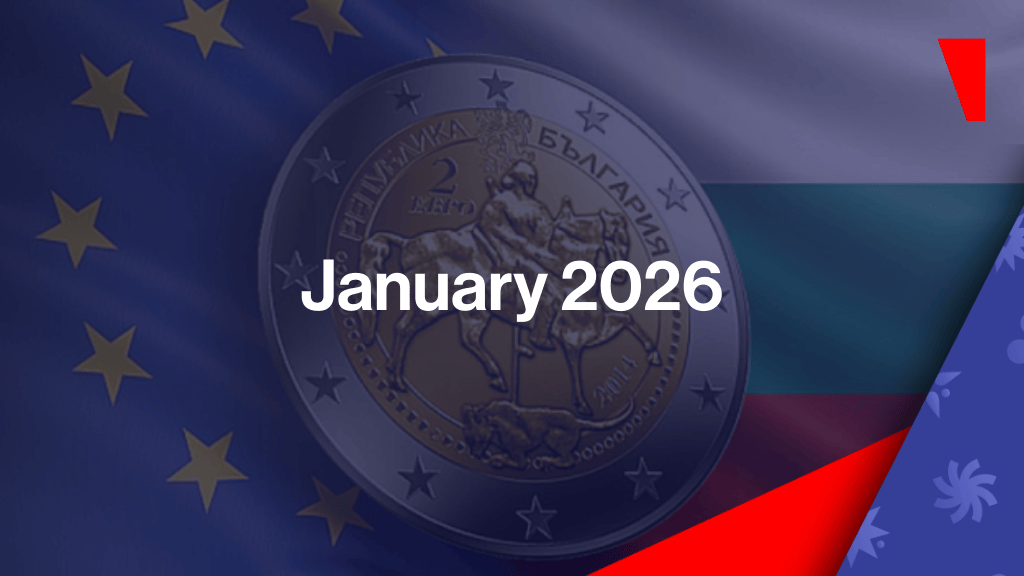
On 1 January 2026, Bulgaria will bid farewell to the lev and officially join the Eurozone, adopting the single currency at the irrevocable rate of 1 € = 1.95583 BGN. The decision, confirmed this summer by the EU Council and the ECB, marks a historic turning point for the country’s economy – but also a delicate transition for industries where cash remains central, such as land-based gaming and casinos.
A transition already underway
The process does not begin in 2026, but is already in motion. Since 8 August 2025, businesses have been required to implement dual price display in lev and euro, a measure set to remain in place at least until the end of 2026. Lawmakers have tightened controls to prevent opportunistic rounding and unjustified price hikes, imposing significant fines on non-compliant operators. For the gambling industry, this means rethinking signage, payout systems, ticket redemption, software interfaces and even marketing campaigns: every figure visible to customers must reflect the official conversion rate, leaving no room for mistakes.
The operational impact on gambling
For gaming halls and casinos, the most pressing challenge lies in cash management. Hoppers, banknote validators and jackpot systems will need to be recalibrated for the euro. Ticket-in/ticket-out (TITO) machines, payout systems and accounting software also require updates to ensure traceability and consistency with audits overseen by the National Revenue Agency, the regulator responsible for the sector. At the same time, online platforms must adjust terms and conditions, update payment thresholds and align their fiscal reporting systems with the new currency framework.
A weapon against illegality
The Bulgarian government is also framing the euro transition as a tool to combat unregulated gambling. Deputy Prime Minister Atanas Zafirov has stressed that monetary harmonisation could reduce opportunities for money laundering, while Deputy Interior Minister Filip Popov has highlighted the ties between illegal gambling and transnational criminal networks. In this sense, adopting the euro promises greater interoperability with AML systems and European standards for tackling organised crime.
Politics and perceptions
The move remains politically divisive. President Rumen Radev continues to call for a referendum, warning that euro adoption threatens national sovereignty and economic independence. Yet EU institutions have already certified that Sofia meets the convergence criteria: controlled inflation, fiscal stability and sustainable debt. In practice, the political machinery is already set in motion.
A shift in paradigm rather than in currency
For Bulgaria’s gambling industry, the transition will not be a macroeconomic shock – the lev has been pegged to the euro for over twenty years – but rather a test of operations and reputation. The dual challenge will be to manage the technical complexity of the switchover without disruption and to reassure consumers with transparency and accuracy in pricing. If navigated successfully, euro adoption could strengthen Bulgaria’s position as a hub for regulated, competitive gaming, boosting investor confidence and easing cross-border partnerships within the European single market.
This article was first published in Italian on 27 August 2025.


