


California flags Kalshi's Super Bowl LX contracts despite ban


California lawmakers, gaming tribes, and the NFL have voiced objections after prediction market platforms such as Kalshi enabled residents to wager on Super Bowl LX outcomes, despite the state’s prohibition on sports betting. By operating as federally regulated products, these platforms sidestep state-level gambling restrictions and tax frameworks. The loophole has sparked pushback from multiple stakeholders, who say it weakens state oversight and existing tribal compacts.
Kalshi and similar services permit wagers on a wide range of events, from which team will win the Super Bowl to more unconventional bets, such as which artist will perform during the opening ceremony or who will attend the game. Examples include Green Day performing “MAGA,” Bad Bunny opening the halftime show with “Baile Inolvidable,” and soccer star Lionel Messi attending the match at Levi’s Stadium in Santa Clara.
Worries over evasion of law
While these unconventional wagers have drawn attention nationwide, California officials say they are increasingly concerned that some prediction market contracts closely resemble traditional sports betting, which remains illegal in the state. Lawmakers, including Rep. Salud Carbajal, have warned that users can now speculate on outcomes ranging from major sporting events such as the Super Bowl to which party controls Congress, often through platforms they argue operate in regulatory grey areas with limited oversight and consumer protections.
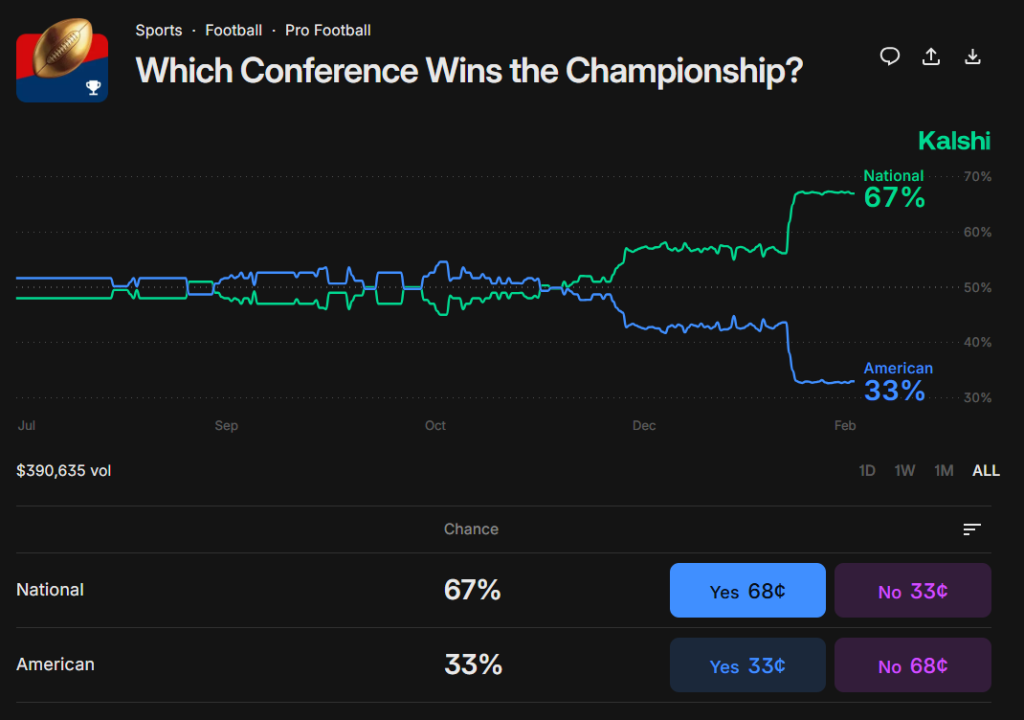
(Source: Kalshi.com)
Reportedly, Kalshi’s Super Bowl markets have seen dramatic growth. Before last year’s game, the platform handled $27 million in bets on the Philadelphia Eagles and Kansas City Chiefs matchup. This year, betting volume has already surpassed $150 million, with users predicting, for example, a 67 percent chance of a Seattle Seahawks win over the New England Patriots. Other major betting companies, including FanDuel, DraftKings, and Fanatics, have launched similar prediction markets in states where sports betting is not yet legal.
NFL against predictors in Super Bowl
However, the NFL has banned prediction market advertisements during its Super Bowl broadcast. While the MLS, NHL, and UFC have partnered with prediction market firms, the NFL maintains a strict policy against participation. Executive Vice President Jeff Miller told Congress that the league views prediction markets in the same category as other banned sports betting activities.
California remains one of 11 states without authorised sports betting since a 2018 Supreme Court ruling struck down a Nevada-only limitation. Prediction markets fall under the oversight of the Commodity Futures Trading Commission (CFTC), a federal agency established to regulate derivatives and prevent fraud, but not under state gambling authorities.
Tribal leaders have expressed frustration that prediction markets bypass both state and tribal laws. Victor Rocha, chair of the Indian Gaming Association, said: “They’re looking for workarounds so they don’t have to pay taxes while eroding the tax bases in states with legal sports gambling.”
While California Attorney General Rob Bonta has not filed a direct lawsuit, his office has joined briefs arguing that prediction markets, including Kalshi, are openly violating state, federal, and tribal laws. Legal experts suggest the issue remains a grey area federally, but is clearly unauthorised under California law. Pending court decisions, including an appeal in the Ninth Circuit, could eventually reach the Supreme Court.
As of now, Californians are still free to place bets on Super Bowl outcomes, performances, and even attendance. However, analysts warn that these markets blur the line between gambling and trading, particularly as insider knowledge could give certain participants an unfair edge.
The fuse is lit. In Mexico City, 01–03 Sept 2026, North America meets Latin America. SiGMA North America welcomes 4,000 delegates for three days of deals, insight, and startup sparks. Serious insight. Real deals. Book your spot.


