


European gambling regulators meet in Madrid: Italy leads anti-illegal measures, self-exclusion reforms and tech challenges

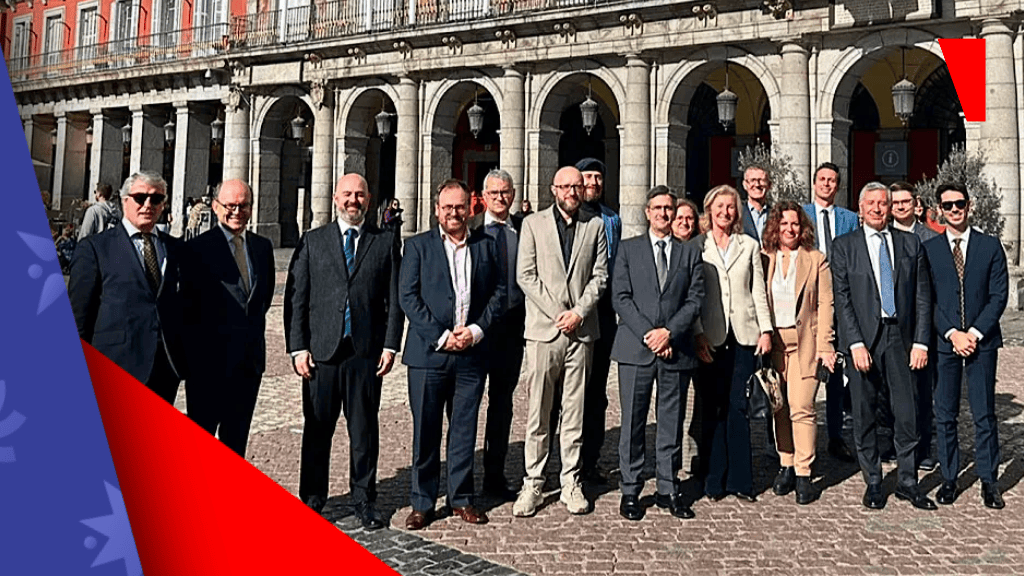
The Dirección General de Ordenación del Juego hosted a new edition of the Encuentro Europeo de Reguladores del Juego in Madrid, the annual meeting that brings together Europe’s key regulatory authorities. Delegations from Austria, France, Germany, Italy, Portugal, the United Kingdom and Spain convened to discuss ongoing projects, regulatory challenges and the future direction of gambling oversight across the continent. Leading the Spanish delegation was Director General Mikel Arana Etxezarreta, who emphasised the importance of maintaining a steady, structured dialogue among European regulators to safeguard players and ensure a more transparent market.
Spotlight on illegal gambling and the role of affiliation
The opening session, chaired by Spain, focused on illegal gambling – one of the most pressing issues for European authorities. Regulators examined the impact of affiliate programmes that promote unauthorised operators and discussed shared strategies to curb the visibility of irregular offerings. The need for stronger cross-border cooperation emerged as a unifying theme: according to the authorities, only coordinated action can disrupt advertising networks that exploit loopholes in national and EU rules.
Italy and Germany outline tools to block payments
Germany and Italy jointly presented a session dedicated to payment-blocking measures targeting illegal operators. Both countries explained how cooperation with financial institutions has become a cornerstone of their strategy, enabling the monitoring of financial flows linked to unauthorised platforms and interrupting the circuits that fuel illegal gambling. Authorities acknowledged that the effectiveness of these tools depends on the ability to harmonise processes and technologies across jurisdictions.
France examines AI in regulated CRM systems
France contributed a technical analysis on the use of artificial intelligence in the customer relationship management systems of licensed operators. The debate highlighted how AI is reshaping customer interaction, offering potential benefits in terms of personalisation and monitoring while also introducing new risks. French regulators drew attention to possible conflicts of interest in sports betting, where automated behavioural analysis may affect the transparency of the relationship between player and operator.
Italy at the forefront with its self-exclusion model
Italy intervened again with an in-depth presentation of its in-person self-exclusion register, considered a key instrument in preventing problem gambling. The Italian system was outlined as a model grounded in direct verification and controlled procedures, reinforcing protections for players most vulnerable to risky behaviour.
Anti-money laundering and FATF evaluation: Austria’s contribution
Austria presented the key points of the recent FATF evaluation and the developments introduced by the EU’s new anti-money-laundering framework. The updated EU rules will impose stricter standards on gambling operators, including enhanced due diligence requirements, greater transparency in financial flows, and the establishment of the new European Anti-Money Laundering Authority, which will have a direct impact on supervisory activities. Regulators stressed that AML is one of the areas where international cooperation will inevitably become more structured.
Spain closes the day by reaffirming the value of European coordination
In the final session, the Spanish delegation reiterated the need for a stable and ongoing exchange among European regulators. Arana Etxezarreta reminded participants that the complexity of the gambling market requires shared solutions, especially as the sector is increasingly shaped by rapid technological innovation and economic integration across borders.
From technical roundtable to the International Gambling Congress
Following the meeting, several of the attending regulators will join the inaugural Congreso Internacional de Juego: El impacto Social del Juego, organised by the DGOJ at the Fábrica Nacional de Moneda y Timbre. The opening session will focus on “Retos y perspectiva de la regulación del juego en Europa”, bringing together representatives from Italy, Germany, the United Kingdom and Spain. The panel will explore ongoing regulatory projects and discuss the direction authorities and industry stakeholders must take to address the challenges ahead.
New priorities: risk, AI and the shifting boundary between gaming and gambling
The Congress programme will also delve into emerging issues such as predictive models for detecting risky behaviours, the application of AI in player-management systems and the growing debate surrounding video games, social gaming and loot boxes. These themes illustrate how European regulation is expanding its scope, addressing product design, digital dynamics and the social impact of new forms of entertainment.
A European landscape evolving between regulation and technology
The dual setting – the DGOJ’s technical meeting and the Congress stage – offers a clear picture of an evolving sector: Europe is strengthening cooperation, building common standards and deploying advanced tools to enhance consumer protection and improve the fight against illegal gambling. The discussions in Madrid confirmed that the future of regulation will depend on continuous exchanges between countries, shared legislative updates and increasing attention to the technological and social developments shaping the industry.
This article was first published in Italian on 14 November 2025.
Be part of the action at SiGMA South Asia, 30 Nov – 02 Dec 2025. Colombo becomes the heart of gaming as 5,000 delegates, 100+ speakers, and 1,000 operators gather under one roof. With high-value traffic, game-changing insights, and unforgettable networking, this is where new markets meet new horizons.


