
FDJ United Q3 revenue dips amid higher taxes and online slowdown

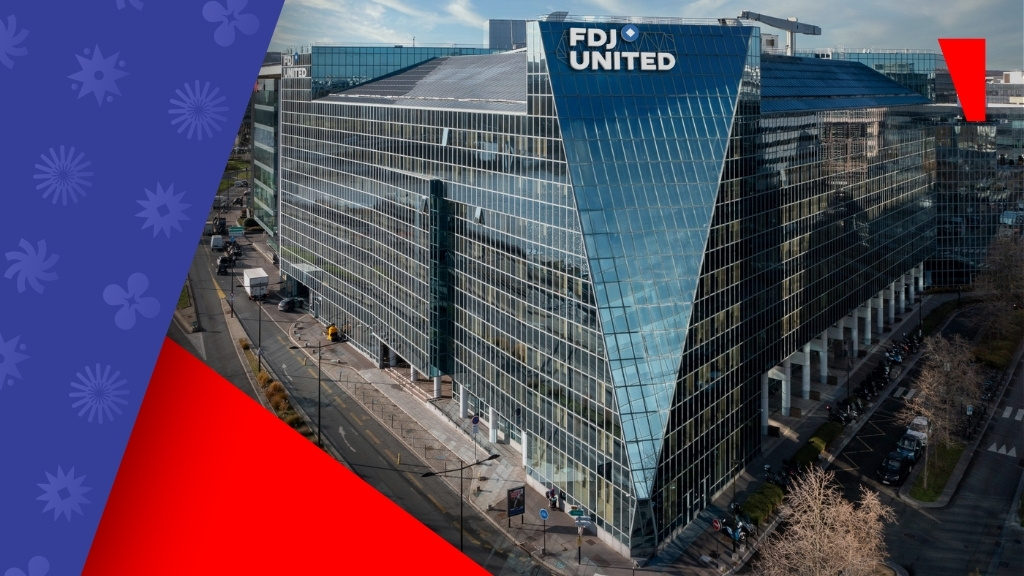
France’s dominant gambling operator, FDJ United, has reported a third-quarter decline in revenue, weighed down by increased gaming taxes and a slowdown in online betting, even as its core lottery operations continued to grow.
The company, which rebranded as FDJ United earlier this year following its acquisition of Kindred, posted revenue of €864 million in Q3 2025, up 29% on a reported basis including the new acquisition but down 3% on a restated like-for-like basis, and “virtually stable at constant gaming taxes,” according to its quarterly financial report.
For the first nine months of 2025, revenue stood at €2.73 billion, up 30% year-on-year in reported terms but down 2% when adjusted for the Kindred acquisition and changes in regulation.
Chairwoman and CEO Stéphane Pallez acknowledged that this was a testing year for the group. “The change in FDJ United’s revenue at the end of September reflects the prolonged decrease in our online betting and gaming business in certain markets and the impact of higher taxation on gaming, particularly in France since 1 July,” she said, adding that the company was “deepening its transformation and performance plan in 2025.”
Lottery resilience offsets online weakness
FDJ’s traditional games have remained a reliable source of growth. In the third quarter, “the French Lottery and Retail Sports Betting business unit maintained its solid momentum, with revenue up 2% to €595 million,” the company said.
Within that, lottery revenue rose 2.5% to €508 million, driven by both draw games and instant tickets. For the first nine months, lottery revenue increased by 4.8% to €1.57 billion, boosted by Euromillions jackpots, “27 draws for jackpots of over €130 million, including six draws for €250 million”, and a steady appetite for instant games.
Online lottery sales also gained ground, rising 14% to €238 million, representing 15.2% of total lottery revenue, with “more than six million active players on a 12-month rolling basis.”
In contrast, retail sports betting revenue fell by 4.6% to €311 million, reflecting “sports betting results that were unfavourable to the operator and a less appealing sporting competition schedule in 2025.”

Online decline and regulatory headwinds
The group’s online betting and gaming arm, now including Kindred’s platforms such as Unibet and 32Red, remained under heavy pressure. Revenue from this division fell 16% in Q3 to €209 million and was down 13% for the first nine months.
The downturn, FDJ said, was driven by “the impact of taxes and regulations in 2025, particularly in France, the Netherlands and the United Kingdom,” as well as the absence of major sporting events that had boosted 2024’s performance.
France’s 2025 Social Security Financing Act, enacted in the spring, increased tax rates across all gambling categories, including a jump in online sports betting levies from 54.9% to 59.3% of gross gaming revenue (GGR) and the introduction of a 15% tax on advertising and promotional expenses.
Pallez had warned senators in August that FDJ’s “11% increase in marketing budgets in 2025 seems to confirm this trend, when no major sporting event is planned.”
FDJ United also faces tougher controls in key European markets. In the Netherlands, “new player protection rules” now limit monthly deposits to €700 (€300 for younger players), while taxes on online gaming were raised to 34.2% of GGR at the start of 2025.
Growing tensions around monopoly power
The company’s continued dominance in both the physical and online gambling markets has ignited debate in France over whether its monopoly is compatible with effective regulation. In August, ANJ president Isabelle Falque-Pierrotin told senators that FDJ’s growth “presents a risk of intensification of gambling practices which could encourage a shift towards excessive or pathological gambling.”
While FDJ United insists that “the main beneficiary of this moderate growth remains the State itself, through taxation,” critics argue that its market share and marketing power risk undermining competition and responsible gambling objectives.
Costs and outlook
Despite the headwinds, the company reiterated its full-year guidance, forecasting revenue above €3.7 billion and a recurring EBITDA margin above 24%, supported by cost-cutting and steady lottery performance.
The group’s recurring EBITDA for the first half stood at €441 million, a 23.6% margin, while adjusted net income fell 5% to €222 million. Pallez described 2025 as “a transition year for FDJ United, with the integration of Kindred well on track.” She added: “Our first-half performance is in line with the expected full-year trajectory.”
To maintain profitability, FDJ United has intensified its “2025–2028 performance plan” and continues to migrate Kindred’s brands onto its proprietary platforms. During the summer, “Unibet migrated to the KSP sports betting platform in Romania and in the United Kingdom,” the company said, noting that all migrations in the UK are now complete.
Subscribe HERE to SiGMA’s Top 10 News countdown and SiGMA’s weekly newsletter to stay up to date with all the latest iGaming News from the biggest iGaming community in the world and benefit from subscriber-only offers.


