


Interview with Joel Madingu: A picture of Africa’s Francophone legal regime

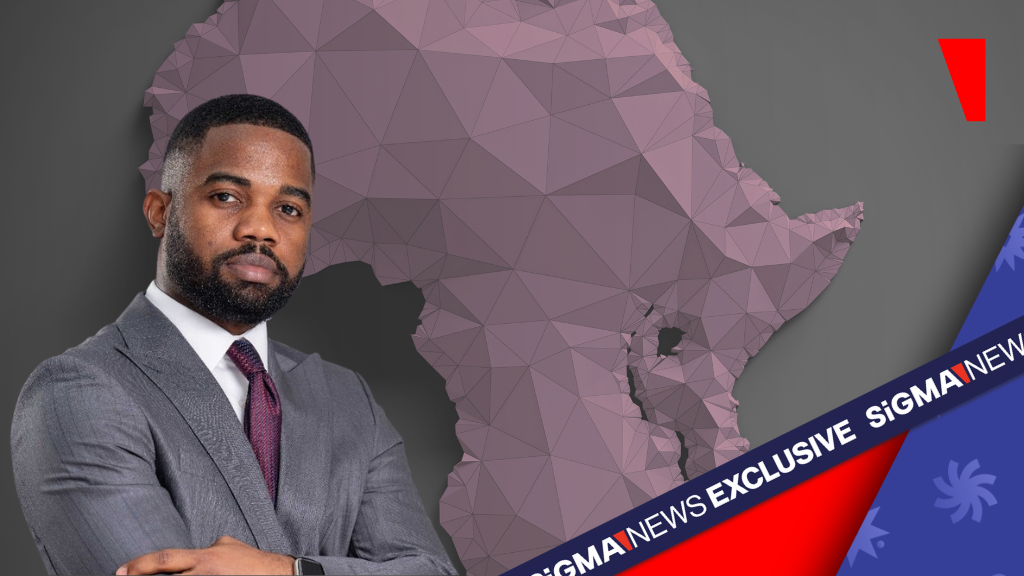
SiGMA News recently had the opportunity to speak with Joel Madingu, Legal and Corporate Affairs Manager at Velex Advisory, about his expertise in the Francophone jurisdictions of Africa. From tax legislation to currency convertibility challenges, his insights shed light on both the opportunities and obstacles faced by operators within these countries, providing a valuable roadmap for stakeholders seeking to understand and succeed in this captivating part of the continent.
Legal blindspots
Q: Where do you see the biggest legislative blind spots—areas not yet covered by statute, that operators should watch?
Joel: In many French-speaking countries, the law does not clearly distinguish between physical games of chance and online games.
Some platforms operate in a legal vacuum due to the lack of a specific framework. This poses a risk for operators, as some licenses are unclear, and there is a high risk of sudden bans on activities or the abrupt payment of new licenses, as seen in the case of the Democratic Republic of Congo, where online gambling was introduced in a ministerial decree.
Lack of recognition of “cross-border gambling”
Most of the governing laws are country-centric, with no precise mechanism to deal with foreign operators targeting local players.
There is also the lack of a French-speaking “shared licence” model, such as the “European passport”.
Tax grey areas
In most jurisdictions, the taxation of online gaming income is often unclear or inappropriate (no distinction between gross and net income, for example).
We cannot forget about the uncertainties that persist around VAT, withholding taxes, and players’ winnings either. This can cause a forced adjustment in tax legislation, creating difficulties in establishing a reliable business plan.
Insufficient protection of personal data
Several French-speaking countries do not yet have robust laws on the protection of personal data, while online games constantly collect sensitive and personal data (identity, bank card, transactions, behaviour).
This could expose operators to litigation or international sanctions if GDPR compliance or a local equivalent is lacking.
Legal status of new forms of gambling
Current legislation does not cover play-to-earn games, NFT games, or loot boxes. The risk is that powerful operators will operate in a legal vacuum, with all the consequences of a sudden shutdown or additional license fees.
Operators should anticipate future regulations in the following grey areas:
- Personal data
- Crypto assets and virtual currencies
- eSports, metaverse, and loot boxes
- Advertising and protection of minors
- Digital taxation
- Artificial intelligence

Anti-money Laundering (AML) & Combating the Financing of Terrorism (CFT)
Q: How have recent AML/CFT guidelines changed the KYC obligations for online sportsbooks and casinos?
Joel: In the Democratic Republic of Congo, the government has, since 2022, strengthened its legal arsenal in the fight against money laundering. This is due, in particular, to the fact that the DRC is an associate member of GABAC (Action Group against Money Laundering in Central Africa), a FATF-type body, and also an observer member of the Eastern and Southern African Anti-Money Laundering Group.
These advances have led the DRC to adapt the KYC (Know Your Customer) obligations applicable to sports betting and casinos, which are classified as Designated Non-Financial Enterprises and Professions (DNFBPs). The legislator now requires operators to implement a policy to deal with money laundering and the financing of terrorism, including the following elements:
- The appointment of a Money Laundering Reporting Officer (MLRO) is responsible for vigilance on customer transactions. They are required to report any indication of money laundering to the competent authorities.
- The establishment of prerequisites for entering into a business relationship: these include the identification of the client and, where applicable, the beneficial owner, the verification of the authenticity of the documents provided to the company creation office, as well as the verification of the legal credentials of the representative acting on behalf of the client.
- A constant monitoring policy involves continuously reviewing all transactions, including occasional ones, to verify their compliance with KYC requirements, particularly to ensure the legitimacy of the source of funds.
Ownership, jurisdictions and payment
Q: Mobile money is the dominant payment method across the region. Which e-wallet or telco integrations raise the most challenging legal questions for betting sites?
Joel: The most difficult and perhaps even without any solution, are e-wallet integrations from banks, which do not integrate betting sites, thus deeming the activity high risk.
There is also the integration of cryptocurrency, which so far raises major but unresolved legal issues.
Q: Do any jurisdictions offer tax holidays or reduced rates for first-mover online operators?
Joel: Tax exemptions in the gambling sector in French-speaking countries are practically impossible, mainly because gambling activity is classified as a high-risk financial activity. Therefore, this sector cannot benefit from any exemption.
However, in the DRC, one issue remains unresolved: VAT for gambling operators. At the same time, a 10% ad valorem tax is levied on the winnings. Additionally, a 16% VAT will be collected at the time of the bet. This question of VAT has sparked several debates and has been suspended, which means that some operators do not yet collect VAT today.
Francophone Africa’s Foreign Exchange Market (FX) and licensing restrictions
Q: How do FX restrictions or currency-convertibility issues impact repatriation of profits for foreign shareholders?
Joel: The first and most significant impact is the loss of value resulting from the exchange rate effect. When the local currency undergoes a significant devaluation and convertibility is limited or subject to an undervalued official exchange rate, the shareholder suffers a real loss of value on their repatriated profits.
This could force the shareholder to go through parallel or unofficial channels (black market, prime rate), which entails enormous legal risks (money laundering, etc.).
The second impact, in my opinion, lies in the regulatory obstacles to transferring funds, as some French-speaking countries, including the DRC, require prior authorisations from the central bank for international transfers, as well as strict compliance with local tax obligations, which are sometimes considered substantial.
“A sustainable Francophone iGaming system would be digitised, ethical, inclusive and sovereign.”
– Joel Madingu
Q: What technical certifications (e.g., RNG, ISO/IEC 27001) do regulators in Francophone Africa recognise or mandate?
Joel: Regulators in French-speaking Africa do not always have an explicit requirement for certification in the texts, but are increasingly aligning themselves with international standards to guarantee:
- Fair gaming,
- Data security,
- AML/CFT compliance,
- The protection of the player.
To my knowledge, here are the technical certifications recognised in French-speaking Africa and used in some countries such as Senegal and the Ivory Coast, namely:
- The RNG
- ISO/IEC 27001
- PCI-DSS
Q: Does any licence obtained in one Francophone country provide “passporting” advantages elsewhere, or must operators start from scratch each time?
Joel: No, a gaming license obtained in a French-speaking country does not give an automatic “passport” right to operate in another country, as each state has its regulatory sovereignty over gambling and betting, and operators must obtain a separate license in each jurisdiction.
I do not know of any French-speaking country that offers “passport” or residency benefits to operators. As I pointed out above, the operator must submit an official application in accordance with the established immigration conditions to benefit from a long-stay work or investment visa.
An expert’s advice and Francophone Africa’s future
Q: What advice would you offer regulators seeking to strike a balance between consumer protection and attracting foreign investment?
Joel: The mission of regulators is also to protect without suffocating, and to open without deregulating.
That is, they must first develop or put in place a clear and transparent legal framework to attract investors, as investors tend to avoid legal uncertainty. The same clear legal framework would also allow consumers to know what to expect.
However, it is also necessary to make the authorisation regime rigorous by allowing a strict yet accessible filter, as the idea is to attract clean investment. Then establish robust consumer protection measures with a policy focused on responsible gaming (minor protection, fight against addiction).
Finally, to establish a framework for permanent collaboration with operators, facilitating communication and regular consultations to identify flaws and receive criticism, thereby enabling continuous improvement.
Q: In five years, what does a sustainable, fully regulated Francophone iGaming ecosystem look like to you?
Joel: In five years, a sustainable French-speaking iGaming ecosystem would be digitised, ethical, inclusive, and sovereign, leveraging innovations while ensuring a safe, fair, and profitable gaming environment for both states and citizens alike.
In short, a fully regulated iGaming ecosystem could have:
- Harmonised and transparent legal framework
- Player trust and protection
- Innovative ecosystem, driven by technology
- Positive economic and social impact
- Creation of skilled jobs (developers, analysts, lawyers, marketing, etc.).
- Fair redistribution of income: taxes dedicated to sports, culture, and youth
- Favouring local operators through quotas or tax incentives
- Francophone regional cooperation
- Effective fight against money laundering and fraud.


