

Italy passes groundbreaking artificial intelligence law: a national framework aligned with the EU AI Act

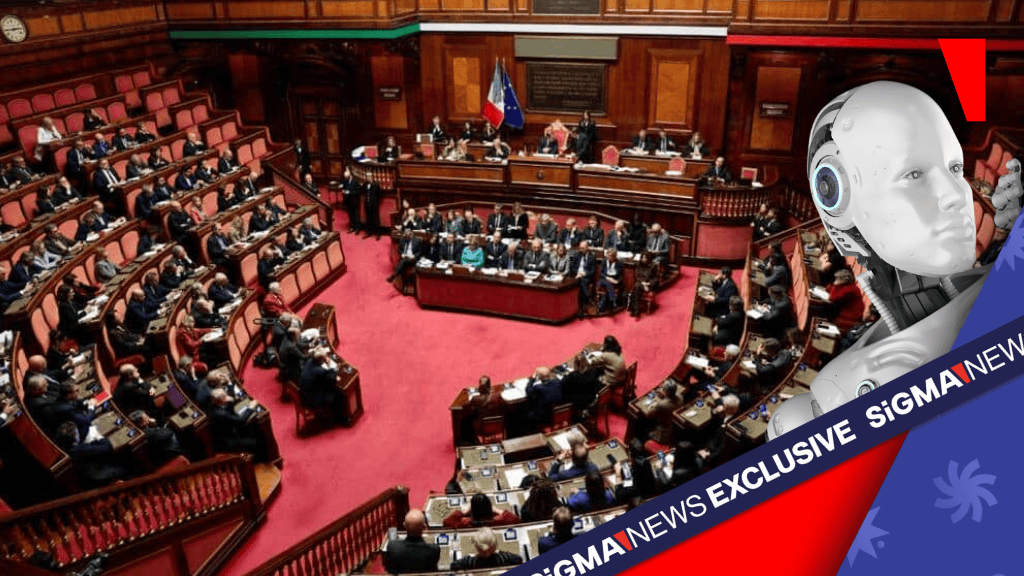
Italy has become the first European Union country to adopt a comprehensive national legislative framework on artificial intelligence. With the final approval of Law No. 132 of 23 September 2025, published in the Gazzetta Ufficiale and entering into force on 10 October 2025, the Italian Parliament has established the principles, governance, and support measures for an AI ecosystem that is “human-centric, transparent, and secure.” This landmark move brings technological innovation firmly within a framework of public accountability, aligning Italy closely with the EU’s AI Act.
An unprecedented legal framework in Europe
The new law sets an ambitious goal: to ensure that the artificial intelligence revolution develops in full respect of fundamental rights, privacy, and national security, while strengthening the competitiveness of Italian enterprises.
The government describes the reform as a stable and pro-innovation framework – one designed to accelerate AI adoption across key sectors such as healthcare, public administration, employment, justice, education, and sport. It also seeks to harness and enhance Italy’s domestic technological capabilities.
Closely mirroring the EU AI Act, approved in 2024, the Italian law adopts its core principles of algorithmic transparency, decision traceability, human oversight, and data protection. Yet, Italy’s approach goes further, introducing a national governance model and a robust investment plan aimed at positioning the country as a European hub for responsible AI development.
Who oversees artificial intelligence in Italy
The law assigns supervisory responsibilities to two major public authorities: the National Cybersecurity Agency (ACN) and the Agency for Digital Italy (AgID).
The ACN is granted inspection and enforcement powers over the security of AI systems, ensuring that algorithms meet standards of reliability and resilience. Meanwhile, AgID will manage notifications, safe-use promotion, and the accreditation of entities that assess system compliance.
Overall coordination will rest with the Prime Minister’s Office, which must prepare a National AI Strategy updated every two years and submit an annual report to Parliament on progress and implementation. An inter-agency committee will oversee these efforts, fostering collaboration between public institutions and private stakeholders.
One billion euros to boost startups and SMEs
One of the reform’s most tangible elements is the creation of a €1 billion funding programme to support startups, SMEs, and research projects in artificial intelligence, cybersecurity, and emerging technologies.
The initiative aims to build a competitive ecosystem capable of retaining talent, attracting investment, and translating digital innovation into industrial value. The funds will also help develop national technology supply chains, consistent with Europe’s goals for digital sovereignty and strategic autonomy.
Undersecretary Alessio Butti, one of the law’s key proponents, described the move as “a decision that brings innovation back within the scope of the public interest, protecting citizens and businesses alike.”
From healthcare to work: where AI will truly change things
The law identifies strategic sectors where AI may be deployed under clear rules and with guaranteed human oversight.
In healthcare, AI must support – rather than replace – doctors, ensuring that clinical decisions remain human-led and that data for research is handled responsibly.
In the workplace, a dedicated AI Observatory at the Ministry of Labour will monitor algorithmic systems’ impact on employment while promoting workers’ dignity and continuous training.
Within public administration and justice, AI may be used strictly as a traceable decision-support tool, with final authority remaining in human hands.
Finally, in education and sport, AI will serve inclusion, personalisation of learning paths, and the enhancement of performance analysis and training methods.
A human-centric, transparent, and secure approach
At the heart of Italy’s AI law lies a guiding principle: technology must remain at the service of humanity. The Italian legislator introduces the notion of a human-centric approach – where humans retain ultimate control over both decisions and the societal impact of technology.
Companies and institutions developing or using AI solutions must therefore comply with standards of transparency, explainability, and accountability. Citizens have the right to know when they interact with automated systems, while developers must ensure that algorithms operate in a non-discriminatory, traceable, and secure manner.
The law also underscores the importance of cybersecurity, recognising that protecting data and safeguarding system integrity are essential for public trust. The ACN will supervise critical infrastructures and entities using AI in sensitive sectors.
New criminal offences against misuse and deepfakes
A particularly noteworthy aspect – often overlooked in public debate – is the introduction of new criminal provisions addressing the misuse of AI.
The law establishes a general aggravating circumstance for crimes committed “through the use of artificial intelligence systems” and introduces a specific offence covering the unlawful dissemination of AI-generated or altered content, directly targeting the deepfake phenomenon, with prison sentences of up to five years.
In addition, penalties have been increased for data and text extraction offences conducted through automated systems, reflecting growing awareness of the economic and media risks posed by emerging technologies.
The political context: between innovation and caution
The law’s approval comes amid intense international debate. Just two days before the Senate vote, Mario Draghi voiced criticism of the EU’s AI Act, describing it as a potential brake on innovation and calling for a temporary pause to assess its implications.
Conversely, Brando Benifei, Member of the European Parliament and co-rapporteur of the AI Act, rejected any suspension, stressing the need for a binding regulatory framework to balance technological progress with the protection of rights.
Against this backdrop, Italy’s move carries strong political significance: it signals confidence in innovation, but within clearly defined legal and social safeguards. Achieving this balance is crucial to keeping the country competitive while upholding its democratic principles.
The challenges ahead for businesses and public institutions
With the law now in force, both businesses and public institutions must adapt their internal AI policies. They will need to revise impact assessments, ethical codes, privacy notices, and algorithmic oversight protocols to comply with the new legal requirements.
Software developers and machine learning providers must follow AgID guidelines and prepare for potential ACN inspections. A notification and prior assessment system is also expected for high-risk applications, mirroring mechanisms under the EU AI Act.
For public administrations, the challenge is twofold: ensuring transparency in automated decision-making while enhancing the digital competence of staff. The law includes training programmes and awareness campaigns to promote responsible AI use in public service management.
An opportunity for Italian digital leadership
With this legislation, Italy takes a decisive step towards ethical and sustainable AI governance. If effectively implemented, the reform could position the country as a European leader in responsible technology regulation, opening new opportunities across the innovation ecosystem.
Public investment combined with clear legal standards could help build trust among investors and citizens, fostering a safer and more competitive AI market.
In the medium term, the success of the law will depend on whether institutions can maintain the delicate balance between protection and innovation, continuously updating the national strategy to keep pace with technological and international developments.
Italy has chosen not to passively endure the future, but to shape it. With Law No. 132/2025, the country places itself at the forefront of the global artificial intelligence challenge, charting a path that combines innovation, security, and accountability.
In an era when AI is redefining work, communication, and governance, the new Italian framework sends a powerful message: technology can be a force for progress – but only if it remains firmly in human hands.
This article was first published in Italian on 13 October 2025.
All roads lead to Rome, 03–06 November 2025. SiGMA Central Europe takes centre stage at the Fiera Roma, uniting 30,000 delegates, 1,200 exhibitors, and 550 speakers. This is where legacies are built, and the future takes shape. Connect with the innovators’ driving change.


