


Why Malta is betting on gaming — Dr. Spiteri on Malta Vision 2050

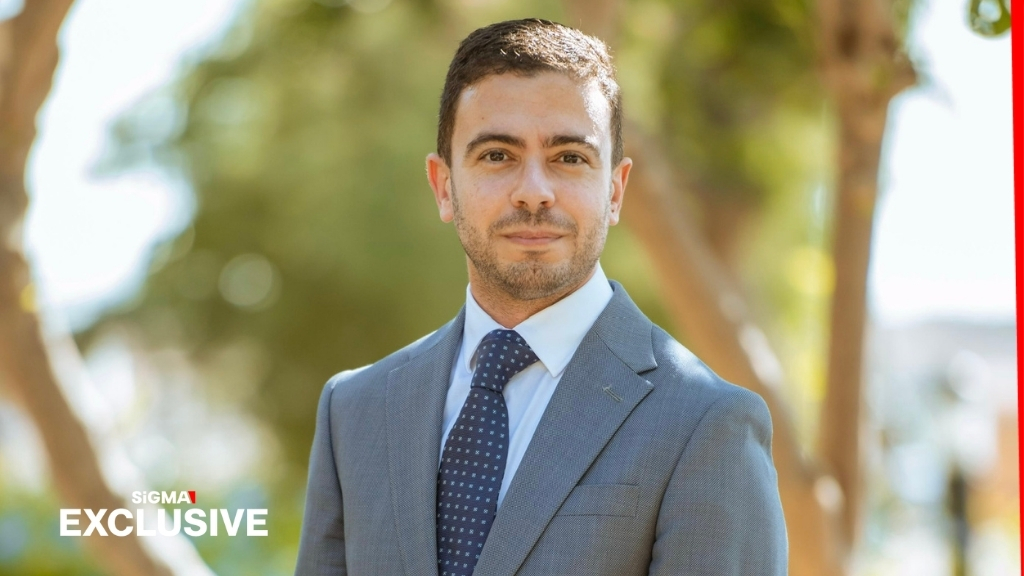
Over the past decade, the gaming industry has become a cornerstone of Malta’s economy—to the extent that the government’s long-term strategy, Malta Vision 2050, names it as one of the key sectors driving the island’s push for sustainable growth.
Dr. Jonathan Spiteri, senior lecturer at the University of Malta, director at Bank of Valletta, and a member of the Vision 2050 team, spoke with SiGMA News about how gaming can support the island’s long-term development goals.
As he explained, “The gaming industry has become very important, not just for Malta’s economy, but for its workforce and its resilience as a country.”
Rethinking success: a vision that goes beyond GDP
At the heart of the Malta 2050 Vision is a simple but ambitious idea: success is about more than GDP.
“We’ve had strong economic growth since 2012. Unemployment has plummeted. But we can’t take that for granted,” Dr. Spiteri explains. “It’s time to look beyond GDP and focus on a healthy quality of life for everyone.”
This means investing in infrastructure, healthcare, education, smart land use, and key industries such as gaming, financial services, tourism or transport.
Enabling growth: how the government can back the gaming industry
Dr. Spiteri believes the government has a role to play in supporting gaming’s growth. “The favourable tax rate and regulatory framework has obviously helped,” he says. “But there’s more we can do: tax incentives for research and development, start-up support, innovation grants.”
One recent step is the government’s launch of a venture capital fund designed to support innovative startups with seed funding, a programme that will benefit tech companies, including those in the gaming sector.
Beyond tax incentives, Dr. Spiteri points to Malta’s policies that attract highly skilled professionals: “We have a 15% tax rate on income for very highly qualified individuals. This scheme could help bring in more expertise.”
Dr. Spiteri sees room for expanding government support, especially around innovation and research: “There could be interesting things to look at in terms of investments in innovation and research — perhaps tax benefits to encourage this type of expenditure.” He points to examples abroad, such as tax incentives offered by the UK for innovative spending, and suggests Malta could adopt similar schemes: “We could think about how research expenditures get treated in tax terms, and how that might benefit the gaming industry.”
Why iGaming deserves its place in the vision
While some may wonder whether the gaming industry—particularly its online segment—is a dependable pillar for national development, Dr. Spiteri offers a confident response.
“It’s only risky if you look at it from the surface,” he acknowledges. “There’s a misconception that gaming is a dodgy industry. But the reality is, this is a professional, highly regulated sector.”
In fact, he believes Malta has become a global leader in responsible gaming governance.
“The Malta Gaming Authority has taken a leading role when it comes to ESG,” he says. “It’s not about promoting gambling as a way of life. It’s about doing it responsibly, with full knowledge of what you’re doing, and with safeguards in place.”
To him, the local benefits are clear. “The gaming industry has opened up incredible job opportunities,” Dr. Spiteri explains. “We’ve seen students go into risk management, data governance, quantitative analysis — these are high-skilled, high-paying roles.”
Raising the bar: what the industry still needs to improve
While Dr. Spiteri praises the sector, he’s clear that it can’t afford to rest on its laurels.
“We need more collaboration between the gaming industry and academia,” he says. “We need training programmes, internships, partnerships, ways to build a talent pipeline.”
He also wants the industry to do more to support social and environmental responsibility.
“With data centres and tech infrastructure, there’s a carbon footprint,” Dr. Spiteri acknowledges. “The gaming sector needs to be aware of that and play its part.”
Closing the talent gap: how universities are responding
The University of Malta is already adjusting to the growth of the gaming sector. Dr. Spiteri points to the integration of gaming-related topics into the economics, risk management, IT, and even mathematics curricula.
“In our faculty, we’ve embraced gaming. We teach cybersecurity, ESG, quantitative risk management, all essential for the industry,” he says. “We have lecturers with direct industry experience.”
Dr. Spiteri believes that exposing students to the realities of the industry is key.
“Students are beginning to realise that gaming isn’t just for IT specialists,” he says. “For instance, the industry needs economists, risk managers, compliance experts, data analysts.”
“Over the last two or three years, I’ve seen more students interested in gaming,” he adds. “It’s clear that, now, gaming is on the radar.”
But he believes more can be done.
“We need industry speakers, practical courses, lifelong learning options, or even a certificate programme for professionals who want to enter the sector,” Dr. Spiteri suggests. “It would be great to see formal postgraduate certificates focused on gaming, maybe in risk, maybe in compliance, maybe even in business management.”
How iGaming is shaping work culture
It’s not just the economy that’s changed. According to Dr. Spiteri, gaming has reshaped Malta’s work culture itself.
“Gaming has introduced a more progressive work environment,” he says. “It’s not about relaxing; people work hard. But it’s different from the suit-and-tie industries of the past. And that attitude is spreading to other sectors.”
As Malta competes for global talent, that cultural shift matters.
“The gaming sector has made Malta more attractive to young professionals, both locals and foreigners,” Dr. Spiteri explains. “And that’s exactly what we need to stay competitive.”
A collaborative vision built to last
Built on months of consultation with stakeholders across the private sector, public institutions, civil society, and even the opposition, Malta Vision 2050 is meant to be a truly democratic roadmap. “It has to be a broad coalition, a democratic vision, where people are giving their views and we have our targets,” Dr. Spiteri explains. “That’s what will make it resilient, and that’s what gives investors and entrepreneurs a sense of long-term certainty.”
With the Malta 2050 Vision in its final consultation phase, Dr. Spiteri urges all stakeholders to get involved.
“The consultation is open until September,” he says. “Anyone with a stake in Malta — citizens or residents, businesses, investors — should participate.”


