


Prediction markets and guerrilla marketing: A matter of time?

Prediction markets have gone from niche curiosity to mainstream talking point in just a few years. Once limited to academics testing the “wisdom of crowds,” platforms like Polymarket and Kalshi are attracting headlines with odds on elections, court cases, and cultural moments.
They’ve become part of the online conversation, where screenshots of markets circulate on Twitter, Reddit, and Discord with the same virality as memes.
But as they grow, an interesting question arises: could prediction markets double as a new form of guerrilla marketing?
From forecasting to buzz machines
At their core, prediction markets were designed to forecast outcomes more accurately than polls or pundits. But attention is a currency of its own, and markets thrive on it. The more people discuss an event, the more traders pile in, and the more others are drawn to watch the odds move.
For brands, this is fertile ground. A market such as “Will Brand X release a new sneaker before Christmas?” or “Will artist Y release an album this year?” would generate debate across social media, forums, and trading groups. Even if the brand isn’t involved, its name suddenly sits at the centre of thousands of speculative conversations.
That kind of buzz can’t be bought easily through traditional ads.
Case study: The Super Bowl ads
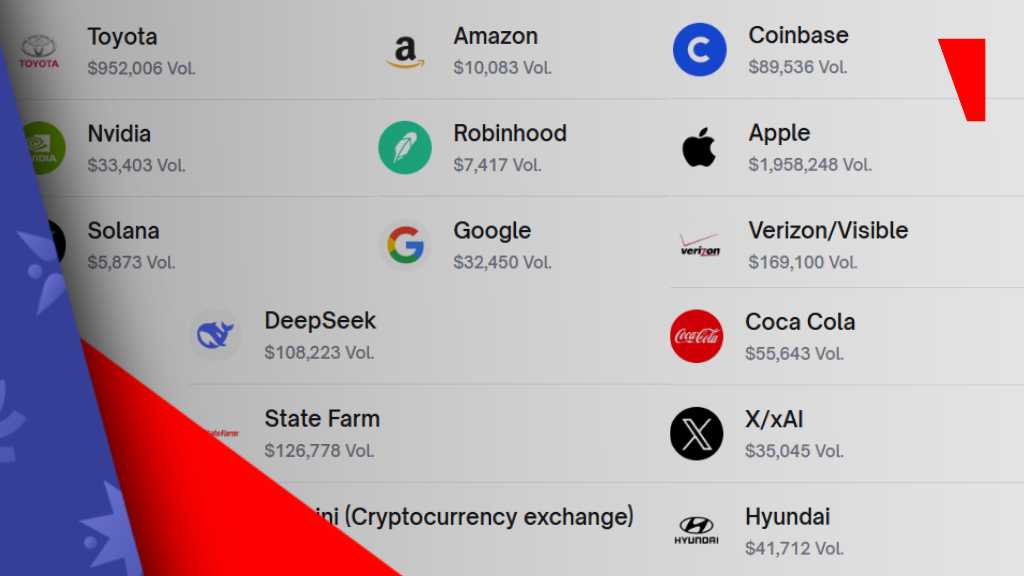
Polymarket has already given us a glimpse into how this might look. During the NFL season, the platform ran markets on which brands would advertise during the Super Bowl. Traders weren’t just betting on touchdowns, but on whether Coca-Cola, Apple, or Toyota would claim a slot during the break.
The brands themselves weren’t participating, but they still gained exposure simply by being the subject of speculation. Screenshots of the odds spread across social media, pulling those brand names into conversations they hadn’t paid to be part of. For the platforms, it meant increased liquidity and user activity. For the brands, it was free publicity.
This example shows how prediction markets can create a marketing effect even without the involvement of the companies concerned. If brands were to lean into the dynamic more deliberately, the result could be a powerful new form of guerrilla marketing.
The regulatory guardrails
It’s essential to note that not all prediction markets operate in the same space. Platforms like Kalshi are federally regulated by the U.S. Commodity Futures Trading Commission (CFTC), meaning every market has to be approved in advance. That makes it far less likely that brand-driven or promotional contracts could slip through, since they must meet strict criteria around economic purpose and legal compliance.
In practice, this creates a natural barrier against prediction markets becoming an easy guerrilla marketing channel, at least on regulated venues. The bigger risk lies in decentralised or offshore platforms, where community demand drives listings and moderation is lighter. Even there, however, markets need traction to survive; without enough trader interest, they fade away.
A matter of time?
As of now, there’s no evidence that brands are deliberately exploiting prediction markets as marketing tools. The platforms remain focused on political, cultural, and financial events. But the mechanics are sitting in plain sight.
For marketers hungry for unconventional ways to capture attention, the lure of prediction-driven buzz may prove irresistible. Whether it begins with unauthorised markets that brands simply ride along with, or more deliberate campaigns, prediction markets could evolve into unexpected advertising playgrounds.
The real question isn’t just if this will happen, but what it will mean when it does. Will prediction markets manage to maintain their integrity as forecasting tools, or will they be swept into the same marketing currents that shape so much of today’s digital world?
Either way, the attention economy rarely lets a tool this powerful go unused for long.
Join the world’s biggest iGaming community with SiGMA’s Top 10 News countdown. Subscribe HERE for weekly updates, insider insights, and exclusive subscriber-only offers.

