
Stabilising VIP revenue in land-based casinos: Experts


VIP players remain the lifeforce of land-based casinos, generating disproportionate turnover and profitability. Yet their behaviour is inherently volatile. They are short bursts of intense play followed by long stretches of inactivity, making revenue forecasting and operational planning a constant challenge.
In an exclusive interview with SiGMA, two industry experts—Alexander Vasyuta, a consultant specialising in B2B gaming strategy and VIP resilience, and Joe Pisano, Founder & CEO of Jade Entertainment Technology—share complementary perspectives on how casinos can stabilise VIP revenue while preserving the traditional gaming experience.
The VIP Challenge
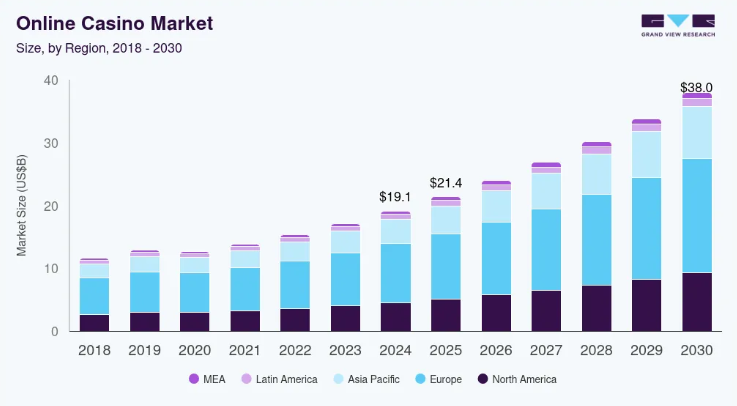
The global casino market was valued at $328.5 billion in 2025 and is projected to reach $577.3 billion by 2034, growing at a CAGR of 6.5 per cent, according to Market Data Forecast.
High-value players contribute 20–40 per cent of total casino revenue, but their unpredictability misrepresents financial forecasts, as reported by Phoenix Research.
Even if a single player has an uninterrupted sequence of success that provides monthly results, this also complicates liquidity buffers, investment decisions, and long-term planning. Additionally, overreliance on a small number of VIPs creates concentration risk, where inactivity from just a few players can disturb operations.
Current management practices
Reliance on relationship-driven strategies has been used in traditional VIP departments, including keeping communication open and providing tailored incentives such as rolling rebates and organising luxurious experiences.
While this is beneficial at the individual level, these approaches are difficult to scale, margin-dilute and overly dependent on human judgment.
Key market drivers
Growth is fuelled by rising consumer spending on leisure, expanding middle-class populations, particularly in Asia-Pacific hubs like Macau, Manila, and Singapore, with the government’s interest in stabilising tax income and employment, as reported by several media outlets.
Legalisation in emerging economies and technological innovations such as AI-driven personalisation, AR/VR gaming, and cashless payment systems are reshaping engagement, according to Phoenix Research.
Structured engagement frameworks
Vasyuta and Pisano highlight the need to have systematised engagement models. Creating a structured framework tailored to the VIP segment reduces inactivity cycles and stabilises turnover without shifting entirely online, as Vasyuta pointed out.
This connects seamlessly with existing VIP departments while providing low-cost, compliance-friendly solutions that help boost efficiency and client orientation.
Pisano goes on to say that lifecycle segmentation, predictive analytics, and structured incentive programmes should replace ad hoc negotiations. Additionally, advocating for diversifying the VIP base by expanding mid-tier segments and building digital ecosystems that keep players engaged even off-property.
Measuring volatility
Metrics like visit frequency and average turnover, considered traditional, remain useful yet incomplete. Pisano proposes a composite “VIP stability dashboard” which combines inactivity duration, revenue concentration ratios, player activity variance, and the gap between theoretical and actual wins. This approach allows operators to forecast volatility and manage risk more successfully.
Strategic impact
By stabilising VIP engagement, it could affect casinos beyond the individual casino. In places like Macau, Las Vegas, and Manila, predictable VIP revenue reinforces tax income, jobs, and overall industry resilience. Vasyuta’s framework offers scalability and adaptability to evolving markets, while Pisano’s operational insights provide practical tools for risk management.
Looking ahead
Vasyuta and Pisano share a central truth. They see volatility as not flawed. Instead, it is part of high-stakes gaming, where operators best positioned for success will be those who reduce dependence on individual players, systematise engagement, and integrate complex measurement tools. Casinos can then transform volatility from a destabilising force into a manageable one, even a strategic element of their business model.
Don’t just read the news — stay ahead of it. Subscribe HERE to SiGMA’s Top 10 News countdown for stories shaping iGaming’s future, weekly insights from the world’s biggest iGaming community, and exclusive subscriber-only offers.


