
Star Entertainment inks $390M refinancing deal with WhiteHawk

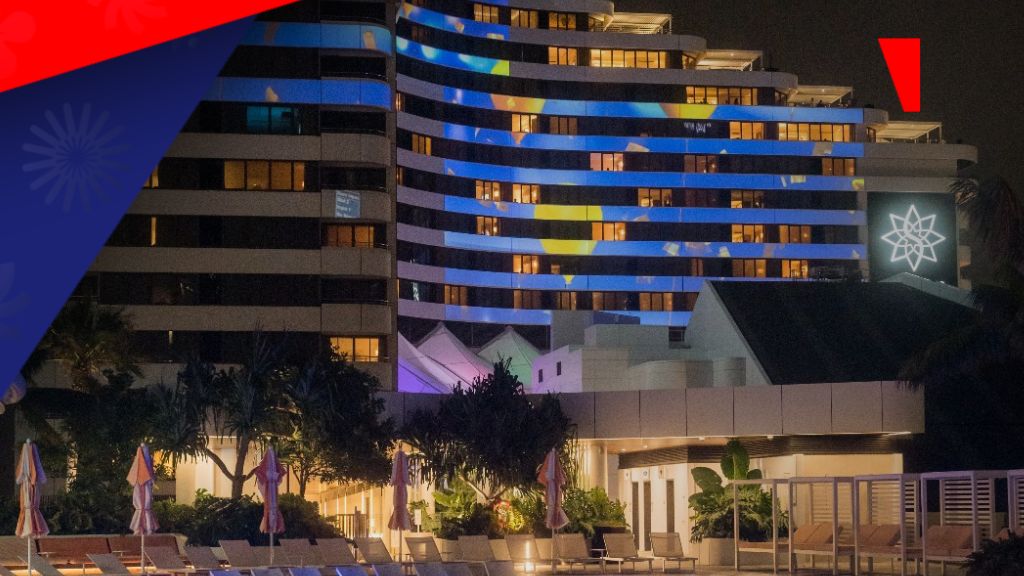
Australia’s Star Entertainment Group announced on Monday that it has secured a binding commitment for a US$390 million (A$550 million) refinancing from funds associated with WhiteHawk Capital Partners, providing the casino operator with fresh liquidity to help stabilise its balance sheet.
The agreement, confirmed in an ASX announcement dated 30 March 2026, follows an in-principle deal reached in late February. The company said it entered into a binding commitment letter on 27 March as part of the process to refinance its existing debt.
Refinancing to replace debt and support operations
According to the company, the three-year facility will fully refinance existing group debt while also delivering additional liquidity to support day-to-day operations.
The facility carries an annual interest rate based on Term SOFR plus a margin aligned with Star’s recent financing agreements. Repayments will begin through quarterly amortisation from 31 March 2027.
The agreement also sets minimum liquidity requirements. Star must maintain at least A$50 million ($34.3 million) in the first year after financial close, rising to A$75 million ($51.4 million) between 12 and 18 months, and to A$100 million ($68.5 million) thereafter.
The refinancing includes minimum asset coverage and EBITDA covenants, as well as standard reporting requirements and default provisions. It also requires an interest reserve account to be set up to cover the first 12 months of interest payments.
Timeline linked to lender waiver
The refinancing is tied to conditions set under a waiver granted by Star’s existing lenders on 27 February 2026. As part of that waiver, the company was required to secure a refinancing commitment by 31 March and complete the transaction by 15 May to avoid default.
Star said it is working to complete the refinancing by no later than 15 May 2026.
However, the refinancing remains subject to several conditions, including the execution of full financing documentation, obtaining regulatory approvals, and completing the sale of Star’s interest in the Destination Brisbane Consortium.
Market reaction and analyst view
Market response to the announcement was muted. Shares in Star were down around 4 percent, broadly in line with a 1 percent decline in the ASX200 index.
Analysts said the refinancing offers crucial breathing space for the company. In a report by news agency Reuters, Marc Jocum, senior product and investment strategist at Global X ETFs, said, “The WhiteHawk refinancing is the oxygen Star Entertainment Group desperately needed.”
He said the deal reduces immediate default risk and gives management more time to focus on execution. “It removes near-term default risk and buys management time, shifting the narrative from survival to execution.”
However, he warned that challenges remain. “But this isn’t a cure… unresolved AUSTRAC (Australian Transaction Reports and Analysis Centre) penalties, a suspended Sydney licence, and ongoing revenue softness mean fundamentals remain fragile.”
Regulatory actions and compliance failures weigh on Star
The deal follows a difficult period for Star Entertainment Group, which has been under regulatory pressure and financial strain for several years. Since 2021, its operations in Sydney, Brisbane and the Gold Coast have been investigated by federal and state authorities.
Regulators identified serious shortcomings in the company’s anti-money laundering controls, raising concerns about potential illegal activity. In 2022, the New South Wales Independent Casino Commission ruled that Star was not qualified to retain its Sydney licence. The company was fined A$100 million (US$66 million), its licence was suspended indefinitely, and a special manager was appointed to oversee operations.
Due to the company’s precarious financial situation and the poor pace of remediation, officials in Queensland postponed suspending Star’s Gold Coast licence until September 2026.
Financial performance reflects ongoing strain
The impact is visible in the company’s financial results. For the fiscal year to 30 June 2025, the company reported a statutory net loss of A$471.5 million ($311 million), narrowing from A$1.69 billion ($1.12 billion) in the prior year, primarily due to reduced non-cash impairments.
Revenue declined by 29 percent to A$1.19 billion ($785 million), driven in part by regulatory reforms such as mandatory carded play and cash limits.
Performance in the first half of FY26 remained weak. Normalised net revenue fell 25 percent to A$649.6 million ($429 million), while EBITDA showed a loss of A$26.4 million ($17 million). The statutory net loss after tax reached A$301.9 million ($199 million).
More recent quarterly figures showed slight improvement, with revenue rising 5 percent to A$284 million ($187 million) and EBITDA losses narrowing to A$13 million ($9 million).
Path to stability remains uncertain
As part of efforts to shore up its finances, Star Entertainment Group has pursued asset sales and capital-raising efforts. In late 2025, regulators cleared a A$300 million ($198 million) rescue package from Bally’s Corporation and Investment Holdings, giving them a controlling interest.
The agreement with WhiteHawk Capital Partners seeks to refinance existing obligations and provide additional liquidity for operational needs.
Subscribe HERE to SiGMA’s Top 10 News countdown and SiGMA’s weekly newsletter to stay up to date with all the latest iGaming News from the biggest iGaming community in the world and benefit from subscriber-only offers.


