


Understanding casino culture worldwide with industry expert Sudhir Kalé

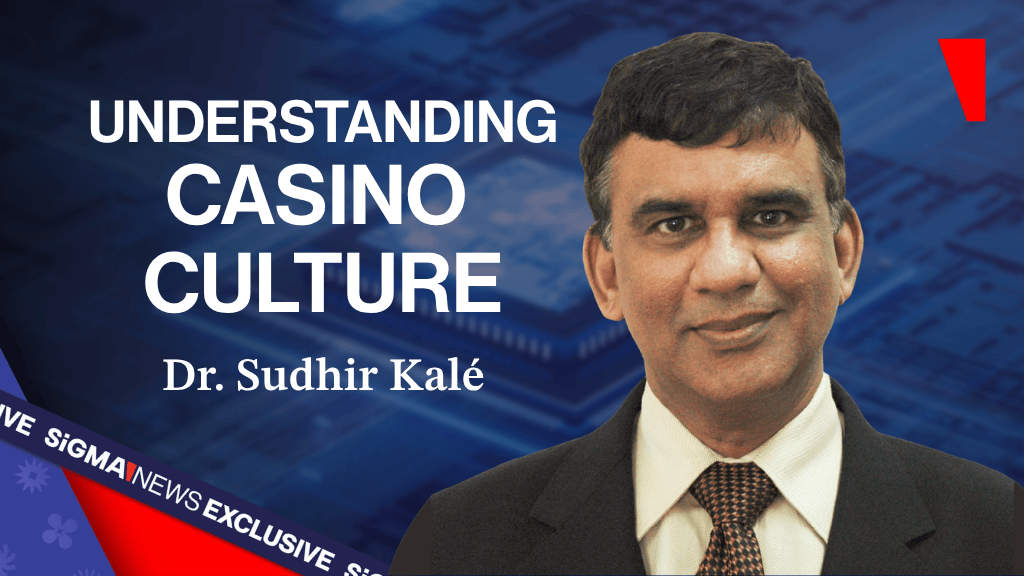
As integrated resorts continue expanding worldwide, from Cyprus to the Philippines, a fundamental shift in organisational culture is reshaping how casinos operate. Dr. Sudhir Kalé, who has consulted with major properties like Marina Bay Sands, Crown Casino, and Galaxy Macau, reveals in an exclusive SiGMA News interview that the industry faces unprecedented challenges that could redefine the very essence of hospitality gaming.
With over 150 published articles on casino marketing and management, Dr. Kalé’s insights paint a picture of an industry grappling with regulatory pressures, technological disruption, and a workforce transformed by the pandemic. His message is clear: the gaming industry must adapt or risk losing what made it successful in the first place.
The evolution of casino culture: from social to task-oriented
The transformation of casino culture didn’t happen overnight. Dr. Kalé identifies three major catalysts that fundamentally altered the industry’s DNA: the Global Financial Crisis, COVID-19, and high-profile regulatory violations that rocked major operators like Crown Melbourne and The Star Entertainment Group.
“What has happened over the years is that the culture all over the world has become more task-oriented as opposed to being social in nature,” Dr. Kalé explains. This shift represents a seismic change from the industry’s roots, where personal relationships and intuitive customer service were paramount.
The globalisation of casino operations has created a shift toward a homogenised culture, with systems developed in the US and policies imported from Australia becoming standard worldwide. While this standardisation brings consistency, it has also contributed to a more rigid, protocol-driven environment that prioritises compliance over customer-centricity..
“There’s more internal emphasis as opposed to external emphasis,” Dr. Kalé. notes, pointing to an industry increasingly focused on internal procedures rather than customer-facing innovation. This inward turn has profound implications for customer experience, as casinos become more concerned with following established protocols than adapting to individual customer needs.
Three warning signs of toxic organisational culture
In his research, Dr. Kalé has identified five critical signs of toxic organisational culture that can severely damage customer experience. These warning signs vary by geography and jurisdiction, but their impact is universally destructive.
Power distance emerges as particularly problematic in Eastern jurisdictions. Dr. Kalé recalls his experience in Macau, where there was little communication between Western executives and the local workforce. His solution was revolutionary for its simplicity: requiring executives to spend two hours on the gaming floor and learn 26 commonly used phrases in Cantonese to be used while interacting with frontline casino staff on the floor. “That created a huge difference in terms of the morale of the employees, because now it is not us versus them anymore,” he explains.
Compliance obsession has become the predominant challenge in Western markets. The shift from “profit before compliance” to “compliance before profits” represents a fundamental cultural realignment. Dr. Kalè cites Crown’s experience, where it took CEO Ciaran Carruthers two years to regain regulatory confidence, ultimately leading to his departure after the cultural overhaul.
Departmental silos remain ubiquitous across all markets. The gaming industry’s notorious division between gaming and hotel operations stems from leadership backgrounds. “Pretty much every person at the top, they either have a gaming background or they have a hotel background,” Dr. Kalé observes. “You seldom have a person that can understand both.”
The hotel side benefits from sophisticated customer interaction models developed by brands like Four Seasons, Shangri-La, and Marriott. Yet when asked to name top casino companies for customer experience, “People will struggle to give you a response,” Dr. Kalé notes, highlighting the industry’s cultural gap.
COVID’s lasting impact on employee expectations
The pandemic didn’t just disrupt operations. It fundamentally altered the relationship between employers and employees. Dr. Kalé describes a “great resignation” where over 40% of hospitality workers expressed intention to leave their positions.
“COVID provided people a time for reflection,” he explains. Employees questioned their work-life balance, career trajectories, and the meaning of their jobs. In an industry characterised by shift work and constant customer interaction, many workers decided they weren’t willing to return to pre-pandemic conditions.
The employer response during COVID proved crucial in determining post-pandemic loyalty. Companies that maintained their workforce through the crisis “did not have any labour shortages afterwards,” Dr. Kalé reports. Conversely, organisations that implemented immediate layoffs discovered that “the bond between the employer and the employee was badly fractured.” This fracture has created a more transactional employment relationship. “If the employer is going to be transactional, then I’m going to be transactional as well,” Dr. Kalé explains, describing how reduced loyalty translates into lower employee engagement and, ultimately, compromised customer experience.
The technology paradox: data rich but information poor
Perhaps no observation is more striking than Dr. Kalé’s assessment of the industry’s relationship with technology: “The irony over the last 15-20 years is we have become data rich, but information poor”.
Modern casinos can track everything from customer emotions through facial recognition to behavioural patterns using Internet of Things technology. Dr. Kalé conducted experiments at The Venetian, testing how music and scent combinations affected customer behaviour.
Yet such technological sophistication comes at a cost. Traditional customer service elements, such as rewards club counters, casino hosts, personal interaction, have been replaced by kiosks and automated systems. “Most companies have done away with their casino hosts,” Dr. Kalé laments. “You don’t need to see a host” because algorithms determine everything from your tier status to your comps and your being invited to various casino events.
This shift misses a fundamental point about land-based gaming: “If you didn’t want to interact with other people, you wouldn’t go to a brick and mortar casino, you would perhaps go online”. The premise that “as far as possible, we don’t want to see the customer” contradicts the very nature of hospitality gaming.
Market consolidation: the loss of personal touch
The industry’s consolidation into four or five companies controlling 90% of global casino business has accelerated the loss of personal connection. Dr. Kalé doesn’t view this concentration positively, despite the economies of scale it provides.
“That reduces the personal touch,” he explains, describing how loyalty executives who once built relationships with individual customers now manage ten different properties. The result is a system where “the loyalty towards the organisation has also diminished” and CEO lifespans have shortened dramatically.
Where casino executives once built 40-45 year careers with single companies, “nowadays, five years is like a life sentence”. This shortened tenure creates short-term thinking focused on immediate stock performance rather than long-term customer relationships.
The rootlessness extends beyond executives to entire brands. Las Vegas Sands, despite its name, no longer operates in Las Vegas. Wynn Resorts generates most revenue from Macau and rather than Vegas. “There’s this feeling of rootlessness amongst everybody,” Dr. Kalé observes, “and that’s all the more reason why people want to belong to somebody, belong to something”.
Looking ahead: three key trends shaping 2025-2026
Dr. Kalé identifies three dominant trends that will define the industry’s near future, each carrying significant implications for organisational culture.
- Technology integration will accelerate beyond current levels. Advances in AI, computer vision, and real-time analytics will provide unprecedented customer insights. However, Dr. Kalé warns against applying “AI at the cost of the personal touch,” noting that companies are “squandering away precious opportunities” for human connection.
- Heightened compliance focus will intensify, driven by international regulatory coordination. Violations in any jurisdiction can now affect global licenses, making compliance “a must” rather than “a nice thing to have”. This requirement will drive more formalised procedures and centralised decision-making.
- Centralised decision-making will become the norm as executives seek greater control following recent industry scandals. The days when pit bosses could approve meal comps based on observation and intuition are ending. “Nobody in the world is authorised to do that” anymore, Dr. Kalé notes, describing the shift toward algorithm-driven customer service.

The twin engines of success: customer experience and employee engagement
Despite the challenges, Dr. Kalé offers a clear path forward through what he calls the “twin engines” of success: customer experience and employee engagement.
His primary recommendation for casino CEOs is direct: “Before you do your senior recruitment, hire a customer experience officer who reports directly to you”. This executive must ensure that “all of your decisions ultimately relate to the customer experience.”
The second engine, employee engagement. requires equal attention. “You can never pay enough attention to employee engagement,” Dr. Kalé emphasises. “The higher the employee engagement, the better the customer experience.”
His most radical suggestion involves restructuring traditional departments: “HR is far too important to be left to HR people”. Instead, he proposes merging HR and marketing into a unified “people department” or “customer department” that treats internal and external customers with equal importance.
The reasoning is compelling: engaged employees stay longer, exceed their job requirements, and speak positively about the company to colleagues and customers. This creates a virtuous cycle where improved employee experience directly enhances customer experience, driving revenue and profitability.
About the Expert: Dr. Sudhir Kalé holds a Ph.D. in Marketing from the University of Illinois and has over two decades of experience in the gaming industry across five continents. He has published over 150 articles on casino marketing and management and has consulted with major properties including Marina Bay Sands, Crown Casino, Wynn Macau, Galaxy Macau, and Mohegan Sun. His customer experience frameworks VICTORS, SMILES, and CLASSIC are widely recognised in the industry.
Subscribe HERE to SiGMA’s Top 10 News countdown and SiGMA’s weekly newsletter to stay up to date with all the latest iGaming News from the world’s iGaming authority, and benefit from subscriber-only offers.


