


Virtual currencies in video games: EU opens debate on child protection and digital competition

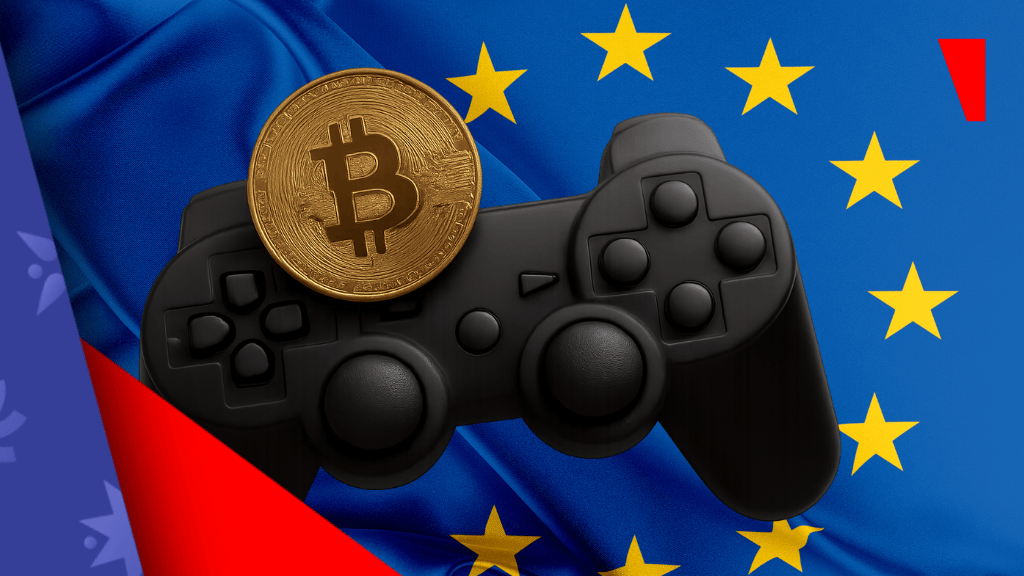
The increasing popularity of virtual currencies in video games has reached the European Parliament, prompting debate over innovation, consumer protection, and safeguarding minors. In a written question, MEP Catherine Griset (PfE) urged the European Commission to take decisive action on the issue, which is reshaping the economics of gaming and evolving into a complex regulatory field. The risks posed to younger users, and the potential distortions of competition caused by global operators based outside the Union, are at the heart of the questions put to the EU executive.
A digital micro-economy that goes beyond play
Virtual currencies such as Robux, which is used on Roblox, allow players to purchase items, customisations, and additional features. Originally designed to enhance the gaming experience, these digital tokens now have a broader function: they can be bought with real money and, in some cases, used across different platforms beyond their original game. This has created genuine micro-economies within games, whose dynamics increasingly resemble those of wider digital markets.
International concerns from the United States to Europe
The fear that these business models may be harmful to children is not limited to Europe. In the United States, federal and state authorities have already filed complaints and initiated legal action against several major online gaming platforms. They cited inadequate child protection measures, the use of manipulative interfaces, and a lack of commercial transparency.
The most high-profile case involves Epic Games, the developer of Fortnite. The Federal Trade Commission fined the company for violations relating to children’s privacy, as well as for using dark patterns that facilitated unintended purchases. Roblox has also been scrutinised by attorneys general and consumer advocacy groups, who have accused the company of failing to ensure the safety of younger users and of not making its monetisation systems sufficiently clear. While not all cases directly address virtual currencies, the broader landscape indicates a digital ecosystem that urgently requires stricter standards to protect its most vulnerable users.
In her parliamentary question, Griset stresses that the system may encourage compulsive behaviour among younger consumers and generate high costs for families, especially when transactions are not transparent or game design encourages repeated purchases. She also warns that virtual currencies could become a tool for harmful manipulation, exposing minors to strong psychological incentives geared towards monetisation.
Digital Services Act and the debate on new rules
In Europe, Griset’s question refocuses attention on the current regulatory framework. The DSA, which came into effect in 2024, introduces binding obligations for online platforms, including greater transparency, restrictions on manipulative practices, and reinforced protections for minors. However, according to experts, the DSA may not fully address the specific challenges posed by virtual economies within games.
Against this backdrop, discussions have emerged around a potential Digital Fairness Act: a legislative package still under consideration that is designed to address regulatory gaps concerning digital mechanisms that influence consumer behaviour. The aim is to tackle persuasive design, deceptive commercial practices, and monetisation models that disproportionately affect minors.
In her written question, Griset asks why the Commission continues to rely on industry self-regulation or incremental measures rather than considering more radical solutions, such as banning virtual currencies in video games aimed at underage audiences. She also raises the issue of competition, noting that many digital currencies are managed by non-EU companies that may benefit from more permissive regulatory environments than European businesses do.
Loot boxes, transparency and new safeguards: Europe looks ahead
The issue of virtual currencies forms part of a broader European initiative aimed at making video games safer for children. In recent months, several European Parliament committees have approved reports recommending stricter rules for online gaming. These include measures against gambling-like mechanisms, such as loot boxes, that are accessible to minors. While these recommendations are not yet legally binding, they signal a clear shift in focus: the sector is under close scrutiny.
Meanwhile, the European network of consumer protection authorities has set out key principles for in-game currencies, urging operators to ensure transparent pricing, clear terms of use, and specific safeguards for young players. Regulators insist that users, especially minors, must be able to recognise when they are making a real-money transaction without the game design obscuring the costs or economic consequences.
A delicate balance between innovation, market dynamics and protection
Catherine Griset’s parliamentary question has added momentum to a crucial debate about the future of Europe’s video gaming market. On one hand, virtual currencies are central to the evolution of modern gaming, supporting innovative business models and enabling increasingly sophisticated digital experiences. However, growing up in a complex and increasingly monetised digital environment can expose minors to psychological, economic, and behavioural risks that institutions cannot overlook.
The European Commission must now respond to the inquiry, clarifying whether it intends to strengthen the current regulatory framework or considers existing tools sufficient. The outcome could have significant consequences for the gaming economy, family protection, and the competitiveness of European businesses in a market dominated by global tech giants.
In a sector where the boundary between entertainment and financial transactions is increasingly blurred, the EU’s ability to strike an effective balance between innovation and the protection of minors will be crucial in building a fairer, safer and more transparent digital environment.
This article was first published in Italian on 19 January 2026.
Be part of the action! Join the world’s biggest iGaming community with SiGMA’s Top 10 News countdown. Subscribe HERE for weekly updates, insider insights, and exclusive subscriber-only offers.


