


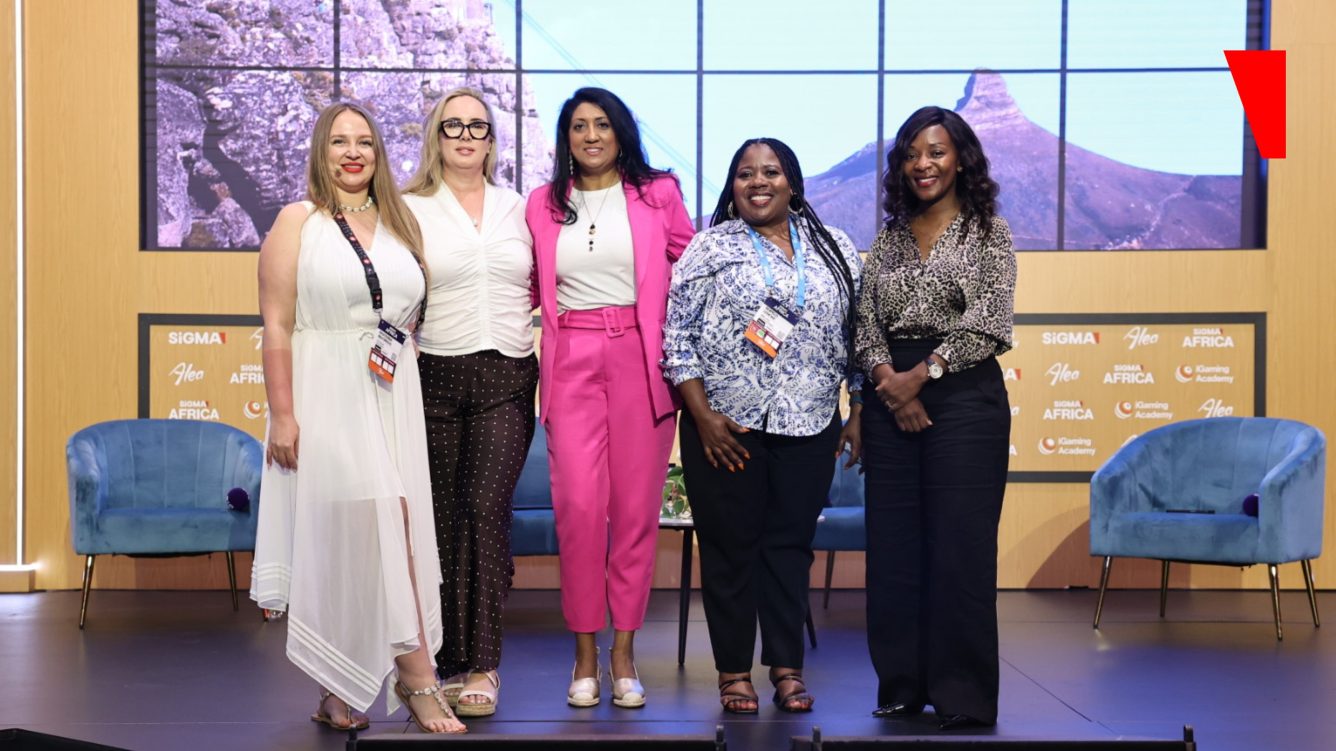
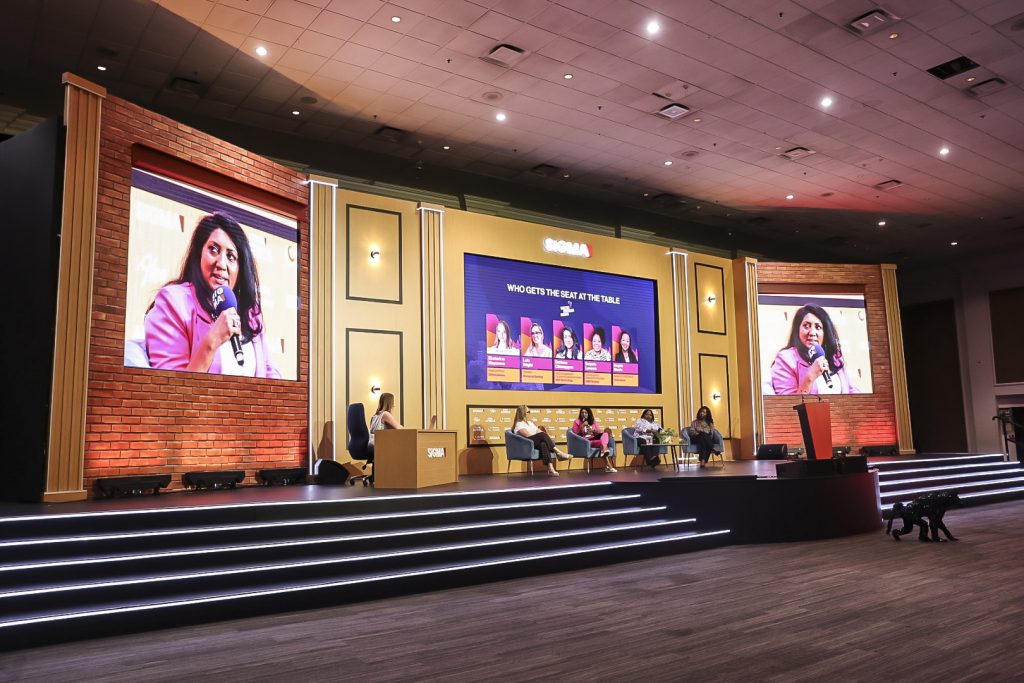
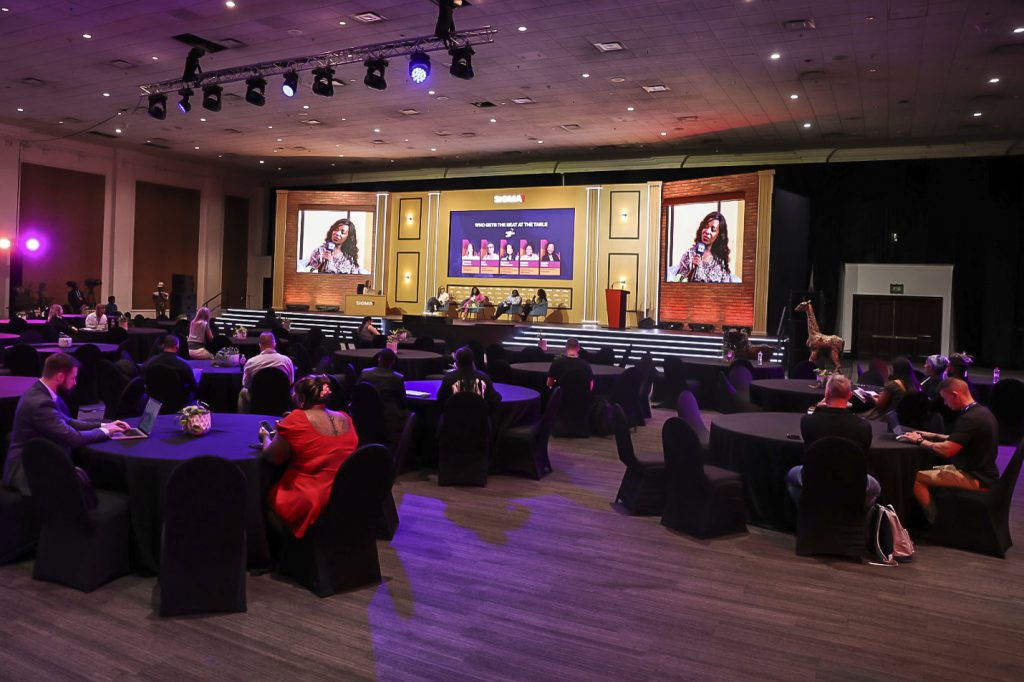
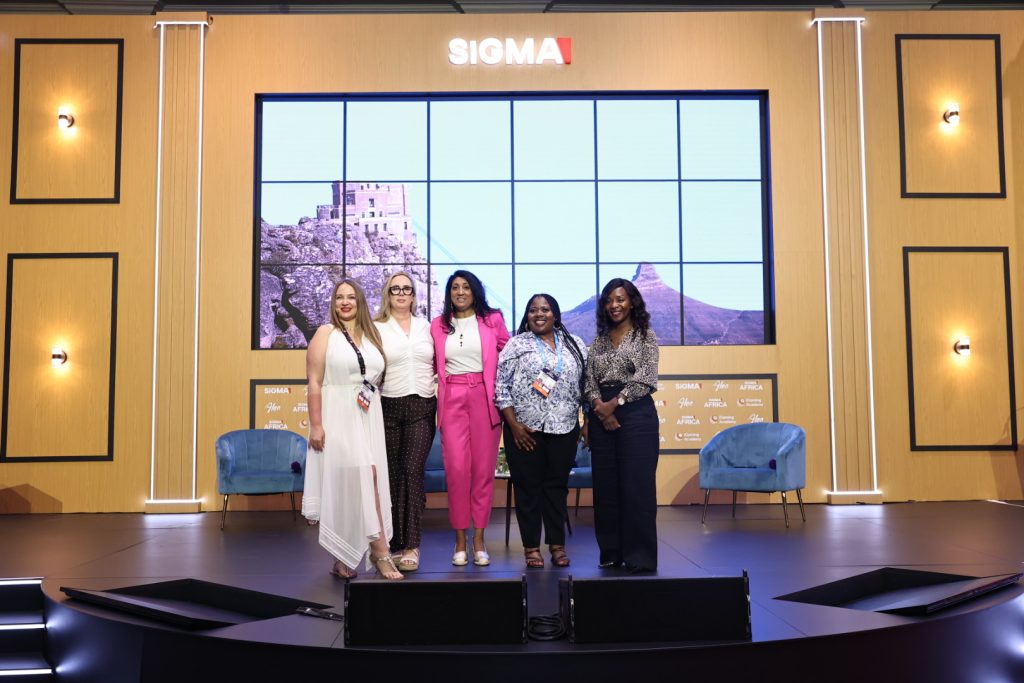
On 05 March, as part of the SiGMA Africa conference in Cape Town, a panel titled “Who gets the seat at the table” took place. Five senior executives discussed who gets access to leadership roles and why, how women’s and men’s career trajectories differ, and how to build long-term leadership. The key takeaways are captured below.
SiGMA Africa 2026 is endorsed by Alea
Who took part in the discussion
- Ekaterina Mayorova (moderator) is Head of Africa at QTech Games. She has more than 14 years of experience in iGaming and technology solutions. In her current role, she is expanding the company’s presence across regional markets and developing partnerships with operators.
- Lois Bright is the Founder of Women in Gaming (WiGA). She has lived on the continent since 2007 and has worked in gaming since 2011. At that time, she recognised the potential and talent of women in the sector and set out to build a supportive community that connects professionals and helps them grow. Today, WiGA is a space for networking, mentorship and collaboration, open to both established leaders and emerging industry talent.
- Denise Chinnappen is a WiGA ambassador and the Founder and Executive Leader of Shift Technology. She is a leader with more than 20 years of experience in strategic management, operational development and scaling organisations in fast-changing environments. Her approach centres on ethical, people-first leadership.
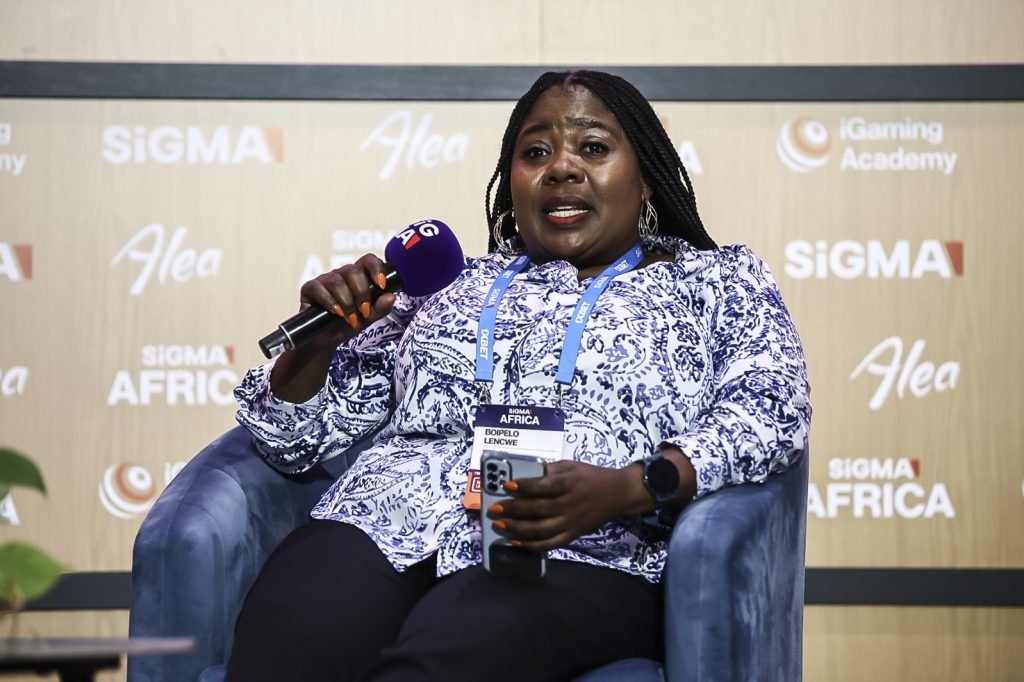
- Boipelo Lenkwe is Licensing and Regulatory Manager at BMM Testlabs. She has more than 20 years of experience in the gambling industry, with a career spanning the full spectrum of the sector – from casino operations to work within regulatory structures. In her current role, she acts as a key link between regulators, operators and technology suppliers, helping drive dialogue and harmonise regulatory requirements in a rapidly evolving gaming environment.
- Angela Mwelu is Senior Vice President for Business Development in Africa at Sharp Vision. She is responsible for building strategic partnerships and implementing technology-led regulatory solutions for the gaming industry across the continent. Her experience spans multiple industries and geographies, from European markets to Sub-Saharan Africa.
1. Participation versus influence
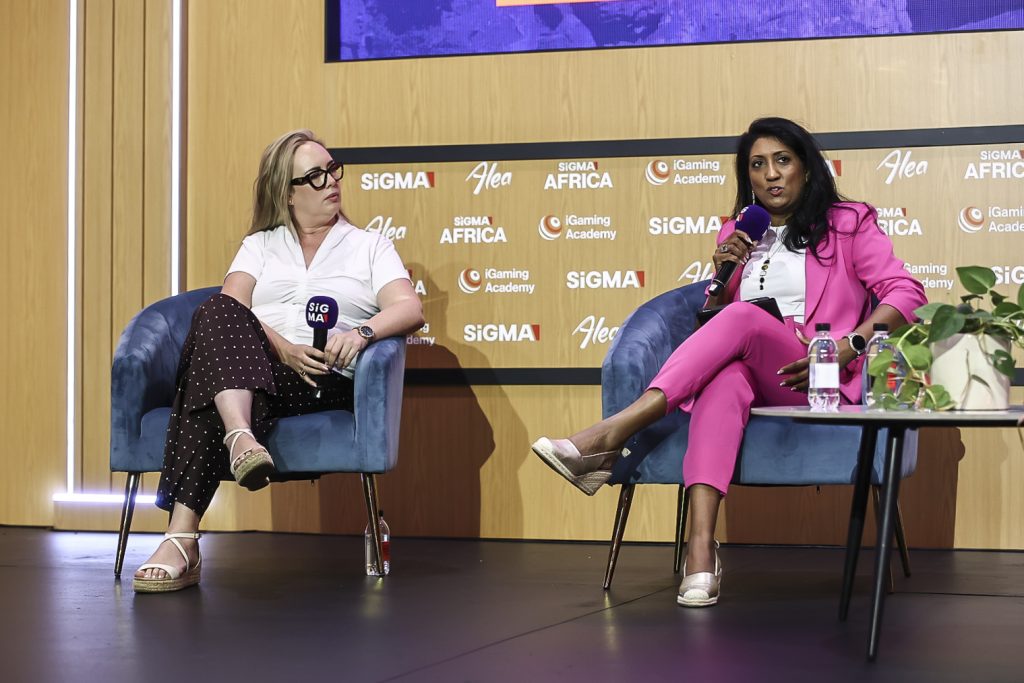
Moderator Ekaterina Mayorova opened with a distinction that set the tone for the panel: you can participate in an industry — attend meetings, join working groups, discuss projects — without gaining access to the rules of the game. Real influence appears only where decisions are made about strategy, capital and growth. So what separates presence from influence?
“Participation is simply being present, but having no control. Influence is the ability to shape decisions and provide meaningful input”
This became the panel’s starting point: if you cannot move a decision, consistent participation in processes remains largely decorative.
2. Where power is concentrated
So where does real influence sit? Denise Chinnappen suggested not focusing on titles — they do not automatically confer power — and instead looking at who manages risk and capital, sets strategic priorities and allocates budgets. In this framing, a voice is earned by those who shape financial decisions and influence how a company takes risk.
Speakers agreed that it is possible to enter these spheres of influence, but staying there depends on the value a person brings — strategic thinking, responsible judgement and the ability to solve problems consistently.
3. The senior-role bottleneck
The panel then moved to hiring realities. Drawing on her recruitment experience across Africa, Lois Bright said the problem is often not access to the industry, but access to senior roles. When companies hire at C-level, there are fewer women already visible in leadership, and candidate shortlists become male by inertia. This creates the gap: women’s participation is visible, but influence concentrates at the top level where they reach less often.
4. Men and women: what differs
Prompted by Ekaterina Mayorova, the discussion turned to imposter syndrome and how it shapes behaviour. Speakers agreed they often see a clear imbalance: men are more likely to accept a new role even when they feel only partially ready, while women tend to wait until they feel close to fully prepared — and as a result, compete for top roles later and less frequently.
“Statistics show that men will raise their hands for a new role when they are 60 to 80 percent ready. Women, however, often won’t even consider it at the 70 percent mark, let alone 100 percent”
That behavioural shift directly affects who enters the decision space earlier and who arrives later. The panellists agreed that it becomes critical to “raise your hand” at around 70% confidence.
5. Influence can be learned
So what helps capable, proactive women reach the top more often? The panel closed on mechanisms. Angela Mwelu used a product analogy: teams typically do not wait for an idea to be ideal before launching — they ship, iterate and learn from feedback. Careers, she argued, should be approached the same way.
“When you have an idea, you don’t wait for it to be perfect before you launch. The same principle should apply to professional roles as well”
Speakers also noted that supportive communities and mentorship can drive momentum by providing contacts, bringing people closer to deals and opening new career opportunities. The remaining step for businesses is to invest in leadership tracks and corporate sponsorship so the pipeline of future executives becomes wider and stronger.
About Alea
Alea is an iGaming platform that helps casino operators bring content and providers into a single ecosystem through one integration. The company focuses on transparency and technological resilience, building infrastructure suited both to major markets and to regions where the industry is still gaining momentum. Africa currently holds a special place in Alea’s strategy. As the general partner of SiGMA Africa 2026, Alea supports the summit’s goal of building a sustainable ecosystem and strengthening industry ties across the continent.
A new frontier rises beneath the skyline of São Paulo. From 06–09 April 2026, BiS SiGMA South America transforms LatAm’s gaming capital into a hub of innovation, bold talks, and billion-dollar opportunity. Don’t sit this one out.


