
What Is EV Betting? Ultimate Guide for 2026

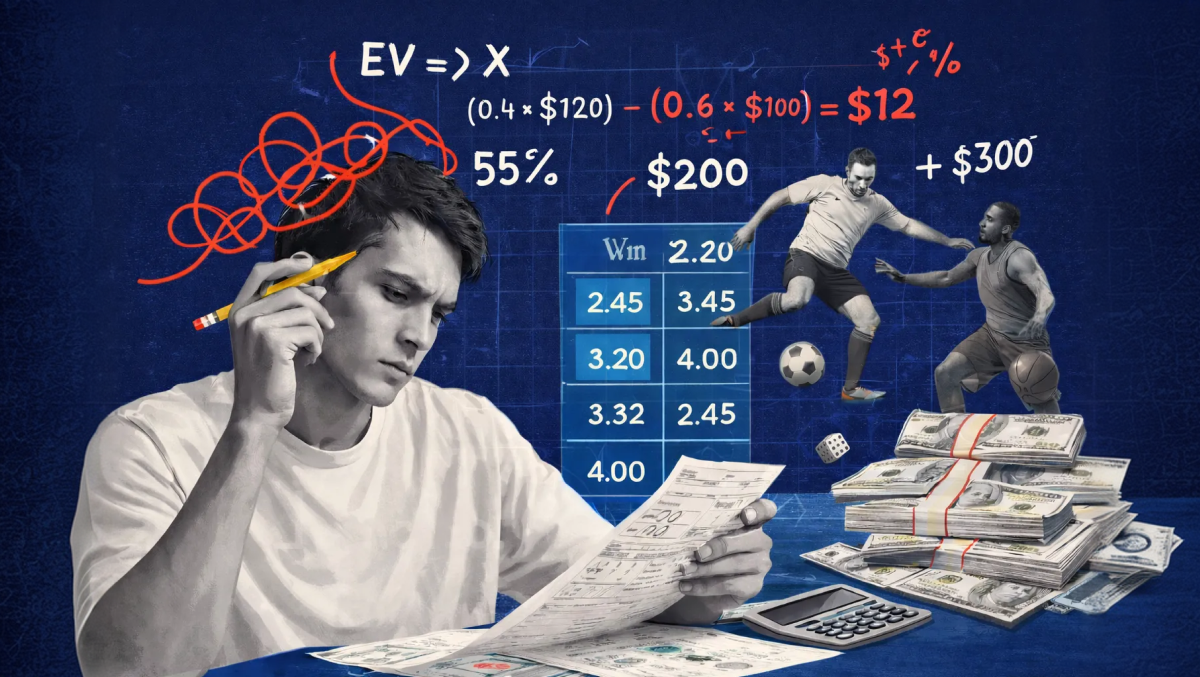
Most bettors lose for one reason. They ask the wrong question. They focus on who will win. That feels logical. It is also what sportsbooks want you to focus on. Sharp bettors think differently. They ask one thing. Is this bet profitable over time. That single shift changes everything. It turns betting from guessing into decision-making. EV betting is built on that idea. Every bet is judged by its long-term value, not by whether it wins today. A losing bet can still be the right move. A winning bet can still be a mistake. This guide shows you how EV betting works, how to spot real edges, and how to apply it without overcomplicating the process.
- 01. What is EV Betting?
- 02. What is EV in Sports Betting?
- 03. How to Calculate Expected Value: The EV Betting Formula
- 04. Implied Probability and Removing the Vig
- 05. What is a Good EV in Sports Betting?
- 06. The Importance of Closing Line Value
- 07. 6 Easy Steps to Start EV Betting
- 08. EV Betting vs. Arbitrage Betting vs. Matched Betting
- 09. Where to Find the Best EV Betting Opportunities
- 10. Is EV Betting Legal and Worth It?
- 11. Where This Leaves a New Bettor in 2026
What is EV Betting?
At its foundation, EV betting refers to expected value betting, a critical concept in modern sports wagering. Expected value is a quantifiable metric that demonstrates the average worth of a bet if the same situation were to occur repeatedly across many iterations.
Consider this perspective carefully. While a single isolated bet may appear entirely random, much like the outcome of a coin toss, EV reflects whether the underlying probability is tilted systematically in one direction across numerous bets. If mathematical analysis indicates that a bet returns more capital than it costs over an extended timeframe, it possesses positive EV betting. Conversely, if the analysis suggests that consistent losses would accumulate over time, it carries negative EV.
Sportsbooks maintain profitability not by demonstrating superior predictive ability compared to everyone else, but rather by setting odds in such a way that the majority of bets placed by customers carry negative EV from the bettor’s perspective. EV betting fundamentally inverts this traditional logic. Rather than relying on intuition or emotion, it prioritises long-term value creation. This methodology proves important because it fundamentally reorients objectives from “achieving a win today” to “making mathematically sound decisions consistently.” This mental and strategic shift alone substantially influences how bets are identified, sized, and meticulously tracked over time.
What is EV in Sports Betting?
To fully grasp what EV means in betting, it is essential to understand the distinction between positive expected value (+EV) and negative expected value (-EV). The same principles apply to major sporting events, including EV betting on the Super Bowl, where bettors constantly compare implied probability against market pricing.
| Positive EV (+EV) | Negative EV (-EV) | |
| What it means | The true probability of winning is higher than the probability the sportsbook’s odds imply. | The true probability of winning is lower than the probability the sportsbook’s odds imply. |
| Long-term outcome | Mathematical profit over a large sample of bets. | Mathematical loss over a large sample of bets. |
| Simple example | A coin flip pays you $120 for Heads and costs $100 for Tails. | A coin flip pays you $100 for Heads and costs $120 for Tails. |
| Who bets this way | Sharp bettors, professionals, EV bettors. | The majority of recreational bettors — by design. |
How to Calculate Expected Value: The EV Betting Formula
Understanding the math behind EV betting is crucial for identifying profitable opportunities. The expected value formula calculates the average amount you can expect to win (or lose) per bet if you placed the exact same wager repeatedly.
The standard EV betting formula is:
(Probability of Winning × Potential Profit) – (Probability of Losing × Stake) = Expected Value
To illustrate this, let us examine a practical EV betting example using American odds. Suppose you are evaluating a moneyline bet on the Chicago Bears at +130 odds. You plan to wager $100. Based on your analysis or a sharp sportsbook’s lines, you determine the Bears have a true 45% probability of winning.
Expected Value Breakdown
The math behind whether a bet is worth placing
For every $100 wagered at +130 odds with a 45% win probability, the expected return is +$3.50 per bet over the long run.
Note
Implied Probability and Removing the Vig
Before you can accurately calculate expected value, you must understand how to use probability in sports betting. Sportsbooks do not offer true odds; they include a built-in profit margin known as the vigorish, or "vig" (also called juice).
When a sportsbook prices a standard point spread at -110 for both sides, the implied probability of each side winning is 52.38%. If you add these probabilities together (52.38% + 52.38%), the total is 104.76%. That extra 4.76% represents the sportsbook's theoretical hold or profit margin.
To find the true probability of an event, you must remove the vig from the sportsbook's odds. This process, often facilitated by a no-vig fair odds calculator, reveals the actual baseline probability the market assigns to an outcome. Once you have the vig-free probability, learning how to find the best betting odds across sportsbooks helps identify positive EV betting opportunities. If another sportsbook offers odds that imply a lower probability than the vig-free baseline, you have found a +EV bet. Understanding the relationship between spread betting and EV betting can also help bettors identify how pricing inefficiencies develop across point spreads and market lines.
Real Sportsbook Example: Applying Vig Removal to Find a +EV Bet
Let’s apply this to a real sportsbook scenario.

- ✓ Competitive odds with low vig
- ✓ Same-game parlays & live betting
- ✓ Fast payouts & easy line shopping
What is a Good EV in Sports Betting?
The classification of "good" EV depends substantially on individual circumstances, including betting volume, bankroll size, and personal risk tolerance parameters.
As a practical reference guide:
- 1% to 2% EV represents a modest opportunity but becomes highly meaningful when applied systematically at scale across hundreds of bets.
- 3% to 5% EV demonstrates strong value and typically proves short-lived in competitive markets as sharp bettors quickly wager on these lines, forcing sportsbooks to adjust.
- Above 5% EV frequently disappears rapidly in efficient markets. While highly desirable, these massive edges often carry elevated risk factors or indicate potential errors in your probability assessment.
Most experienced professional bettors actually prefer lower EV opportunities that they can execute repeatedly and frequently. Exclusively pursuing only the most substantial EV opportunities may sound appealing initially, but ultimately leads to disappointment and missed consistent profit opportunities.
Throughout extended periods, maintaining steady decision-making habits produces superior results compared to pursuing isolated, rare high-risk scenarios. Sustained consistency ultimately outperforms dramatic single plays.
The Importance of Closing Line Value
In the realm of EV analytics, Closing Line Value (CLV) is widely considered the most accurate metric for evaluating a bettor's long-term expected profitability. The closing line represents the final odds offered by a sportsbook immediately before an event begins. Because these odds have been shaped by the maximum amount of market information and sharp betting volume, they are generally the most accurate reflection of true probability.
If you consistently place bets at odds that are better than the closing line, you are generating positive CLV. For example, if you bet the Kansas City Chiefs at -3 (-110) on Tuesday, and the line closes on Sunday at -4.5 (-110), your bet has significant CLV. Consistently beating the closing line is closely tied to understanding line movement in sports betting and identifying value before markets adjust. This same approach is commonly applied to major golf tournaments, including EV betting on The Masters 2026, where outright odds and player pricing can shift significantly throughout tournament week.
6 Easy Steps to Start EV Betting
Mastering EV betting as a newcomer becomes significantly more manageable when you break the process into distinct, actionable steps. The following framework transforms abstract concepts into concrete practices that you can implement immediately in your betting activities.
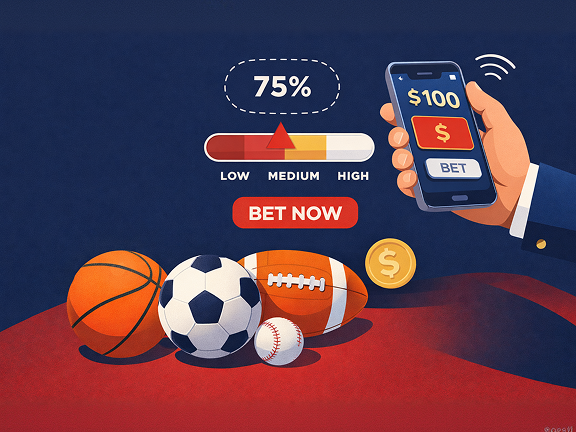
Odds reflect probability. Bet only when your estimated probability exceeds implied odds.
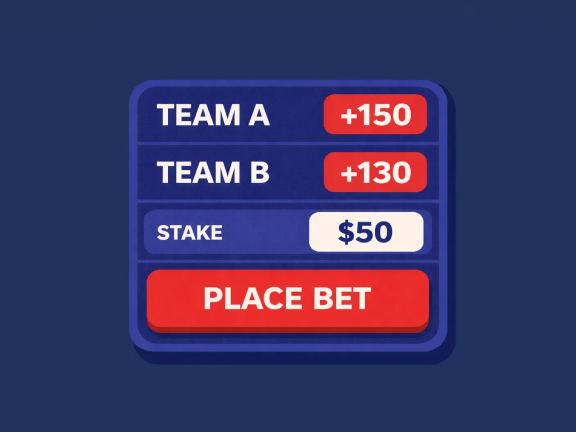
Sharp sportsbooks provide the most accurate market lines. Treat them as true probability.
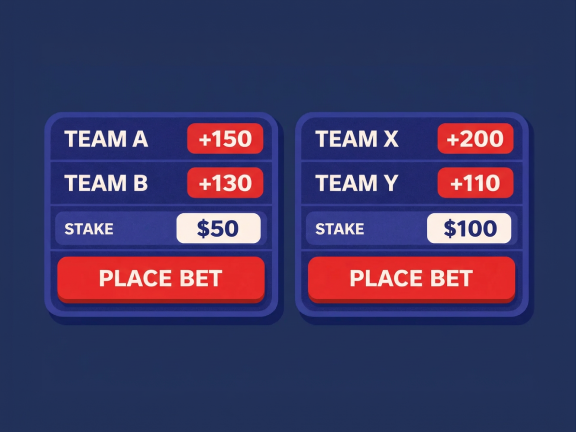
Value appears when a soft sportsbook's odds imply a lower probability than the sharp market baseline.

Use an EV calculator to confirm your edge before placing any bet.
Use structured staking like fractional Kelly. Expect losing streaks and stay disciplined.

Track CLV, not short-term profit. Use rounded bets and mix in casual wagers to avoid limits.
Note
EV Betting vs. Arbitrage Betting vs. Matched Betting
While EV betting is a powerful strategy, it is often confused with other mathematical betting approaches. Understanding the distinctions is crucial for selecting the right methodology for your goals.
| Strategy | Definition | Risk Level |
| EV Betting | Wagering on outcomes where the odds offer a higher implied probability than the true probability. | Moderate (Subject to variance) |
| Arbitrage Betting | Placing opposing bets on all possible outcomes of an event across different sportsbooks to guarantee a profit regardless of the result. | Very Low |
| Matched Betting | Utilizing sportsbook promotions (like bonus bets) and hedging them against opposing outcomes to extract guaranteed cash. | Very Low |
Where to Find the Best EV Betting Opportunities
Certain sports and bet types, including EV betting on the Indianapolis 500, offer strong positive EV opportunities because market inefficiencies often appear across outright and prop betting markets.
-
Player Props
Player proposition bets (e.g., total passing yards, total rebounds) are notoriously difficult for sportsbooks to price perfectly. Because limits are lower and the market is less efficient than major moneylines, player props are a goldmine for +EV bettors.
-
Live Betting
In-game odds change rapidly based on real-time events. US live Sportsbooks rely heavily on automated algorithms for live betting, which can sometimes lag behind the actual flow of the game, creating brief windows of massive +EV.
-
Smaller Markets
Niche sports (like tennis, MMA, or international soccer leagues) receive less betting volume and less scrutiny from oddsmakers compared to the NFL or NBA, leading to softer lines and more frequent EV opportunities.
Is EV Betting Legal and Worth It?
Yes, EV betting is entirely legal in any jurisdiction where sports betting is permitted. It is simply a mathematical approach to evaluating odds; you are not manipulating the games or violating any laws.
Is it worth it? For individuals willing to embrace a disciplined, data-driven approach, EV betting demonstrates genuine profitability potential. It requires treating sports betting as an investment portfolio rather than a form of entertainment. While it offers no guarantees of expedited profits, it authentically provides mathematical fairness in an industry fundamentally constructed around profit margins. By consistently identifying and exploiting positive expected value, bettors can systematically turn the odds in their favor.
Common EV Betting Mistakes to Avoid
Even bettors who intellectually understand the concept of expected value frequently undermine their own results by making avoidable errors. The following mistakes are among the most common and most damaging.
Ignoring the vig when calculating EV
Abandoning the strategy during variance
Chasing high-EV bets exclusively
Neglecting account management
Relying solely on one sportsbook
Where This Leaves a New Bettor in 2026
Identifying an edge across the best betting sites is only the first step; EV betting itself is not a hidden competitive advantage or magic solution. Rather, it represents a fundamental mindset transformation. It demands patience in an environment designed to accelerate rushed decisions. It rewards deliberate, calm thinking during moments specifically engineered to provoke emotional reactions.
The truly relevant question is not whether EV betting contains mathematical validity. The authentic question becomes whether maintaining commitment to a sound, disciplined process feels more rewarding than chasing the emotional satisfaction of being correct on any particular day.
Most bettors discover their answer to this question only after accumulating experience across approximately one hundred wagers.
FAQs
EV stands for Expected Value. In betting, EV represents the average amount you can expect to win or lose per wager if the same bet were placed repeatedly under identical conditions. A positive EV (+EV) bet is one where the true probability of winning exceeds the probability implied by the sportsbook’s odds.
Positive EV betting (also called +EV betting) is the practice of only placing wagers where the mathematical expected value is positive — meaning the odds offered are better than the true probability of the outcome warrants. Over a large sample of bets, this strategy is expected to generate a net profit.
Use the formula: (Probability of Winning × Potential Profit) – (Probability of Losing × Stake). For example, a $100 bet at +150 odds on an outcome you believe has a 45% true probability: (0.45 × $150) – (0.55 × $100) = $67.50 – $55.00 = +$12.50 EV.
An implied probability calculator converts sportsbook odds into a percentage probability. For American odds, the formula for positive odds is: 100 / (Odds + 100). For negative odds, it is: |Odds| / (|Odds| + 100). An implied probability calculator also typically removes the vig to show the “true” market probability.
Closing Line Value (CLV) measures whether the odds you bet at were better or worse than the final odds offered by the sportsbook just before the event began. Consistently beating the closing line is the strongest evidence that your bet selection process is generating genuine +EV.
Yes, EV betting is completely legal in all US states where sports betting is permitted. It is a strategic and mathematical approach to wagering, not a form of cheating or manipulation.
EV betting involves placing a single wager where the odds are favorable relative to the true probability, accepting variance as part of the process. Arbitrage betting involves placing opposing bets on all outcomes of an event across different sportsbooks to guarantee a small profit regardless of the result, eliminating variance entirely. EV betting has higher profit potential; arbitrage betting has lower risk.
The Kelly Criterion is a bankroll management formula that calculates the optimal percentage of your bankroll to wager on a given bet based on your perceived edge. The formula is: Kelly % = (Edge / Odds). Most bettors use “fractional Kelly” (betting a fraction of the full Kelly recommendation) to reduce variance and the risk of ruin.
Player props across all major sports (NFL, NBA, MLB, NHL) are generally considered the most accessible source of +EV for recreational bettors due to less efficient pricing. Tennis, MMA, and international soccer leagues also offer frequent opportunities due to lower market liquidity and less sophisticated oddsmaking.
To extend the lifespan of your sportsbook accounts, avoid always betting the maximum, round your bet sizes to natural numbers, occasionally place small recreational bets (parlays, futures), spread your action across many sportsbooks, and avoid betting exclusively on lines that are moving in your direction.
Positive and negative betting odds (e.g., +150 vs. -150) simply indicate whether you are betting on an underdog or a favorite, and how much you win or risk. EV betting is a separate concept: it refers to whether the value of the odds offered is favorable relative to the true probability of the outcome, regardless of whether the odds are positive or negative.
Yes, and new betting sites often represent excellent EV betting opportunities. Newly launched sportsbooks frequently offer aggressive promotional bonuses (which create instant +EV), and their oddsmaking teams may be less sophisticated initially, leading to softer lines. Always verify that a new sportsbook is licensed and regulated in your state before depositing.
Related Posts


