


Amazon Slots case: Amazon distances itself, ADM confirms “not authorised”

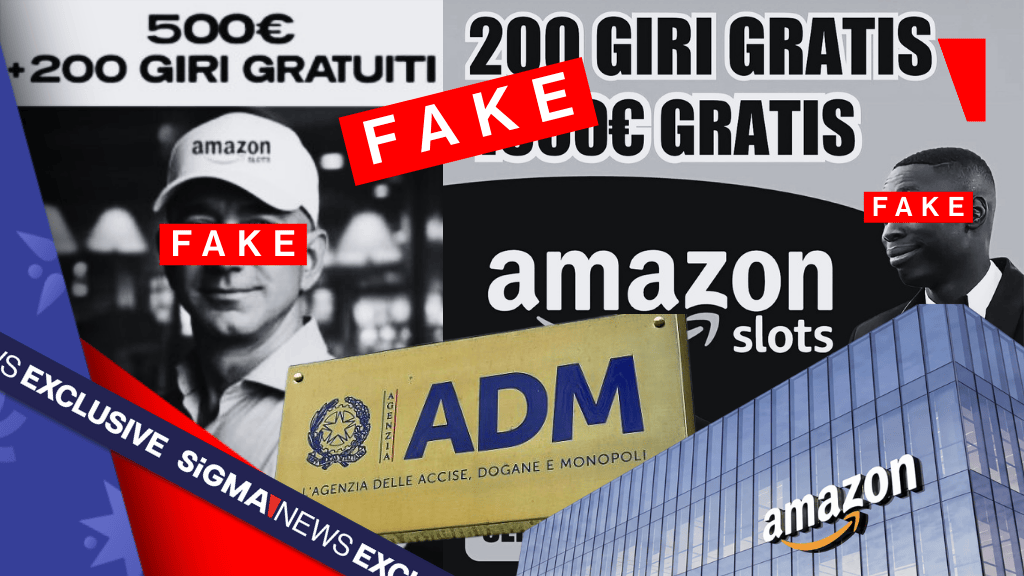
Following the publication of SiGMA News’ investigation into “Amazon Slots” – the alleged online gambling platform using the Amazon brand and the images of Jeff Bezos and Khaby Lame to promote bonuses and slot games on social media – the first official responses have now arrived.
These responses clarify a central point: “Amazon Slots” is not Amazon and it is not an authorised operator to offer remote gambling services in Italy.
The fraudulent use of global brands to promote illegal gambling platforms represents one of the most insidious threats to the regulated iGaming market. The “Amazon Slots” case is emblematic of a phenomenon that goes far beyond a single suspicious operation, raising questions around compliance, enforcement and the responsibility of digital platforms.
Sponsored advertisements, circulated in Italian on Facebook and Instagram, promoted (and continue to promote) an alleged online casino called “Amazon Slots”, using graphics almost identical to Amazon’s branding and manipulated images of Jeff Bezos and influencer Khaby Lame as fake endorsements. Aggressive claims such as “no-deposit bonuses” and “free spins” completed a communication strategy designed to convey credibility and official status.
A communication strategy which, as confirmed by both the authorities and the company involved, is fraudulent.
Amazon: no connection with “Amazon Slots”
When asked about the case, Amazon issued a clear denial: the company has no relationship whatsoever with “Amazon Slots” or “Amazon Slot” and has not authorised, in any form, the use of its brand or the image of its founder, Jeff Bezos, to promote online gambling services.
Amazon also reiterated its commitment to combating digital fraud and identity theft, stressing that the unlawful use of its brand falls squarely within practices that undermine consumer trust and damage the wider digital ecosystem. This further confirms the deceptive nature of the operation and clarifies that the e-commerce giant is a victim in this case.
ADM: “Amazon Slots” is not an authorised operator
From a regulatory perspective, the response from the Italian Customs and Monopolies Agency (ADM) is equally unequivocal. The Authority confirmed that the brands “Amazon Slots” and “Amazon Slot” do not appear among the operators authorised to offer remote gambling in Italy. The official list of licensed operators, published on the Agency’s website, remains the only valid reference for identifying authorised entities.
ADM also stated that it has detected the online presence of content linked to the “Amazon Slots” name and has initiated the technical and legal checks required under the current regulatory framework. Enforcement actions may include reports to AGCOM, the Italian Communications Regulatory Authority, sanctioning procedures and, where applicable, the blocking of websites operating without a licence, as well as direct engagement with digital platforms to request the removal of unlawful content.
How to report and protect yourself: ADM’s operational guidance
In its response, ADM also provided specific guidance on how users and operators can report illegal gambling activity and protect themselves from unauthorised platforms. In particular, the Agency notes that:
- • it is possible to request information or submit reports via ADM’s institutional portal, using the online Public Relations Office (URP) and completing the dedicated URP form;
- • illegal gambling websites can be reported directly to the dedicated certified email address (PEC): [email protected];
- • complaints relating to authorised licensees (and not for reporting illegal sites) can be submitted via the PEC [email protected];
- • where there are suspicions of fraudulent activity, or where a user believes they have been the victim of a scam or attempted fraud, it is possible to contact law enforcement authorities, in particular the Postal Police for cybercrime, as well as the State Police or Carabinieri for formal complaints.
This is a significant point, as it reinforces that combating illegal gambling is not solely a matter of institutional enforcement, but also requires awareness and cooperation from users and licensed operators alike.
Brand impersonation: a systemic threat to the regulated market
The “Amazon Slots” case highlights a deep-rooted issue for the regulated iGaming industry: brand counterfeiting as a marketing lever for illegal offerings. The use of global brands and highly recognisable public figures allows unauthorised operators to “borrow” trust, bypassing users’ natural scepticism and positioning themselves, at least superficially, on the same level as legitimate operators.
For the regulated market, the damage is twofold. On one hand, consumers are exposed to non-transparent and potentially fraudulent offers; on the other, licensed operators are forced to compete in a deeply asymmetrical environment, constrained by strict compliance obligations and advertising bans that illegal operators systematically ignore.
The digital platforms dilemma
A further critical issue concerns the role of digital advertising platforms. In Italy, advertising for gambling with cash prizes has been banned since the 2018 Decreto Dignità, yet campaigns linked to unauthorised operators continue to circulate through automated advertising systems.
ADM has confirmed that it operates in coordination with AGCOM and maintains technical dialogue with major platforms to flag unlawful content and request its removal. However, the “Amazon Slots” case illustrates how enforcement remains largely reactive, while the phenomenon evolves rapidly by exploiting brand recognition, artificial intelligence and algorithm-driven advertising dynamics.
Beyond a single case
“Amazon Slots” is not merely a case of unauthorised brand use. It exemplifies how illegal gambling is refining its strategies, eroding user trust and distorting competition within the regulated market.
For the iGaming industry, the challenge goes beyond curbing illegal supply. It also involves developing effective mechanisms to prevent brand impersonation practices that place increasing pressure on regulators, licensed operators and digital platforms. A challenge set to remain central to the compliance and advertising debate in the years ahead.
This article was first published in Italian on 12 December 2025.
Be part of the action! Join the world’s biggest iGaming community with SiGMA’s Top 10 News countdown. Subscribe HERE for weekly updates, insider insights, and exclusive subscriber-only offers.


