
Balancing compliance and innovation in high-risk industries

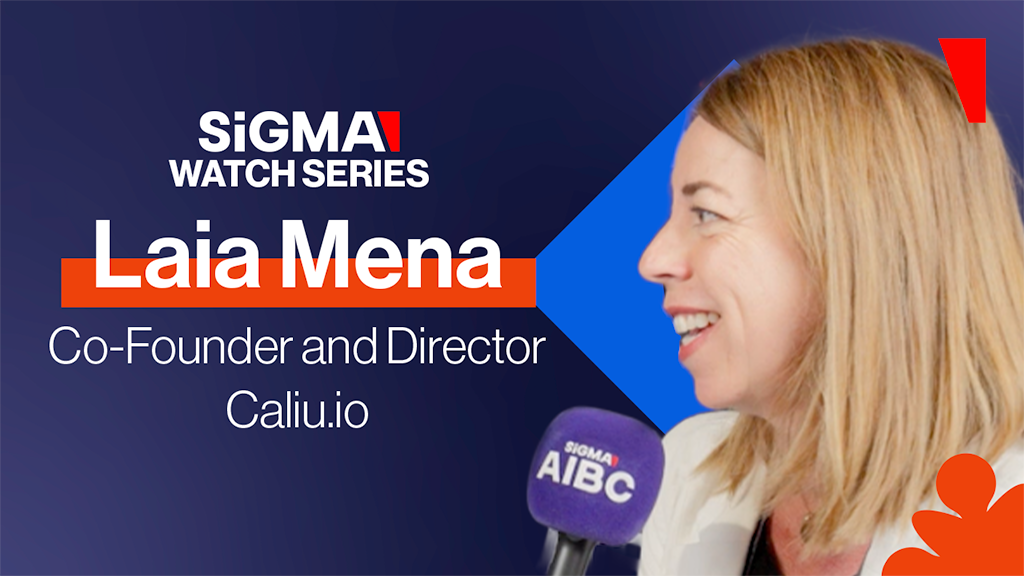
In an interview with SiGMA World at SiGMA Rome, Laia Mena, Co-founder and Director at Caliu, shared insights on high-risk industries. Laia tells us that Caliu’s specialised approach to high-risk industries helps it transform operational challenges into strategic opportunities. In addition, it ensures long-term growth by identifying key payment methods and partnerships to expand their operations successfully into new markets. Laia also acknowledges that compliance with a market‘s regulatory regime and an innovative business partner who can adapt well to different company structures are essential.
How to balance compliance with market demand
“Innovation is for the brave, and you need to take risks,” says Laia. Often, operators will be required to find a workaround while maintaining market compliance, and that does involve risk. The demand for compliance will slow down the enthusiasm to keep being innovative because it may feel strenuous.
Laia believes that, regardless of these limitations, it is possible to balance innovation and the introduction of new things while still playing within the compliance zone. Operators should look at compliance as an enabler rather than a barrier for successful operations.
Solutions operators can adapt in Italy’s rapidly digitalising market
Regulation in Italy is currently costly, as well as any shift from land-based to digital operations, which may be an issue that slows down progress for operators. The adoption of new payment platforms for users also poses its own challenges; the change from cash to online payments and using local APMS like MyBank.
“Many market operators would transition to digital platforms, and then the implementation of new regulations would follow. But in this case, everything is evolving together, calling for additional capital all around,” Laia pointed out. Slowing down operations to give themselves time to adapt to the new market structure may be the best course of action for operators.
Trends that will redefine high-risk industries in the future
Laia emphasises once more that adding capital to any operations moving forward should be a priority. She also points out that “AI is going to be a major player within the industry’s transition in the future, inclusive of high-risk industries.” There are plenty of AI tools that are significant to have, for example, fraud prevention tools and user behaviour analytics tools. Such tools, among many others, are the reason why more capital is necessary for success.
AI adoption is set to redefine how the iGaming industry works. From the picture Laia paints, AI is more than simple tasks like content creation. It is slowly being adopted by operators, service providers, and even regulators within and outside high-risk industries. It is not only bound to make work easier, but also efficient.
In conclusion, Laia Mena’s insights highlight that success in high-risk industries depends on strategic patience, adequate capital, and adaptable partnerships. By treating compliance as a foundation rather than a constraint, operators can innovate responsibly while meeting regulatory demands. As digitalisation and AI reshape the sector, operators who invest wisely and evolve steadily will secure sustainable growth.
Stay ahead of iGaming’s biggest stories with SiGMA’s Top 10 News countdown. The world’s biggest iGaming community brings you weekly insights and subscriber-only offers. Join HERE today.


