


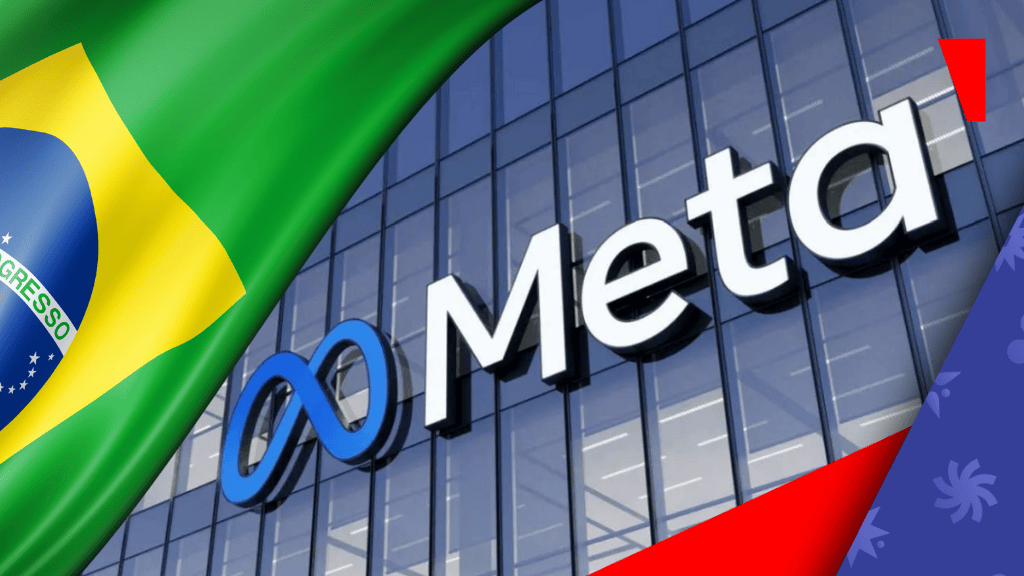
Brazil’s Attorney General’s Office (AGU) has ordered Meta, the parent company of Facebook and Instagram, to remove all advertisements linked to unauthorised betting operators within 48 hours. The decision came after the National Prosecutor’s Office for the Defence of Democracy (PNDD) identified hundreds of active ads published by profiles lacking ministerial authorisation.
Gambling legislation in Brazil
The regulatory framework is defined by Law No. 14,970/2023 and Ordinance No. 1,207/2024 issued by the Ministry of Finance. These stipulate that fixed-odds betting can only be offered by licensed operators and through domains ending in “.bet.br”. Any activity outside of these conditions is deemed illegal, and related advertising campaigns constitute a violation of the law.
The risks linked to illegal gambling
According to the AGU, the spread of ads from unauthorised operators is far from a minor issue; it may conceal serious crimes such as tax evasion, money laundering and fraud against consumers. For this reason, Brazilian authorities are tightening the pressure on digital platforms, which are now seen as an integral part of the chain of responsibility.
The Supreme Court ruling and the new landscape
A decisive turning point came with the Federal Supreme Court (STF) ruling of 26 June 2025, which declared Article 19 of the Marco Civil da Internet partially unconstitutional. This ruling established that digital platforms can be held liable for illegal paid content, unless they prove they acted swiftly to remove it.
Meta’s position and AGU’s criticism
Meta has reiterated that its policies already prohibit unauthorised gambling advertising and that internal checks have been strengthened. However, the AGU maintains that these controls are still inadequate and contain too many “loopholes”, allowing irregular adverts to continue circulating.
Growing restrictions on gambling advertising
This measure comes in the midst of an already heated climate. In May, the Brazilian Senate approved new restrictions on gambling advertising which include a ban during live sports broadcasts, a total prohibition in print media, strict time limits for TV and radio, and the exclusion of famous personalities such as athletes and influencers from campaigns. The measures, now under consideration by the Chamber of Deputies, have triggered protests among licensed operators who fear negative effects on the regulated market and a strengthening of the black market.
A difficult balance to strike
The action against Meta is not merely an administrative step, but a powerful political and legal signal. On one hand, it seeks to reinforce controls against illegal gambling; on the other, it aims to protect licensed operators already burdened by an increasingly strict regulatory framework. The future of gambling regulation in Brazil will now depend on striking a balance between consumer protection and market stability, at a time when big tech companies face unprecedented judicial pressure.


