

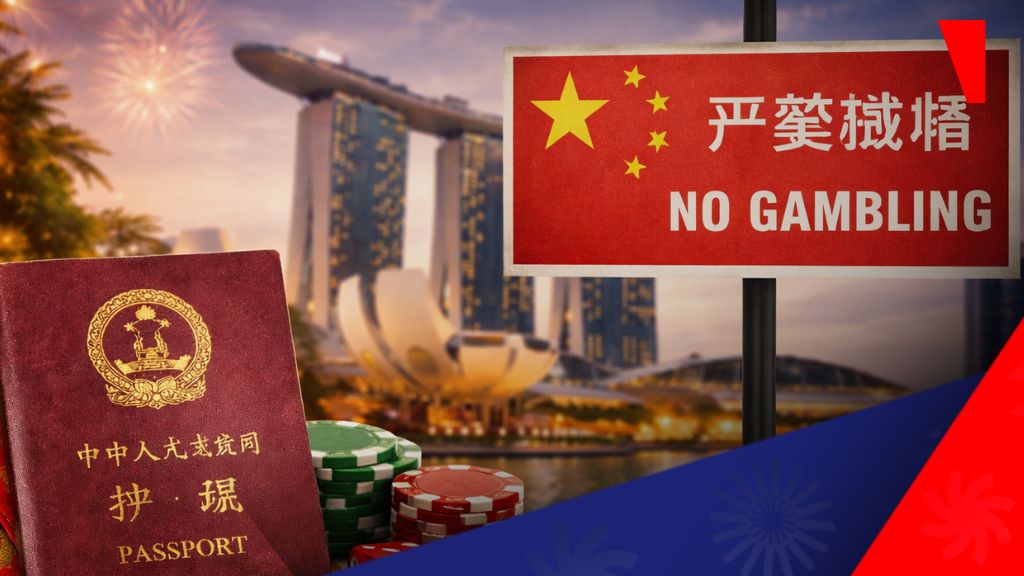
Chinese diplomatic missions have warned citizens to avoid overseas gambling during the Lunar New Year travel period, citing recent deaths linked to casino activity and reiterating that participation in cross-border gambling may breach Chinese criminal law even when casinos operate legally abroad.
Advisories issued by the Chinese Embassy in Singapore and the Consulate-General in Da Nang were published days before the holiday travel rush, a peak period for outbound tourism across Asia’s casino markets. Both notices referenced recent incidents involving Chinese nationals who died after gambling overseas and urged travellers to “stay away from gambling” while abroad.
The Singapore embassy reported that a Chinese citizen had died after gambling at Marina Bay Sands, and that the government was helping the family. The warning notice said that there had been several cases of gambling-related deaths in the past few years and that visitors should enhance legal awareness during the festive travel season.
A separate advisory from the Da Nang consulate described a fatal incident involving a Chinese national who had participated in gambling at a hotel in the Hoi An area. The consulate characterised the case as a serious warning and repeated similar guidance to Chinese citizens travelling or residing locally.
Legal reminder on cross-border gambling liability
Both diplomatic missions emphasised that gambling remains prohibited under Chinese law and referenced amendments to the country’s criminal code that formally criminalised cross-border gambling activities. The notices stated that even where casinos are legally licensed overseas, Chinese citizens who participate may still face legal liability under domestic legislation, particularly if involved in organising gambling or related activities.
The advisories also emphasized that embassies and consulates cannot offer consular protection for illegal actions. The wording used was uniform in the Singapore and Vietnam advisories, indicating a unified message before one of the busiest periods of the year for Chinese outbound travelers. The advisories are targeted at countries that have a casino industry and receive visitors from mainland China, such as the integrated resorts in Singapore and Vietnam.

Holiday travel impact
The Lunar New Year continues to be a significant period for casino operators in the region, with travel patterns having historically contributed to high visitation levels across the Asia-Pacific gaming markets. In Macau, the sole gaming jurisdiction in China where casino gaming is legal, there were close to 279,400 visitor arrivals over the opening weekend of the festive period.
The Chinese diplomatic message regarding international gambling has appeared from time to time in recent years, but the current notices have specifically mentioned the recent fatal incidents, along with the legal warnings. The notices have reiterated that the amendments to China’s criminal law have included cross-border gambling, which made the punishment for overseas gambling the same as that for operating illegal casinos.
The embassy and consulate notices were issued through official consular channels and framed as travel safety reminders rather than regulatory action against operators. However, the statements directly addressed participation by Chinese nationals in foreign casino markets, underlining the legal framework governing outbound gambling activity.
As more Chinese citizens travel abroad during the nine-day holiday period from 15 February to 23 February, the warnings bring to the fore the application of Chinese law to citizens who gamble abroad, even in regulated markets. The warnings are still in effect as travel for Lunar New Year continues.
Step inside the world’s biggest iGaming community. Join HERE for weekly updates from the world’s iGaming authority and unlock subscriber-only offers.


