


How integrated resorts look beyond the casino floor

Integrated resorts across Asia are being reshaped as operators put non-gaming attractions at the centre of their strategies. This means shifting focus from the casino floor to broader experiences built around hospitality, food, entertainment, and technology.
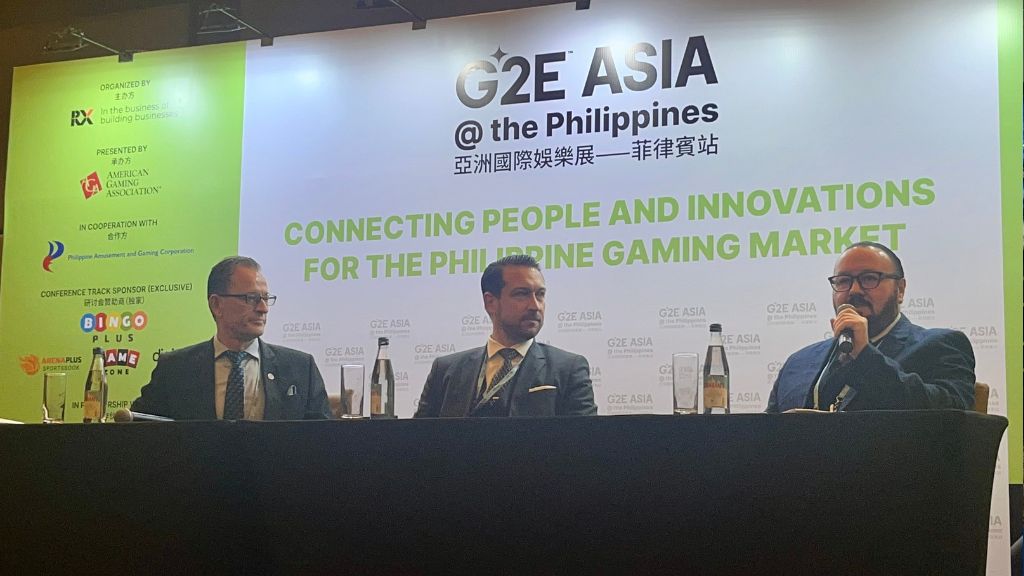
In a panel discussion at G2E Asia @ the Philippines in Pasay City, titled Beyond the Casino Floor: Redefining the Integrated Resort with Non-Gaming Innovation, Niall Murray, Chairman and CEO of Murray International, John Lucas, Chief Hospitality Officer at Newport World Resorts, and Samuel Wilkes, Vice President for F&B Business Development and Strategy at Solaire Resort, discussed what is driving the global move towards non-gaming attractions and why this shift has become so central to performance.
“The diversification from the IRs, from not being just that traditional gaming to being venues where people come and spend a whole bunch of time, is critical,” Lucas said, framing the change through the lens of hospitality and visitor behaviour. He noted that visitor counts at Newport World Resorts show growing numbers of guests entering through hotel, retail, and dining access points rather than casino entrances.
“A lot of them aren’t necessarily coming here for gaming,” Lucas added. “Those numbers continue to increase and increase, so it’s incumbent on us to keep expanding our non-gaming offering.”
Wilkes linked the shift to changing attitudes towards time and convenience. “People want to experience a lot of things in a very small space,” he said, adding that integrated resorts meet that demand by clustering amenities in one location. While non-gaming attractions are not designed purely to convert visitors into gamblers, he said they still play a role in broadening the customer base. “Even if you’re talking about one or two percent having a propensity to gamble, it’s one way you can get them in the door.”
What works in non-gaming investment
When the conversation turned to what types of non-gaming concepts deliver returns, Lucas emphasised the value of brand partnerships and experiences that guests remember. At Newport World Resorts, a collaboration with Chef Gordon Ramsay has become a cornerstone of its food and beverage strategy.
“It was a bit of a leap of faith for us,” he said. “It continues to do very well, so for us that was a strategic step and something new to try.”
He also pointed to the role of international hotel brands in driving non-casino traffic. Newport World Resorts operates multiple hotel flags across roughly 2,500 rooms. “We would never fill those rooms without non-gaming demand,” Lucas said. “You’re talking about over 500 million customers globally, and even tapping a tiny part of that really supports the business.”
Wilkes agreed that differentiation is essential in a market where entertainment, dining, and retail options are widely available. “It needs to be something that they can’t easily get somewhere else,” he said. Unique brands or experiences that are exclusive to a particular resort give guests a reason to travel further.
He added that many ideas that failed in earlier years have already been phased out. “Operators are experienced and mature enough now that anything that didn’t work has been taken away,” Wilkes said. “What we see now is good, but there’s still room to bring in more unique experiences.”
Balancing local culture and international appeal
A recurring theme was the need to adapt non-gaming strategies to the Philippines’ mix of domestic and international visitors. Wilkes described this balance as distinct from other jurisdictions. “There’s such a balance between international and domestic, and that’s not the case everywhere,” he said.
Interestingly, he observed that both groups often want similar things. “The internationals want to experience something local, and the locals want some level of familiarity,” he said. This has shaped Solaire’s approach to dining and entertainment, with local food options sitting alongside international concepts.
Signature events have also emerged as key drivers. Wilkes cited the success of a musical production. “We knew it was going to be good. We didn’t know quite how well it was going to be,” he said. The show appeals to a wide age range, from young children to older audiences, and has drawn new visitors into the property daily.
With more theatres and venues planned across Entertainment City, Wilkes warned that competition will intensify. “Once again, it’s going to be about differentiation,” he said, noting that tighter margins will push operators to refine their offerings for both local and overseas guests.
Measuring success beyond foot traffic
While revenue and visitor numbers remain core metrics, the returns on non-gaming investments are increasingly measured through loyalty and behaviour.
“It’s about making sure that the balance of what we’re offering is what the customers want to see,” Wilkes said, adding that the insights will guide future development decisions.
Lucas highlighted the importance of understanding how guests behave before and after events. “If they just come and go, that’s great,” he said. “But if they didn’t have dinner before or a drink afterwards, that’s a lost opportunity.”
Technology, personalisation and the future guest journey
Technology also plays a role in shaping non-gaming experiences. Wilkes said advances in data and AI are allowing operators to understand guests in ways that were previously impossible. “We can almost pre-empt what it is they’re going to want,” he said, describing this as the goal of pre-emptive service.
He also pointed to the decline of traditional touchpoints, such as in-room phones, replaced by digital ordering and messaging platforms. However, he cautioned that technology comes with high costs and rapid obsolescence. “The moment you commission a new piece of technology, it’s already out of date,” he said.
Lucas agreed, stressing the challenge of merging online and offline journeys into one seamless experience. “People are not as tolerant of a queue anymore,” he said. Yet he also underlined that technology cannot replace hospitality entirely. “People still like to have some level of service or interaction,” Lucas said. “The key is getting that balance right.”
Stay in the loop and join the biggest iGaming Community in the world with SiGMA’s Top 10 news countdown. Subscribe HERE for weekly updates from the world’s iGaming authority and exclusive subscriber-only offers.


