

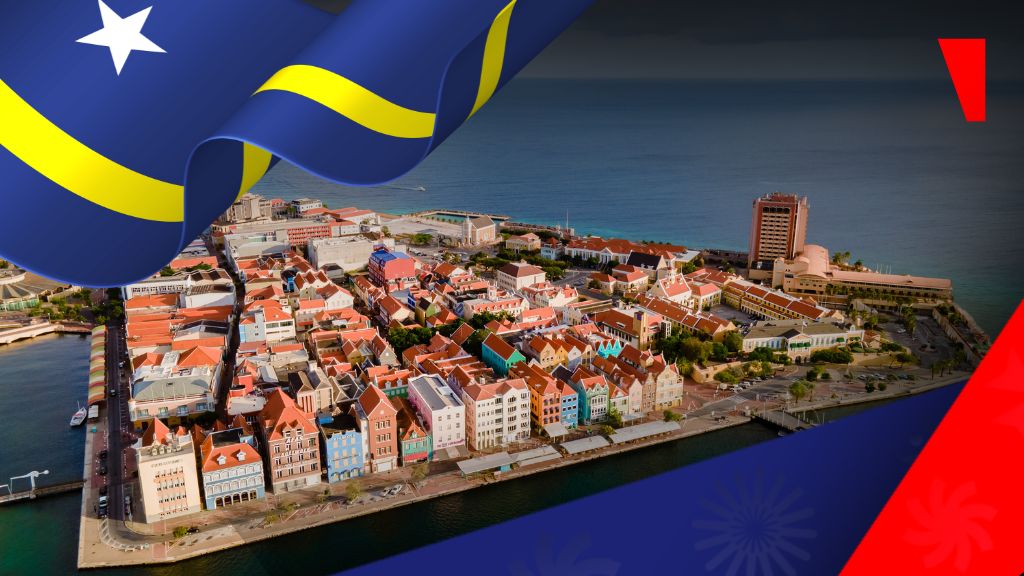
The Curaçao Gaming Authority (CGA) has released Version 2.0 of its updated fee framework under the National Ordinance on Games of Chance (LOK), marking a further step in the island’s transition towards a modernised, stricter regulatory model. The changes apply to both business-to-consumer (B2C) operators and business-to-business (B2B) service providers, and are aimed at improving financial supervision and enforcement against illegal gambling activity.
The new framework formally removes the remaining transitional elements from the previous NOOGH system, signalling the end of legacy licensing structures. Industry observers say this confirms the government’s intention to rely fully on LOK-based rules going forward, creating a more predictable compliance environment for offshore operators.
While licence application costs remain unchanged at €4,592, annual oversight fees also stay steady, with B2C operators continuing to pay €47,450. Suppliers will continue to contribute €24,490 annually. Administrative charges relating to domain additions, certification, and ownership updates have also been left untouched, suggesting the government wishes to avoid adding financial strain during the regulatory shift.
New billing cycle for licence holders
The most significant revisions concern how first-year annual fees are invoiced. Rather than issuing a single yearly bill, authorities will now divide fees into two six-month cycles. An operator’s first invoice must be paid before a licence becomes valid, while the second will only be issued if the business remains eligible after the initial period. From the second year onwards, billing reverts to a standard annual cycle. Officials argue that this phased approach allows closer scrutiny of new entrants, especially during early operations.
Invoices must be paid within 14 days, and delayed payments will trigger escalating reminder notices. Failure to settle invoices within 71 days will result in immediate licence revocation and removal from the public registry. The CGA has stressed that invoices alone do not guarantee continued operation; written confirmation is required after each assessment period to ensure compliance is maintained.
Policy updated after administrative overhauls
The update follows a recent administrative decision that shifts responsibility for the gambling sector from the Ministry of Finance to the Ministry of Justice. The transfer, effective from 19 August 2025, is meant to strengthen legal enforcement and crack down on illegal betting networks, an area regulators have struggled to contain amid increasing global scrutiny.
“Since the introduction of the Landsverordening op de Kansspelen (LOK), the emphasis has shifted toward a solid legal basis for supervision and for tackling illegal operations,” officials said, adding that oversight must now reflect international standards.
But this move sparked political speculations around the regulator, following the resignations of Supervisory Board members Shelwyn Salesia, Robert Reijnaert, and Ildefons Simon. Their departures left the CGA without a board only months after modernised oversight began. Local media briefly speculated that political intervention was underway, reporting that Prime Minister Gilmar Pisas held discussions with the regulator immediately afterwards.
Though, the CGA rejected suggestions of interference, describing such reports as misleading. It said Supervisory Board appointments are routinely reviewed when departmental mandates shift and stressed that the process mirrors governance norms in other public bodies.
Analysts say operators may face short-term budgeting challenges due to the compressed first-year cycle and tighter deadlines, but many agree the overhaul suggests Curaçao is accelerating efforts to improve credibility and attract legitimate business.
Stay ahead of iGaming’s biggest stories with SiGMA’s Top 10 News countdown. The world’s biggest iGaming community brings you weekly insights and subscriber-only offers. Join HERE today.


