
Developments and overview of Morocco’s gambling sector in 2025


Gambling in Morocco has long been regulated under Dahir No. 1-65-206 (1966). Under that law, licensed land-based casinos, horse racing, state lotteries, and sports betting remain legal. However, there is currently no formal licensing or regulation for online gambling. As a result, many Moroccans who want to bet online use foreign platforms, but until recently, those winnings passed untaxed.
That situation changed in 2025. The government passed a new tax regime targeting offshore gambling winnings.
New tax regime on online gambling winnings
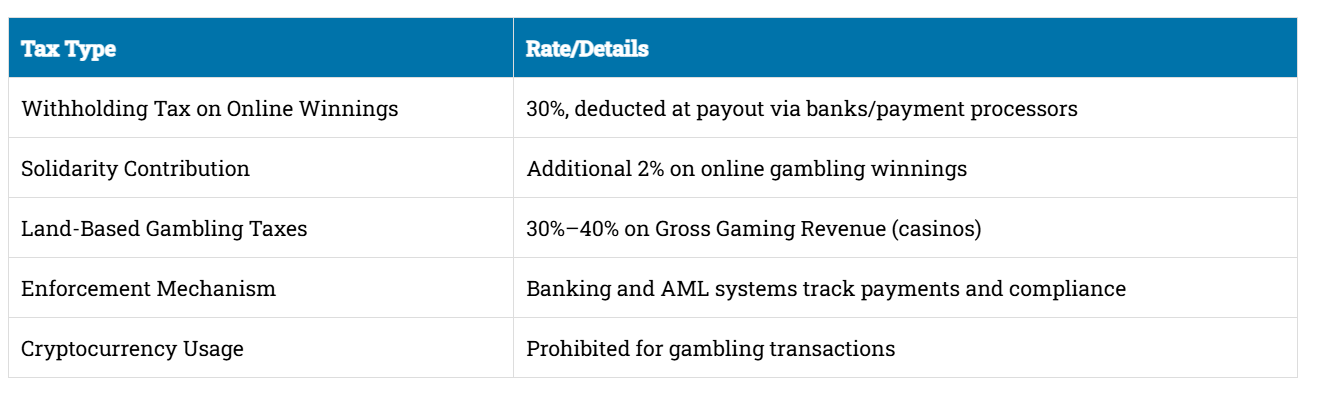
As part of the 2025 Finance Bill, Morocco introduced a 30% withholding tax on all winnings obtained via foreign online gambling platforms. In addition, an extra 2% solidarity contribution applies to the same winnings.
Authorities intend for banks, card issuers, and other payment intermediaries to deduct these levies at the source when winnings are paid out. This method leverages existing anti-money laundering (AML) and payment-tracking systems, rather than creating a new monitoring infrastructure.
If either a payment provider or a player fails to comply, the measure allows for penalties. According to government officials, this marks “the end of a tax-free era for offshore casinos.”
Reasons behind the reform
The new taxation scheme aims to curb capital flight and revenue leakage. Many foreign betting sites earned significant sums from Moroccan users without contributing to the national economy. The move gained backing from the General Confederation of Moroccan Enterprises (CGEM), which argued that these offshore platforms siphoned money abroad without paying taxes.
Deputy Budget Minister Fouzi Lekjaa estimates the legal gambling sector produces roughly $250 million in annual tax revenue. The new measures aim to bolster that revenue and channel money previously lost to offshore platforms back into public coffers. A portion of the new “solidarity contribution” is earmarked for social programmes: support for vulnerable households, education, rural development, and infrastructure projects.
These steps signal the government’s intent to integrate online gambling into the economy rather than leave it unregulated and invisible.
Legal status of online gambling
Despite the new tax, it remains true that Morocco lacks specific regulation or licensing for domestic online gambling operations. That means private companies cannot legally offer online casino games or sports betting to Moroccan players under Moroccan law.
For now, the 2025 reforms target only winnings from foreign platforms, not the activity itself. Meanwhile, state-licensed casinos, lotteries, and sports betting remain under the existing regulatory framework.
This two-tier situation, regulated land-based gambling and taxed but technically unlicensed offshore gambling, creates a complex environment. Players may follow tax rules, but there remains no consumer protection, age verification, or licensing oversight for offshore online gambling.
Impacts and challenges ahead
The new tax will likely stem the offshore capital outflow and generate revenue for social programmes. It may also steer players toward legal, land-based options such as casinos, lotteries, and state-approved sports betting.
However, without a domestic licensing and regulatory framework, many questions remain. Offshore platforms remain technically unlicensed. Players avoid regulation beyond tax, exposing them to risks like unfair practices or a lack of recourse.
Some operators may respond by using more opaque payment methods. Though authorities have banned cryptocurrency for gambling withdrawals, previous use of crypto and unregulated payment systems helped offshore sites bypass oversight.
To fully modernise the sector, Morocco may eventually need clear regulations, licensing, player protections, and enforcement. Discussions around this path are reportedly ongoing, according to a report by SCCG Management.
Morocco’s industry future
Morocco’s 2025 tax reform marks a turning point for online gambling. The introduction of a 30% withholding tax plus 2% solidarity contribution on foreign online winnings shows the government’s seriousness about stemming revenue loss and regulating offshore gambling.
Yet, the legal and regulatory framework remains incomplete. Online gambling, per se, remains unlicensed and unregulated. Until lawmakers adopt a complete licensing system, the industry will exist in a hybrid state: taxed, but largely outside any comprehensive oversight.
For now, Morocco has closed a significant loophole. But to ensure fairness, transparency, and long-term viability, the country must still build a modern regulatory structure for both online and land-based gambling.
Step inside the world’s biggest iGaming community. Join HERE for weekly updates from the world’s iGaming authority and unlock subscriber-only offers.


