


DGOJ leads the First International Gaming Congress in Madrid with a focus on regulation and protection

The First International Gaming Congress, organised by the Spanish gambling regulator, the DGOJ, on 13–14 November 2025 in Madrid, brought together more than 300 experts to analyse the social impact of gambling and regulatory challenges in Spain and Europe. This pioneering event highlighted international cooperation and new policies for a safer and more responsible sector.
Gambling regulation in Spain: foundation for a safe and responsible sector
First of all, the importance of gambling regulation in Spain lies in its role as a guarantor of a safe environment for players and society. The DGOJ is in charge of regulating action under the Ministry of Social Rights, Consumer Affairs, and the 2030 Agenda, with an emphasis on combating gambling addiction and safeguarding children. As a result, the conference was held in an environment where problems include creating regulations that encourage operators’ and users’ social responsibility and implementing stringent laws against illicit gaming. Moreover, the current regulation involves a broad and constantly updated framework that adapts to technological and social advances.
Diversity and technology at the service of debate in Madrid
The Congress, held at the emblematic Royal Mint of Spain (Fábrica Nacional de La Moneda y Timbre) in Madrid, gathered 327 attendees from public administrations, operators, associations, universities, and the media. It also featured a hybrid format, with simultaneous translation into Spanish and English, facilitating international participation and remote access.

Among the speakers were representatives from European regulators such as the United Kingdom and Italy, as well as prominent academics and experts, who contributed a multidimensional view of the social impact of gambling. Additionally, new topics were addressed, such as a panel dedicated to the video game sector, reflecting a pioneering interest in integrating emerging perspectives within the industry.
Key regulatory announcements and debates on safety and transparency
During the sessions, the Secretary-General for Consumer Affairs and Gambling, Andrés Barragán, from the Ministry of Social Rights, Consumer Affairs and the 2030 Agenda of Spain, confirmed major regulatory developments: the ban on welcome bonuses and the requirement that all payments be made with bank cards in the player’s name. The purpose of these measures is to increase transparency and security in transactions. In addition, there were in-depth discussions about blocking payments to illegal operators, regulating the use of artificial intelligence in managing user relationships, and the most effective practices for self-exclusion.
European regulators meeting: strengthening cooperation for effective regulation
The DGOJ also hosted the European Gambling Regulators Meeting, with representatives from Austria, France, Germany, Italy, Portugal, the United Kingdom and Spain. This technical forum focused on sharing strategies against illegal gambling, payment blocking, money laundering prevention and physical self-exclusion. Joint measures that promote player safety and industry integrity are made possible by the active cooperation between various nations’ authorities, which also strengthens gaming regulations throughout the continent, as will Latin America, which intends to establish FIJA, a Federation that welcomes gaming associations from the countries of Latin America.
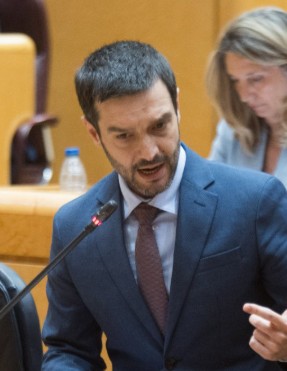
Below are seven relevant points presented at the event, organised by the Directorate General for the Regulation of Gambling (DGOJ):
- Pablo Bustinduy, Spain’s Minister for Social Rights, Consumer Affairs, and the 2030 Agenda, underlined that establishing safe gaming environments is a democratic duty that goes beyond player authority and emphasises the defence of social equality.
- The Secretary-General for Consumer Affairs and Gambling, Andrés Barragán, announced the approval of key bans such as the elimination of welcome bonuses and the requirement for payments to be made exclusively with bank cards in the player’s name.
- Regulators from European countries such as Germany, Italy and the United Kingdom discussed payment blocks to illegal operators and joint strategies against unlawful gambling.
- The emerging use of artificial intelligence was highlighted for optimising user relationship management and mitigating problematic behaviour and conflicts in sports betting.
- Authorities shared technological innovations in physical self-exclusion and international cooperation on money laundering prevention through the FATF.
- More than 300 participants, including national and international experts, attended in person and virtually, reflecting the significance of the meeting.
- The event reaffirmed the importance of multinational cooperation to adapt and harmonise regulatory frameworks in response to the sector’s current challenges.
The First International Gaming Congress, promoted by the DGOJ, demonstrated the public and private sectors’ commitment to rigorous regulation and social responsibility. To advance a market characterised by transparency, sustainability, and safety, the DGOJ urges both authorities and the business sector to keep working together in order to ensure a resilient system and protect users. This event is key to fostering an ethical and fair industry and lays down a framework for the future of gambling legislation spanning Spain, the Iberian Peninsula, and Europe.
This article was first published in Spanish on 17 November 2025.
Stay in the loop and join the biggest iGaming Community in the world with SiGMA’s Top 10 news countdown. Subscribe HERE for weekly updates from the world’s iGaming authority and exclusive subscriber-only offers.


