

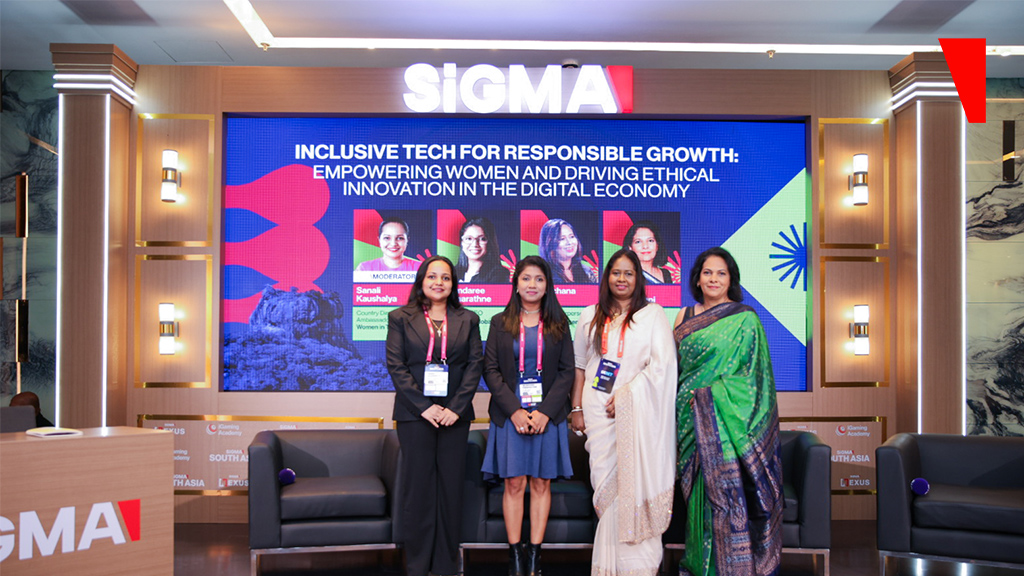
On the second day of the SiGMA South Asia conference, which is taking place at Cinnamon Life, at City of Dreams, leaders from across Sri Lanka’s innovation ecosystem gathered to spotlight a topic that resonates globally: empowering women in tech and building an inclusive digital economy.
The session brought together female founders, industry experts, and social-impact leaders who have spent years pushing boundaries in fields such as AI, STEM education, and digital innovation: Manoji Wadugodapi, Chairperson at PAMS Hydro, Dr Sulochana Segera, Founder and Chairperson, Women in Management, Nevindaree Premarathne, Founder and CEO, The Makers Global, and Sanali Kaushalya, Country Director & Ambassador, Women in Tech Sri Lanka. Their message was clear – responsible growth in the digital age requires collaboration, inclusivity, and a renewed focus on ethical innovation.
The panel opened by acknowledging a paradox familiar in many emerging markets. Sri Lanka has a strong representation of women in education, particularly in STEM fields, yet female participation sharply declines when transitioning into the workforce. Even though many women earn degrees in engineering, maths, and technology, they still face cultural barriers, limited freedom to move around, and few role models to look up to. These challenges cause many women to leave the field, which holds back their careers and slows down the country’s progress in the digital world.
Inclusivity shouldn’t just focus on gender, they stressed. They argued that technology can’t truly grow if it ignores large groups of people or ignores the cultural realities. Ethical AI, transparent regulation, and digital safety emerged as urgent priorities, mainly as misuse of AI tools increasingly affects youth and vulnerable groups.
They also called attention to the importance of mindset shifts. Many limitations arise not from lack of talent but from deep cultural conditioning. Early education, parental attitudes, and social norms shape girls’ confidence and career choices long before they reach the workplace. Creating exposure to STEM from a young age – and ensuring teachers themselves remain digitally updated – can address these gaps.
The private sector, they noted, must not wait for government action. Several panelists shared how their organisations have been helping women in rural areas by teaching basic tech skills, supporting female entrepreneurs, and offering guidance and mentorship. They explained that even small, steady efforts – like giving access to laptops, running digital-skills classes, or creating supportive workplace policies – can make a big difference in helping women take part in the economy.
The session ended with a clear message: real progress in the digital world depends on working together. Companies and communities need to unite to create an environment where women are not only included but encouraged to lead. Only then can developing countries fully benefit from the power of innovation in today’s digital age.
Stay in the loop and join the biggest iGaming Community in the world with SiGMA’s Top 10 news countdown. Subscribe HERE for weekly updates from the world’s iGaming authority and exclusive subscriber-only offers.


