


What it took to enter Europe’s toughest iGaming markets in 2025

Europe has become one of the most demanding regions in the global iGaming industry. Throughout 2025, regulators have raised expectations around technical compliance, anti-money laundering (AML) controls, responsible-gaming standards and supplier accountability. For content studios, entering regulated European markets now requires more than just strong game ideas; it also demands solid technology, clear processes and the ability to meet regulatory requirements from the outset. It demands mature technology, clear operational structures and the ability to meet regulatory requirements from the outset.
Earlier in November this year, slot developer Big Daddy Gaming secured a B2B licence from the Swedish Gambling Authority (Spelinspektionen), marking its first major regulatory approval since launching earlier this year. Sweden is among Europe’s most tightly regulated iGaming markets, known for strict technical requirements, detailed reporting rules and ongoing action against unlicensed operators. Gaining approval in this environment is widely regarded as a clear test of a supplier’s compliance standards and technical preparedness.
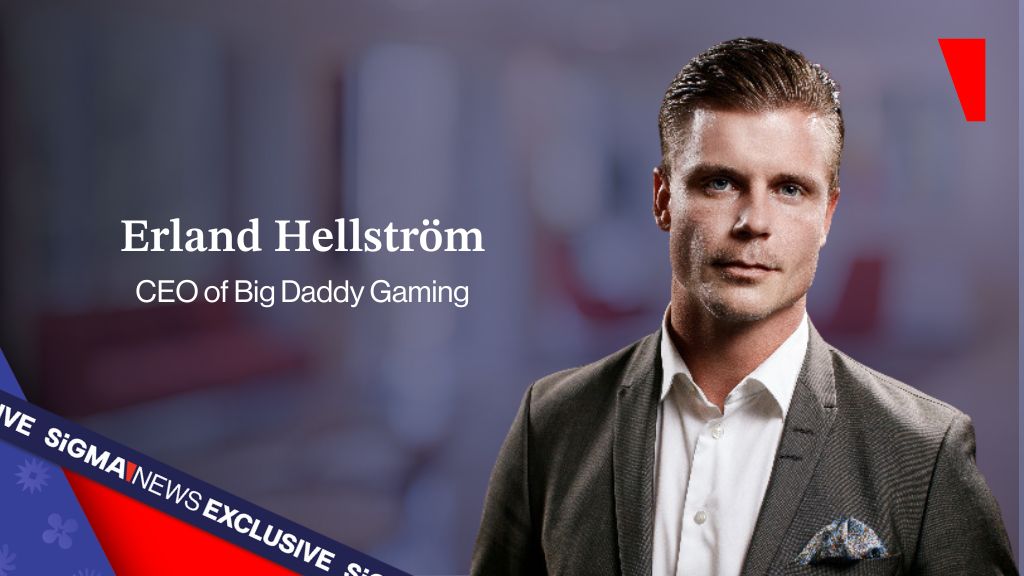
Founded in early 2025 by a team of industry professionals, the company is using its Swedish approval as a starting point for broader European expansion. In this exclusive SiGMA News interview, Big Daddy Gaming’s CEO Erland Hellström discusses the realities of entering Europe’s toughest markets in 2025, from regulatory pressure points and operator expectations to product design decisions and the operational challenges facing new studios heading into 2026.
Regulatory landscape & market entry
SiGMA News: Europe has tightened technical, AML and responsible-gaming rules significantly throughout 2025. From your experience entering the market this year, what have emerged as the toughest compliance barriers for new studios preparing for 2026?
Erland Hellström, CEO of Big Daddy Gaming: The European landscape has become increasingly complex to navigate due to the volume and diversity of regulatory approaches. Both established and emerging studios need to weigh several factors when deciding on the most effective route into the market.
For new studios that do not fully own their technology, there is a potential disadvantage in speed to market, as they risk depending on the timelines of middleware providers. This reliance can impact their ability to respond quickly and fulfil operator commitments. Recognising this, Big Daddy Gaming chose early on to take full ownership of its technology, allowing us to fully control our creation and delivery processes. That control over our roadmap has become crucial in managing the diverse pressures and demands of different markets.
Time and cost are also critical considerations. Ultimately, some markets, although attractive, might need to wait. As a young supplier, you cannot enter every market simultaneously; selecting markets based on operator demand and internal focus is essential. Evaluating markets solely on return on investment (ROI) also poses significant compliance challenges, as commercial opportunities can easily outpace regulatory readiness and risk control.
SiGMA News: Your first approval came from Sweden, which has raised its technical and reporting requirements even further in 2025. Which part of that licensing process proved the biggest operational or technical adjustment for your team?
CEO Hellström: Sweden is a natural market for Big Daddy Gaming and has long been a strategic focus for us. Its players are highly discerning, and we welcome the challenge. While the technical and reporting requirements have become more stringent in 2025, it remains a core jurisdiction for many of our key operator partners, both today and in the long term.
The B2B licensing process itself is relatively straightforward, and we designed our core technology with Sweden and other tightly regulated markets in mind from the outset. In practice, entering the Swedish market did not require major operational or technical changes, as the early planning paid off. With modular architecture and configurable back and front ends already in place, we were able to adapt efficiently to local requirements.
Without that level of preparation, however, these same regulatory adjustments can prove far more demanding for companies trying to retrofit compliance into their platforms at a later stage. My advice is to plan your markets in advance and deliver accordingly.
Credibility & early-stage trust
SiGMA News: New suppliers often face a credibility gap in their first year. Looking back at 2025, which early signals or KPIs matter most in convincing operators that a young studio can deliver reliably?
CEO Hellström: All new suppliers face a credibility gap, or what we prefer to call a period of trust-building. It takes time to prove your titles to operators and to demonstrate that they genuinely resonate with players. Having only recently launched, we see 2026 as our real foundation year for proving performance and commercial value, as much of 2025 was focused on setting up the business and ensuring full market readiness.
For our inaugural year, the most important key performance indicator (KPI) is actually the number of deals closed, and I’m proud of how impressive our pipeline is just over a month into our official launch. We are highly encouraged by the momentum that has been building among operators since we planted our flag in October, and our focus now is on proving performance and building long-term trust.
Commercial strategy & distribution
SiGMA News: Distribution has expanded rapidly, but operators are selecting partners more carefully. What commercial approach works best for a new supplier today: broad distribution or deeper partnerships with fewer operators?
CEO Hellström: The market is now oversaturated, and operators no longer want to be bombarded by hundreds of suppliers. From a commercial perspective, they are looking for partners who genuinely understand their operational reality, and that is a connection we prioritise highly. We have taken a more focused approach, guided by our clear mission, “Reel Fun, Real Value”.
That mission reflects our commitment to both players and operators. As a supplier, long-term success requires striking the right balance between achieving meaningful distribution and building close, collaborative relationships with operators to maximise the overall value proposition. We know what operators need, and we are here to deliver.
Product performance & market reality
SiGMA News: Now that 2025 is drawing to a close, which slot mechanics or design choices have actually moved performance this year, and which trends have clearly lost relevance?
CEO Hellström: It is still too early to draw firm conclusions from our own content, as we are only just beginning our launch journey. That said, we are very confident in our roadmap and believe it stands out on several levels, combining originality with gameplay mechanics that players genuinely have an appetite for.
In terms of trends that appear to have lost momentum, content positioned as “super high volatility with massive x-multiplier wins” has started to fade. While these titles often delivered eye-catching big-win videos, their tangible value for the average player and long-term profitability for operators frequently fell short. Players are ultimately looking for clear winning opportunities and genuinely enjoyable gameplay, while operators need games that encourage repeat play and sustain engagement over time.
SiGMA News: When shaping your first wave of releases, how do you decide the balance between proven mechanics and more experimental concepts that help differentiate a new catalogue?
CEO Hellström: All suppliers want defining content and mechanics that genuinely stand out, but achieving that requires a balanced approach. There are hundreds of mechanics that players are already familiar with, yet what distinguishes Big Daddy Gaming is how we interpret and apply those elements across every aspect of a game. This includes everything from theme and flow to side features, variance, and payout structure. Using proven mechanics is not a limitation; execution is everything. Every decision is about bringing Big Daddy Gaming’s DNA into effect in a way players can immediately feel, without risking isolation or creating an experience they simply won’t connect with.
Player behaviour & regional design
SiGMA News: Mature European markets showed clear shifts in 2025 around volatility, bonus pacing and session length. How have these changes influenced your design philosophy for 2026 launches?
CEO Hellström: As a supplier, you cannot build games simply because an idea looks good on paper. While creating engaging content that players can connect with is important, it is equally necessary to shape products around real market trends and the needs of both players and operators.
The market has shifted significantly compared with a few years ago. The 2020s look very different from what came before. Variance and volatility are decreasing, session lengths are shortening, and average bets per round are falling. This means suppliers have to work harder, adapt faster, and be more deliberate in aligning their games with how players actually behave today. Based on our experience, I believe we are perfectly positioned to deliver on that promise.
SiGMA News: Are early titles being tailored for specific regions, or are you prioritising mechanics that can scale efficiently across multiple regulated markets?
CEO Hellström: We develop content with both a global and a local perspective. The aim is to create universal mechanics and themes that can scale efficiently, helping maintain focus and consistency across the roadmap. At the same time, it is not possible to design purely for scale without considering how different markets will experience a game.
Regulation often has a direct and significant impact on gameplay. Many suppliers build a single core version and later remove elements to meet compliance requirements, but this can compromise the player experience. Our approach is global from the outset, while also designing features and maths profiles that allow elements to be adjusted or removed for regulatory reasons, without weakening the overall player experience.
Operator expectations & data
SiGMA News: Operators became far more data-driven this year, particularly around lifetime value and content ROI. What tools or post-launch support do you see as essential for suppliers in 2026?
CEO Hellström: Operators are far more data-driven and cost-conscious today, largely due to increasing regulatory and tax pressures. In this environment, the most valuable support a supplier can provide is relatively straightforward: consistently performing games combined with clear and transparent commercial terms. This approach reflects our focus on delivering both player engagement and measurable value for operators, addressing a gap we have observed in the market.
SiGMA News: With retention now prioritised over acquisition, which engagement features or game attributes do you believe will have the greatest impact going into next year?
CEO Hellström: Operators are increasingly prioritising long-term, sustainable profitability over short-term revenue spikes driven by a constant cycle of new launches. Players tend to remain loyal to a relatively small group of titles, which means operators have become more selective and are investing in a core portfolio of games that can support ongoing engagement and retention.
To support this shift, games need to create memorable moments early on and provide clear reasons for players to return. At the same time, reliance on recycled themes and repeated mechanics is showing diminishing returns. Distinctive design, strong game flow and a clear identity are likely to play a much bigger role in driving retention than volume alone.
Technology, white-label & infrastructure
SiGMA News: Many operators now run multi-brand or white-label setups. How important are flexibility, customisation and lightweight integration when building technology that supports this environment?
CEO Hellström: Operators have diversified their brands for several reasons, including deeper market coverage, differentiated offerings, improved visibility, and merger and acquisition (M&A) activity. Suppliers need to support this complexity efficiently, both through seamless integrations and through reliable support and accounting services.
Operators today are managing increasingly complex setups, often across multiple jurisdictions and products at the same time. As a result, ease of configuration within a supplier’s architecture has become critical. Flexibility and speed at a technical level are now essential foundations for commercial success in this type of operating environment.
SiGMA News: For a studio entering the market in 2025, what milestones in 2026 will signal that the long-term model is working: market expansion, operator depth, or consistent product performance?
CEO Hellström: There are many possible indicators, but my focus is naturally on Big Daddy Gaming. We believe we have put the right foundations in place to operate effectively in a crowded market and really make a difference. With a clear brand identity, a defined game DNA and a differentiated commercial approach, we are confident in capturing the attention of both players and operators.
Ultimately, success in 2026 will be reflected in a combination of factors, including the depth of our operator relationships and how consistently our games perform in live environments. Those outcomes provide the clearest indication of whether a studio’s long-term model is working.
Step inside the world’s biggest iGaming community. Join HERE for weekly updates from the world’s iGaming authority and unlock subscriber-only offers.


