



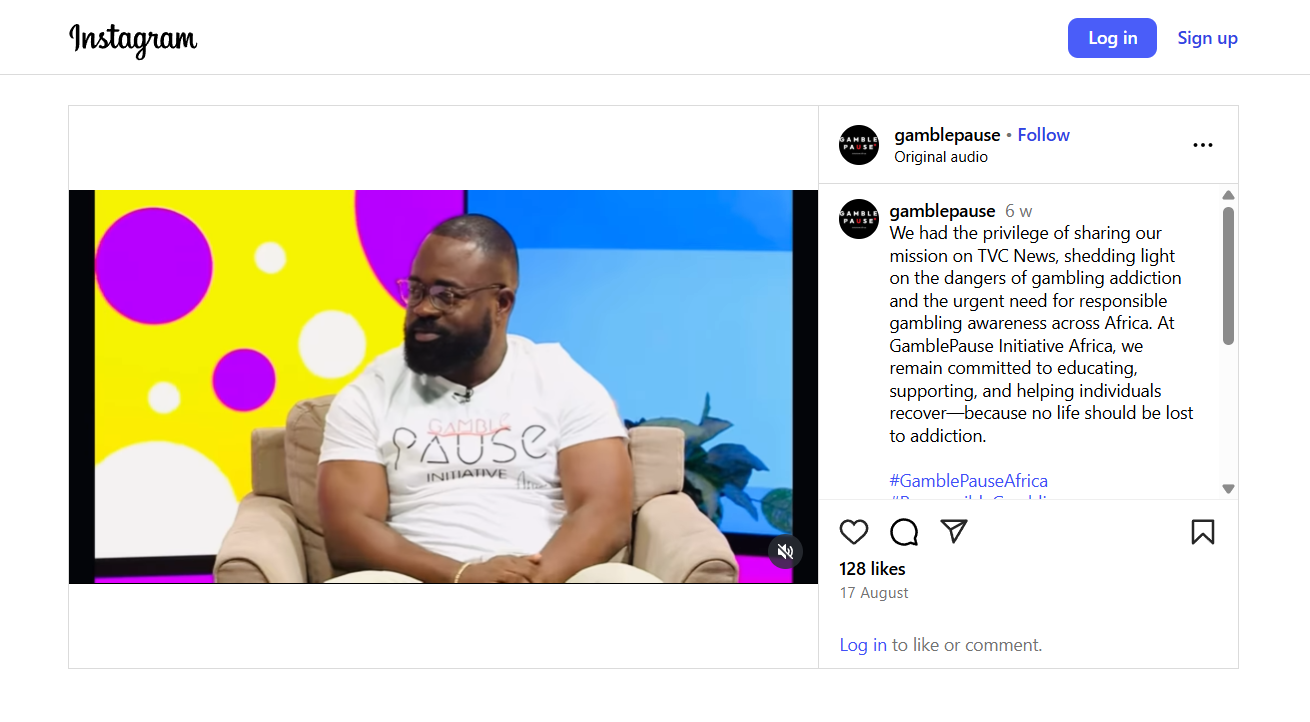
Gambling has long carried controversy and stigma across Africa. In Nigeria, many view it as irresponsible and damaging. Ladipo Abiose, the founder of GamblePause, highlighted this attitude when he explained how society often looks down on problem gamblers.
“A lot of people believe that gambling is irresponsible and that gambling addicts are the worst of them all,” recalled Founder of GamblePause, Ladipo Abiose. His remark captured a perception long echoed in conversations around gambling. In just a few words, he highlighted the stigma faced by people struggling with problem gambling in Nigeria.
GamblePause and its mission
GamblePause promotes responsible gambling and prevents underage participation. It is also a rehabilitation centre for problem gamblers. The initiative extends the company’s digital services into physical support. This expansion aims at ensuring the gambling sector’s sustainability.
“70%of the clients we are currently treating for problem gambling started when they were young. Your brain starts moving differently. You get hooked on quick returns,” said Abiose. “When you start gambling at that stage of your life, there’s a part of your brain that activates. The dopamine level your brain distributes is a lot.”
Abiose explained that gambling at a young age reshapes the brain’s reward system. It encourages reliance on instant gratification instead of steady personal development. That distortion makes underage gambling a hidden trap, stressing the need for early detection and awareness.
Global concerns and local realities
A World Health Organisation (WHO) report states that people who gamble at harmful levels generate about 60% of industry losses, with net consumer losses projected to approach $700 billion by 2028. Only about 0.14% of adults seek formal or informal help for a current gambling problem.
The report further outlined mental illness, suicide risk, family violence, financial distress, child neglect, crime, and money laundering as linked harms. The evidence highlights the urgent need for stronger prevention systems to support victims before more lives fall through the cracks.
Redefining gambling for society
Abiose explained the importance of changing how people see gambling. “We’re able to let people understand the concept of gaming, which is gambling based on fun and entertainment,” he said. He emphasised, “When you start seeing it as that, you will understand that it is not a business model.”
He stressed that people should not see gambling as a livelihood. Instead, they should treat it as entertainment requiring discipline.
Religion and cultural barriers
Abiose acknowledged how culture and religion shape Nigerian society. But these same forces also strengthen stigma and deepen isolation for problem gamblers.
“They frown at it, especially in Islam, where it is forbidden to indulge in gambling activities, while Christian groups see it as a sinful vice. We believe that has made it difficult for people to open up about their problems. You can’t even speak to people you see as religious leaders, since you fear being judged. It’s been a real setback in that space,” Abiose added.
Religion and moral perceptions make it harder for individuals to discuss gambling problems openly. Many fear judgment from leaders or peers.
GamblePause’s strategy for change
For these reasons, GamblePause focuses on digital platforms and outreach programs. This approach makes help more accessible and reduces stigma. The group describes this effort as “a mind shift and a social re-engineering.”
Abiose explained how addiction begins to show in harmful behaviours. “Before they even lie, they start borrowing money. Then they begin giving excuses, because people will ask, ‘Why are you borrowing from five or six people? What’s the problem?’ And you can’t tell anyone you’re gambling.”
He called for open conversations to combat silence. “We need to start having those conversations. That way, people will feel more comfortable talking about their problems. If we keep making the players, the clients, and the victims feel they can’t open up—or if we keep stigmatising their problems, we’ll end up with many people unwilling to speak out. That silence could lead to suicide and other harms, affecting families and society as a whole.”
Education as prevention
Abiose noted that education is vital in addressing gambling stigma. Through awareness, society can recognise early signs of addiction. Guidance can then be offered to underage and problem gamblers, giving them a second chance.
He stressed that GamblePause cannot fight this battle alone. Collaboration with peer organisations, regulators, operators, and individuals is needed. These collective efforts can foster safer environments for players and protect the industry’s sustainability.
GamblePause’s societal efforts
Underage gambling is a rising concern across Africa. GamblePause Initiative Africa responded with proactive campaigns to address this growing issue.
Earlier this year, the organisation launched its “Say No to Underage Gambling” campaign. The campaign targets awareness of the risks minors face when exposed to gambling. It also highlights the long-term social, financial, and psychological consequences. The initiative engages parents, schools, and community leaders directly. And by doing so, it stresses the importance of protecting minors from gambling-related harm.
Taking the campaign to communities
The campaign includes visiting schools, community workshops, and digital programs. Through such initiatives, GamblePause will foster safer environments where young people grow without being harmfully exposed to gambling. By raising awareness, it seeks to reshape how society addresses gambling risks, particularly among youth.
The stigma tied to gambling in Nigeria continues to silence victims and isolate addicts. Abiose and GamblePause argue that society must open dialogue and foster understanding. Without conversations, prevention, and collaboration, stigma will remain a barrier to progress.
Through education, digital outreach, and campaigns such as “Say No to Underage Gambling,” GamblePause is carving a different path. Its mission is not only to rehabilitate problem gamblers but also to protect the future generation from falling into the same cycle.
Be part of the action! Join the world’s biggest iGaming community with SiGMA’s Top 10 News countdown. Subscribe HERE for weekly updates, insider insights, and exclusive subscriber-only offers.


