
Greece led Europe’s iGaming growth in H2 2025: report

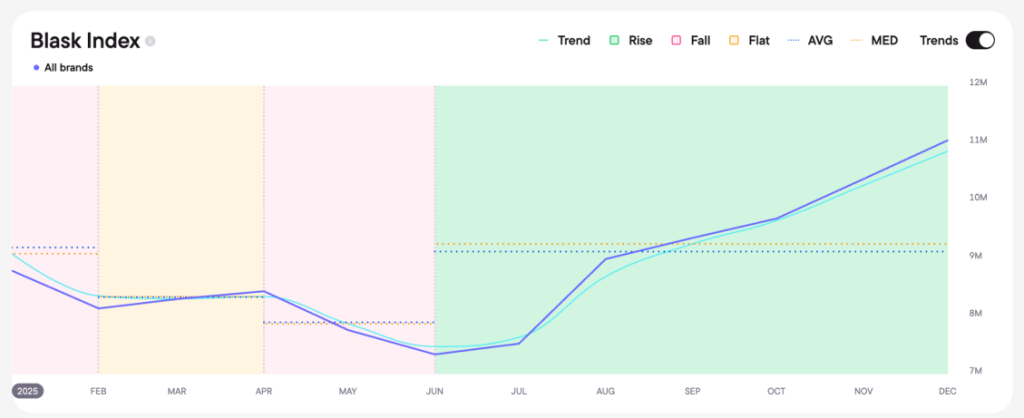
Greece has overtaken larger European jurisdictions to become the continent’s fastest-growing online gambling market, according to new data from Blask, as a dense sports calendar and a crackdown on illegal sites pushed more play towards licensed operators.
“In the second half of 2025, Greece emerged as Europe’s fastest-growing iGaming market,” the market-intelligence firm said. “Greek market demand rose by more than 50% between June and December, standing out as one of the year’s clearest growth stories.”
Across much of Europe, online gambling growth has slowed as markets mature and regulators tighten the screws. Greece, by contrast, still has headroom: consumers are shifting online, products are changing, and enforcement is beginning to bite.
The regulator recently described the online market as “extremely dynamic and growing”, noting gross gaming revenue of €1.349bn in the first half of 2024, up 8% year on year.
Blask argues the rise was not a one-off bounce. “According to data from Blask, the surge was not the result of a single tournament or seasonal spike,” it said, calling it “a structural shift” with multiple drivers.
Blask’s customer profile data points to a market with strong online penetration (Greece has a population of 10 million, nearly 9 million of whom are internet users) and a predominantly young user base, with 63% aged 18–34. It also suggests gambling is not dominated by a single vertical: 60% of respondents report using lottery products, 45% traditional sports betting, and 30% online casino products, alongside 25% using slots and other instant-win games.
A sports calendar with no quiet weeks
Blask says Greek demand held up because major competitions landed back-to-back. It points to “a tightly stacked sports calendar” that sustained engagement from late August through the autumn.
Blask added that the pattern differed from the usual boom-and-bust around finals and derbies. “Rather than short-lived peaks followed by sharp declines, demand remained elevated well beyond individual events,” it said.
That schedule arrived as the country’s biggest gambling names were reshuffling. In October, Allwyn International and OPAP, the former state-owned monopoly-holder, announced a merger and set out plans to rebrand OPAP from early 2026. In November, OPAP was named preferred investor for a 12-year concession to run Greece’s state lotteries, agreeing to an €80m upfront payment and a 30% annual share of gross gaming revenue.
Casino reform and tougher enforcement
Sport was only part of the lift. Blask’s report highlights a regulatory change that made casino play more commercially attractive. “Greece’s decision to raise RNG stake limits from €2 to €20 altered the mechanics of the market,” it said, arguing that online casinos could “absorb demand during sports off-peak periods.”
It links that to operator results: “As sports-led acquisition increasingly converted into casino play, operators reported double-digit iGaming growth,” Blask said, adding that the effect “persisted over time”.
Enforcement has also started to shift the balance between licensed and unlicensed gambling. “In December, Greek authorities blocked approximately 11,000 illegal gambling domains,” Blask reported, saying the move redirected player interest towards regulated platforms.
The licensed sector has been pressing for that kind of intervention. The Hellenic Gaming Association has warned of a large illegal market, estimated at €1.7bn in 2023, and has called for tighter coordination between regulators, law enforcement, payment service providers, and internet service providers.
Regulators have also called for reforms after cases that exposed weaknesses in how player funds are protected. The gaming association has also accused illegal operators of targeting Greek players through websites advertising in Greek, including sites operating under the .gr domain, and said it would begin sending notices to authorities about illegal content identified through its own investigations.
Blask suggests payments are another accelerant, pointing to “the adoption of IRIS instant payments”, which it says “reduced deposit friction and improved conversion from interest to activity.”
The Hellenic Gaming Association has also argued that the licensed online market is being squeezed by heavy taxation, including a 35% tax on gross profits, which it says can push the overall tax burden to nearly 60%, leaving operators less able to compete with the black market.
For the government, a faster-growing regulated market can bring more tax revenue and bigger contributions to social causes, particularly via lotteries. For public-health campaigners, the risk is that rapid growth is accompanied by more harm, especially if enforcement simply channels existing demand without reducing risky play.
Subscribe HERE to SiGMA’s Top 10 News countdown and SiGMA’s weekly newsletter to stay up to date with all the latest iGaming News from the biggest iGaming community in the world and benefit from subscriber-only offers.


