


As iGaming races toward real-time, attackers do the same. Transactions clear in seconds, crypto rails shrink reaction windows, and fraud can move faster than an alert. The most serious risks are now quiet. They sit in identity theft, synthetic players, and account misuse that happens between deposit and withdrawal. That shift has turned cybersecurity in iGaming into a silent war, fought mostly out of sight.
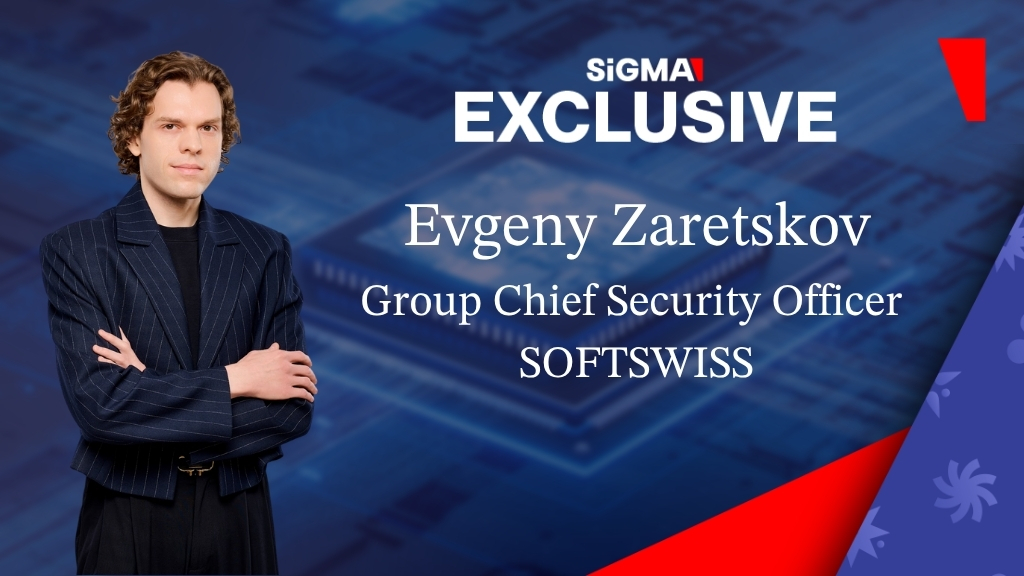
Evgeny Zaretskov, Group Chief Information Security Officer at SOFTSWISS, says the centre of gravity has moved. Attackers favour precision over noise. Generative AI now scales convincing phishing, localises language, and fuels deepfakes that can bypass weak checks. Speed continues to narrow the time to respond.
“Generative AI has industrialised phishing, made it multilingual, and armed criminals with deepfakes capable of bypassing verification,” he said. “Speed has compressed the window for defence. Instant payouts mean you must design journeys with brakes, not one-click pipes.”
From compliance to resilience
Across mature operators and suppliers, defence now starts with design. Compliance is treated as a baseline, not an endpoint. Risk-based information security systems must live inside engineering and operations, not sit on a shelf. According to Zaretskov, the work is to build resilience rather than accumulate certificates. “We do not treat certifications as stickers,” Zaretskov explained. “Our goal is resilience, not paperwork.”
In practice, layered controls count more than slogans. Real systems pause in small ways with a quick check here, a short limit there, whenever a new device or odd route turns up. After login, behavioural tools keep a quiet eye on play, catching the strange stuff while the real players barely notice. The idea’s simple: add a bit of friction where it helps, and leave the rest alone. It should protect lifetime value and licence reputation while keeping the customer experience smooth.
The result is a model where cybersecurity in iGaming supports, rather than interrupts, the player journey. Every control has a purpose. “Friction hurts first-time deposits, but breaches hurt lifetime value and licences. The trick is targeted friction.”
AI is rewriting the rules of defence
Artificial intelligence has redrawn the security map. Attackers use it to fake identities and flood support desks with believable requests. Defenders use it to spot what no human could see in time.
Across the industry, security teams now feed data from every layer – devices, networks, the cloud, and payments – into unified models that learn what normal behaviour looks like. When something shifts, the system reacts in seconds. Automated playbooks isolate servers, revoke tokens, or pause withdrawals until checks clear.
This tighter loop between detection and response is changing the economics of risk. Machine-learning firewalls study live traffic, blocking new threats before they surface. Pattern-recognition tools join related alerts into a single incident, freeing analysts to look at the cause instead of clutter.
In recent months, SOFTSWISS reports that automation and AI-assisted detection have helped cut time-to-containment by around 31 percent. This was achieved by correlating endpoint, network, and cloud signals through AI-driven analysis and deploying hundreds of automated playbooks – from host isolation and token revocation to intelligent payout holds. The team also reduced alert noise through AI-based grouping and deduplication. For context, industry-wide XDR platforms report up to 98 percent fewer alerts and up to 88 percent faster investigations, which SOFTSWISS says are directionally consistent with its experience.
Zaretskov says this speed will define the next generation of cybersecurity in iGaming. “Modern security operations centres must protect money flows, not only systems. AI helps us detect earlier, block inline, and respond automatically.”
Weak links and shared responsibility
The next breach doesn’t usually start inside an operator’s own walls. They tend to find a way in through partner systems, affiliate panels, or the payment pipes that keep the lights on. When supplier credentials leaked in 2024, operators across Europe acted quickly, cutting access and alerting users before wider damage occurred. One weak point in a vendor’s system can send shockwaves through every connection it touches.
Many companies now build vendor security into their contracts, demanding clear audit trails, multi-factor authentication, and rapid breach reporting. “Vendors are extensions of your attack surface,” said Zaretskov. “You can’t secure what you can’t see.”
Industry regulators share that concern. The European Union Agency for Cybersecurity (ENISA) recently ranked supply-chain compromise among the fastest-growing threats across all digital industries. It urged firms to run joint incident drills with critical partners and to log-share as part of baseline resilience.
Viewed through that lens, cybersecurity in iGaming is no longer a back-office function. It is business continuity, brand equity, and player trust rolled into one.
Trust is now the currency of gaming
Looking ahead, the next phase of defence will depend on cooperation as much as code. Zaretskov points to a roadmap built on continuous identity checks, payout journeys with built-in brakes, stronger crypto custody, and AI-driven security operations that understand both money flow and data flow.
Zaretskov’s closing argument reframes security from expense to asset. “Proactive protection is not IT spend,” he said. “It is conversion insurance and lifetime-value insurance. The fastest way to lose growth is to lose trust.”
That idea is fast becoming an industry truth. In a market driven by real-time payments and public scrutiny, trust is now the currency that matters most. Every click, credential, and crypto key depends on it. For all its speed and innovation, cybersecurity in iGaming may prove to be the sector’s greatest test of endurance.
Don’t just read the news – stay ahead of it. Subscribe HERE to SiGMA’s Top 10 News countdown for stories shaping iGaming’s future, weekly insights from the world’s biggest iGaming community, and exclusive subscriber-only offers.


