


iGaming in Latin America according to a SOFTSWISS study

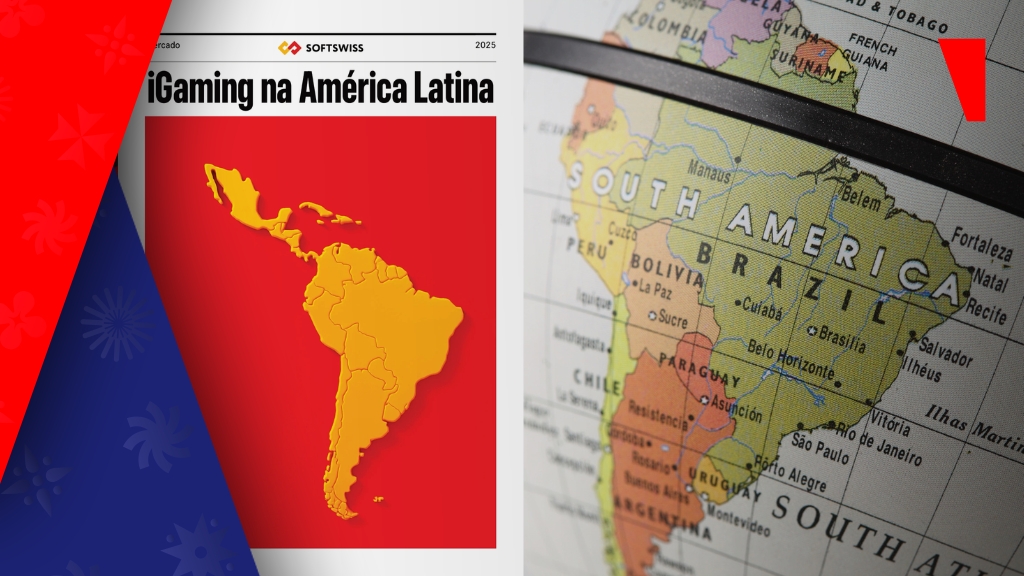
iGaming in Latin America is no longer a secondary market; it has become a dynamic landscape, characterised by regulatory advances, strong cultural traditions, and contrasts between widespread access via mobile phones and the lack of legal clarity. This mix creates, at the same time, great opportunities and challenges for operators. This article outlines the main trends and realities of each country, as presented in the SOFTSWISS report, and highlights key points for companies considering entering or expanding in the region.
Overview: decentralisation, regulatory progress and local knowledge
SOFTSWISS describes Latin America as highly heterogeneous: some countries have unified, modern structures for online casinos and sports betting, while others still operate partially or entirely without regulation. This means there is no “one-size-fits-all” approach for operating in the region – success depends on strategies tailored to each market, local partnerships, and close attention to compliance, taxation, and player protection.
The report emphasises three strategic points: in-depth knowledge of the specificities of each market, the speed of regulatory reforms, and the importance of trust and security tools to ensure sustainable growth.
Brazil: scale, new rules, and open opportunities
Brazil stands out for its size and recent regulatory changes. With around 212 million inhabitants and over 86% internet penetration, it is the largest market in the region by population and reach.
The regulatory landscape shifted between 2023 and 2025 with Law No. 14,790, which set out all the rules for online casinos (effective January 2025), ending reliance on offshore licences and requiring operators to obtain Brazilian federal licences. Sports betting had already been regulated under earlier legislation (Law No. 13,756/2018), leaving the sportsbook market with clearer and more defined rules. Even so, some issues – such as physical betting shops and resort casinos – remain under political debate.
The report highlights strict KYC and technology requirements (including facial recognition in some checks) and a greater focus on player protection and usage limits.
Argentina: provincial regulation and rapid online growth
In Argentina, the model is the complete opposite: regulation is carried out by the provinces, not the federal government. Today, 16 out of 24 jurisdictions regulate online gambling, but each sets its own rules and licensing requirements. This forces companies to treat the country as a set of micro-markets, with some provinces requiring local partnerships or a minimum percentage of Argentine ownership.
The national passion for football, combined with the strong use of mobile devices, particularly boosts sports betting. The online casino segment is also experiencing rapid growth and significant revenue.
Chile, Colombia and other models
Chile maintains a state-run model for sports betting (a monopoly in some segments) and a consolidated land-based casino sector focused on tourism. The private online market is still not widely legalised, but reforms are under discussion.
Colombia, on the other hand, is seen as a regional benchmark. It has a centralised licensing model (Coljuegos) covering online casinos and sports betting, clear technical requirements, and active blocking of illegal operators. This structure attracts companies seeking stability and legal certainty.
Panama, Ecuador, El Salvador, and other countries each have their own combinations of openness, taxation, and requirements – from Panama’s single-licence model, recently expanded to the domestic market, to Ecuador’s measures for registering and taxing sportsbooks.
Culture, traditional games and payment methods
Traditional gambling habits – such as horse racing, lotteries, and typical games like Brazil’s jogo do bicho or Ecuador’s Cuarenta – still influence demand and product offerings. Mobile phones are the main access channel across most of the region, but payment methods vary widely.
In some countries, cryptocurrencies are accepted (as in El Salvador), while others require integration with local banks, in-country server hosting, and strict currency controls. These factors affect product rollout order: sports betting tends to scale faster than online casinos, which require more infrastructure and compliance.
The report maps out different taxation regimes – percentages on Gross Gaming Revenue (GGR), flat fees, or hybrid models – and warns that tax structures directly impact margins. Markets with high GGR taxation favour high-volume sports betting, while flat fees can benefit large operators able to absorb higher initial costs.
Practical recommendations from the report
- Research locally: licensing, advertising, and ownership rules are decisive.
- Prioritise compliance and security: KYC tools, session limits, and self-exclusion are essential.
- Adapt launches in each country: usually starting with sports betting; casinos come later, once tax and hosting issues are resolved.
- Seek local partnerships: they reduce time-to-market and make it easier to operate in provincial or municipal contexts.
The SOFTSWISS iGaming in Latin America report makes it clear that the region is neither a single opportunity nor a single risk, but a set of distinct markets – some regulated and stable, others where informal demand outpaces legislation. For operators willing to invest in localisation, compliance, and long-term market building, the potential is high; for those seeking a standardised model, the journey will be costly and frustrating.
This article was first published in Portuguese on 13 August 2025.


