

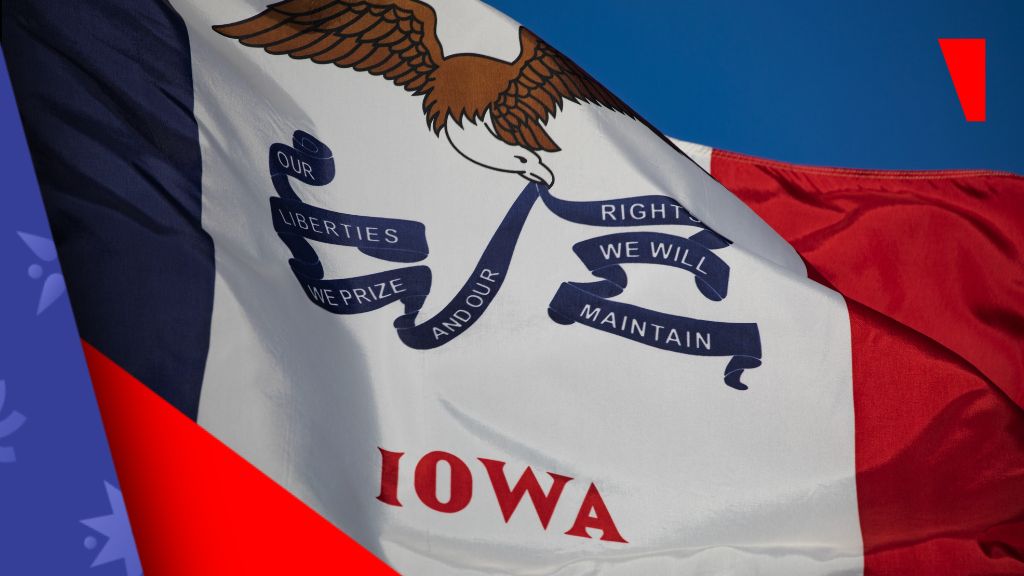
Iowa lawmakers have introduced Senate File 2085, a proposal that would impose new regulatory and tax requirements on prediction markets operating in the state. The bill targets “event-driven contracts,” a growing class of financial instruments that allow traders to speculate on the outcomes of sports events, elections, legislative actions, and key economic indicators.
A central feature of the proposal is a new permit requirement for any company seeking to operate a designated contract market in Iowa. Operators would be required to obtain authorisation from the Iowa Department of Revenue before offering contracts to residents, whether through a physical presence in the state or via online platforms. The initial permit fee is set at $10 million, with an annual renewal fee of $100,000. Permits would expire on 30 June each year.
New 20% tax on prediction market revenues
In addition to licensing requirements, the bill introduces a new tax on prediction market revenues. Senate File 2085 would impose a 20 percent tax on adjusted revenues generated from event-driven contracts. Adjusted revenues are calculated by subtracting trader payouts from total fees and charges collected, then applying a location-based formula to determine the share attributable to Iowa traders. All revenue collected through the tax and permit fees would be directed to the state’s general fund.
Major changes to trader income taxes
The proposal also makes substantial changes to how gains and losses from prediction markets are treated for Iowa income tax purposes. While federal tax rules under section 1256 of the Internal Revenue Code currently govern many derivative contracts, the bill explicitly excludes event-driven contracts from those provisions at the state level. Traders would be required to recompute gains and losses for Iowa taxes, add back gains from event-driven contracts, and limit deductible losses to no more than 90 percent of those gains if they itemise deductions.
State income tax withholding would also apply to gains exceeding $600 from event-driven contracts that are subject to federal taxation. The new tax rules would affect both individual and corporate taxpayers, with the Iowa Department of Revenue tasked with developing new reporting forms and enforcement mechanisms.
Some provisions of Senate File 2085 would apply retroactively from 1 January 2026, a move that could prompt concern among traders and market operators planning future activity in the state. The bill is currently at an early stage in the Iowa General Assembly and has yet to advance through committee.

If enacted, the legislation would position Iowa among the most aggressive states in regulating federally regulated prediction markets. The legislation would significantly raise the cost of doing business for federally regulated prediction market operators and introduce major changes to how gains from these markets are treated under Iowa income tax law.
Senate File 2085 defines event-driven contracts as financial derivatives that offer a fixed, binary payout based solely on the verified outcome of a specific future event. Unlike traditional securities or commodities, these contracts are not priced through continuous market fluctuations but instead settle on a yes-or-no result once the event concludes. Only contracts traded on designated contract markets regulated by the US Commodity Futures Trading Commission would be permitted under the bill.
Legislation efforts to regulate and tax prediction markets
Iowa joins a list of states that are trying to regulate and tax prediction markets. Among them is New York, which has brought on the ORACLE Act (Assembly Bill A09251), a proposal introduced by State Rep. Clyde Vanel, that would prohibit prediction market platforms from offering sports betting contracts to New York residents.
Meanwhile, a US federal judge has temporarily blocked Tennessee gaming regulators from stopping prediction markets operator Kalshi from offering event-based contracts in the state, dealing a setback to state-level efforts to classify the platform’s products as illegal sports betting.
In Massachusetts, a judge has ruled that prediction-markets platform Kalshi cannot allow residents of the state to place sports-related bets through its online platform, dealing a major blow to the company’s fast-growing sports business. The final verdict is expected on 22 January 2026.
The Commodity Futures Trading Commission (CFTC), in charge of regulating prediction markets, is signalling a rethink of its financial markets rulebook as it looks to modernise oversight and future‑proof regulation for emerging products, including prediction markets.
However, the CFTC chairman stopped short of outlining specific plans for prediction markets. While he acknowledged the tensions surrounding the sector, the chairman did not indicate that the CFTC intends to pursue a crackdown, instead suggesting the agency is focused on aligning its regulatory approach with new market realities.
Be part of the action! Join the world’s biggest iGaming community with SiGMA’s Top 10 News countdown. Subscribe HERE for weekly updates, insider insights, and exclusive subscriber-only offers.


