

Latest esports betting data exposes surprising trends


Competitive gaming has come a long way from a fringe hobby to a booming industry worth billions. But what’s really interesting isn’t just the revenue, it’s who’s behind the rise. And chances are, it’s not who you think.
Esports betting has experienced explosive growth, with total market revenue reaching $2.5 billion in 2024 and projections suggesting it could hit $2.8 billion in 2025. The user base has tripled in just seven years, growing from 21.9 million participants in 2017 to an impressive 74.3 million in 2024. This growth trajectory suggests we’re witnessing the maturation of an industry that’s moved well beyond its early adopter phase.

*estimated
Gen Z leads the charge, but millennials hold the purse strings
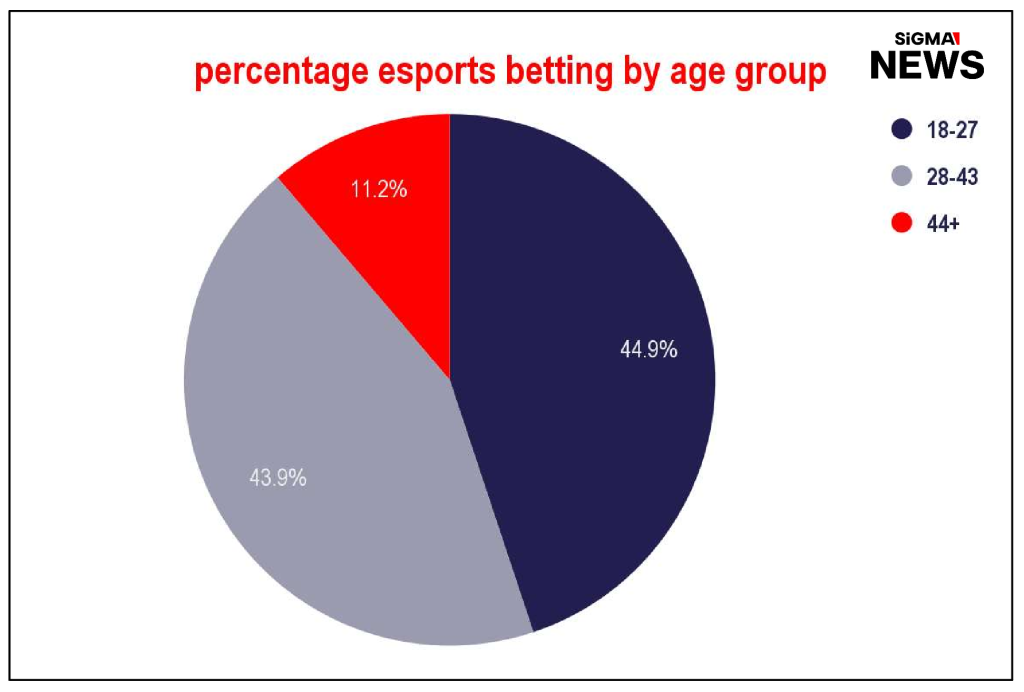
Whilst Gen Z continues to dominate the esports betting landscape, representing 44 percent of all bettors in 2024, up from 36 percent the previous year, Esports Insider describes a compelling story emerging about older millennials. The 18-43 age group collectively accounts for 87 percent of the entire betting audience, with millennials making up roughly half of that demographic.
What makes this demographic shift particularly interesting is the financial muscle that older millennials bring to the table. This increased investment is reflected in the numbers, with recent data from oddin.gg showing the average esports wager has reached €29, significantly higher than the €5 average for football betting.
The appeal for older millennials isn’t just about nostalgia, though that certainly plays a part. Many of these bettors have been following games like Counter-Strike and Dota 2 for over two decades, giving them deep knowledge of team strategies and player performance that they can leverage when placing wagers. Their familiarity with digital platforms and comfort with mobile betting apps creates a perfect storm for engagement.
Live betting is changing how fans watch esports
According to market insight provider Sharpr, in the last quarter of 2024, nearly half of all Counter-Strike bets were made during live matches. VALORANT wasn’t far behind, accounting for 28 percent of in-play wagers. It’s clear that real-time action is where the excitement (and the money) is.
This shift towards real-time engagement represents more than just a preference, it’s fundamentally changing how fans interact with competitive gaming. Unlike traditional sports betting, which often requires physical locations or desktop access, esports betting is fully optimised for mobile devices, allowing users to place bets whilst simultaneously watching streams on platforms like Twitch or YouTube.
The rise of live betting has been accompanied by increasingly sophisticated wagering options. Prop bets (specific wagers like predicting the number of kills a player will achieve) accounted for 13 percent of Counter-Strike bets in Q4 2024.
Player-focused markets have become particularly popular, with standout performances from professionals like Danil ‘donk’ Kryshkovets and Mathieu’ ZywOo’ Herbaut driving massive interest in individual player wagers.
Event-driven betting creates concentrated engagement
The esports betting economy operates quite differently from traditional sports, with activity heavily concentrated around major tournaments. The Shanghai Major for Counter-Strike alone captured 28 percent of all Q4 2024 bets, whilst the League of Legends World Championship attracted 19 percent of the quarter’s betting volume.
This event-driven nature creates both opportunities and challenges for operators. Industry experts esports.gg noted, “The majority of bettors are event-driven. They aren’t placing daily or even weekly wagers. Instead, they’re showing up in droves when a marquee matchup is on the line.” This concentration means that whilst engagement can be massive during peak tournaments, operators must navigate periods of lower activity between major events.
Counter-Strike continues to dominate the betting landscape, commanding 64 percent of total betting handle in Q4 2024. League of Legends maintains a solid 26 percent market share, whilst VALORANT has shown impressive growth, doubling its market share from 3 percent to 5 percent year-over-year. Dota 2, however, has seen its influence wane, dropping from 14 percent to 10 percent annually.
The tech behind esports betting has stepped up in a big way. Features like bet builders and flash markets now let punters place rapid-fire wagers during pivotal moments in a match. As these tools become more widespread, they’re likely to change how fans interact with competitive gaming in 2025 and beyond.
According to LSports’ numbers, esports saw a 70 percent jump in fixture consumption in Q1 2025, making it the third most in-demand product for sportsbook clients worldwide. Dotan Lazar, CEO of LSports, highlighted how crucial data has become for betting operators, “This report gives a clear, data-backed view of where demand is heading, and where operators need to focus to stay ahead,” he said.
It’s not all sunshine and Rainbow Six Sieges
Esports betting is on the rise, but confusion and concern still linger. iGB’s 2024 esports betting report found that around 33 percent of would-be bettors aren’t sure how it works, while 15 percent cite fears over match-fixing and 10 percent reference the potential harm gambling could bring to the esports community. As the market grows, so does the need for better education and stronger integrity checks.
Still, the direction of travel is pretty clear. Esports betting has gone mainstream, driven by a generation raised on gaming and now ready to put real money behind it. With mobile-first platforms, smarter betting tools, and bigger prize pools, the momentum isn’t going to slow down. The question now is how fast the leagues are going to rocket.


