


LEBOM ASA ruling: Shots, shame and gambling ads in the frame

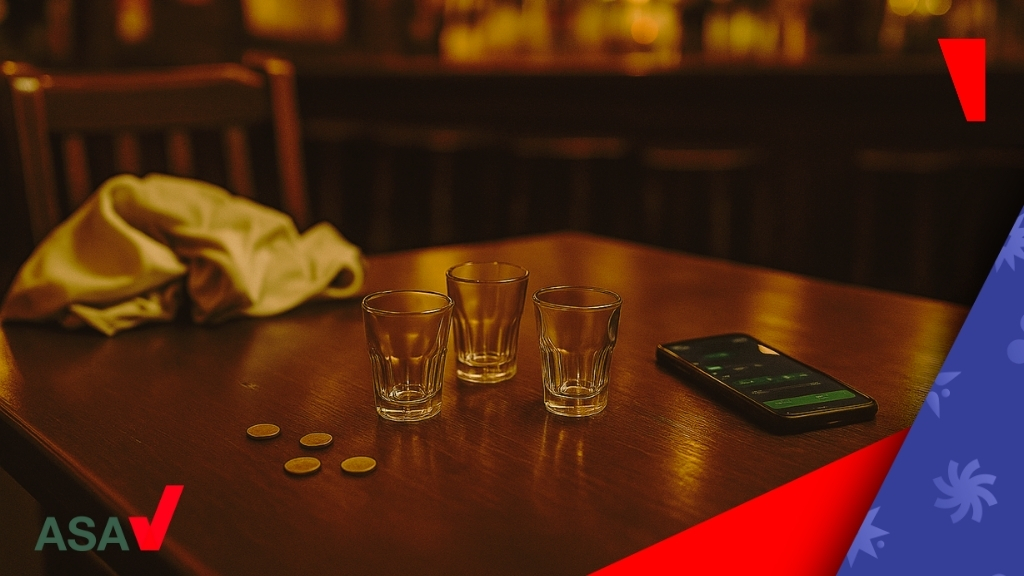
Shots downed, the loser stripped to his underwear, and a £200 prize pot cheered in a crowded bar. This wasn’t a night out; it was a gambling ad. The ASA, the UK’s Advertising Standards Authority, is the independent regulator enforcing ad codes across all media, including gambling. The LEBOM ASA ruling shows how far gambling ad rules have fallen behind social media culture. On 2 July 2025, that tension broke into the open. Regulators now face pressure to rein in peer-to-peer platforms and influencer campaigns. What once looked like light entertainment now edges toward exploitation. The gap between the two is shrinking fast.
When banter becomes breach
The ads at the centre of the LEBOM ASA ruling ran on Facebook and X in April 2025. They featured internet personality Mashtag Brady drinking with friends while using the LEBOM app. Viewers saw shots consumed, forfeits carried out, and Brady urging his audience to “get pissed” and “get absolutely f***ed up.”
LEBOM’s platform was framed as different from bookmakers: a peer-to-peer betting app where players “gamble against your friends on the Premier League.” The company likened it to fantasy football or pub sweepstakes, highlighting safeguards such as maximum stakes and limited game frequency.
But while LEBOM positioned this as authentic and social, the ASA judged it to be harmful.
The ASA’s double verdict
The LEBOM ASA ruling upheld two complaints that reveal how gambling advertising can breach rules while appearing to mirror youth culture.
Gambling as social currency
The first breach related to CAP Code rules 16.1, 16.3.1, and 16.3.6. These prohibit gambling ads from suggesting that betting improves self-esteem or social standing. The ASA said the ads “irresponsibly linked gambling with improved recognition or self-esteem” by celebrating the winner while mocking the loser.
This ruling matters because it directly tackles how gambling ads can embed social validation into peer dynamics. The ads portrayed winning as a route to admiration and losing as humiliation.
Alcohol and gambling convergence
The second breach fell under CAP Code rule 18.1, which bans ads from encouraging excessive drinking. Alcohol was not incidental. It was central to the scenes. Brady’s language, the shots, and the pub setting presented binge drinking as light-hearted fun, and crucially, linked it with gambling as a way to “improve socialising.”
By trivialising gambling while intoxicated, the ads created a double breach. This brings us to the role of influencers, whose content often blurs the same lines between entertainment and responsibility.
The influencer factor: Authenticity vs accountability
Influencer-driven gambling ads mimic real life. LEBOM argued the clips came from an unscripted YouTube video and parodied drinking games already familiar to Brady’s audience. Their defence was that the ads showed gambling “honestly and authentically.” Even stylised or playful formats, like cartoon-style gambling ads, are not exempt, as demonstrated by the ASA’s ban on Play’n GO’s cartoon gambling ads.
But the LEBOM ASA ruling demonstrates that authenticity is no shield if that “realness” includes excessive drinking or harmful gambling cues.
This is significant given wider industry trends. Research shows influencer endorsements are particularly effective with young men and teenagers, who often find them highly appealing in gambling contexts.
In fact, industry reports suggest a majority of operators now use some form of influencer marketing, with spend increasing year on year. The ASA has continued to uphold multiple rulings against gambling ads in recent years, several of which involved influencer-led social media campaigns. For example, cases like the Hollywoodbets youth breach highlight how sensitive regulators have become.
This regulatory scrutiny reflects broader concerns about how gambling intersects with social culture. Public health campaigners, including Alcohol Change UK, warn that alcohol marketing often links drinking with social activities, and they urge regulators to scrutinise this dynamic closely when it combines with gambling messaging.
From rules to risk-based thinking
The ASA’s call indicates the wind is changing, and operators can feel it. It shows regulators are willing to scrutinise subtle cultural cues, not just obvious harms. In recent years, studies have already highlighted how gambling ads often align alcohol with sport. By pulling peer-to-peer platforms into scope, the LEBOM ASA ruling shows that social betting models are not outside the regulatory net.
For operators, “risk-based thinking” now means more than just compliance box-ticking. Teams must tighten approval workflows, pre-vet content through legal and responsible gambling checks, and question whether humour, forfeits, or influencer banter crosses into harm. Campaigns may need sign-off not only for accuracy, but also for cultural signals that regulators increasingly perceive as risk-laden.
Operators are tightening scrutiny at each stage of content creation, embedding multiple layers of compliance review to guard against regulatory risk.
Industry response and implications
LEBOM removed the ads that featured phrases like “Let’s get pissed” and scenes of forfeits. Their quick response demonstrates how quickly operators move once regulators step in.
Peer-to-peer betting platforms argue they are different, often presenting themselves as games of skill or social sweepstakes. Yet the LEBOM ASA ruling proves regulators see them as bound by the same codes.
In the US, apps such as Fliff have faced regulatory questions over whether their peer-to-peer models fall under gambling law. The LEBOM ruling makes clear that UK regulators aren’t distinguishing by format. Any platform with similar consumer risks falls under the same rules.
Entertainment meets exploitation
This case is about more than one brand. It highlights a collision between online entertainment culture, drinking games, forfeits, laddish banter, and regulatory demands for social responsibility. What looks like everyday fun on TikTok — shots, dares, forfeits — turns into a breach the moment it’s packaged as a gambling ad. This was recently seen in ASA rulings against animated or celebrity-led promotions, such as the Mecca Bingo Tom Hanks quiz ruling.
The ASA has made it clear that social context does not excuse socially irresponsible gambling ads.
LEBOM responds to the ASA ruling
A LEBOM spokesperson told SiGMA News:
“LEBOM respects the ASA’s decision to uphold the complaints and will continue not to use the creative assets in question, consistent with our decision to withdraw them immediately upon learning of the complaint.
“We appreciate that the nature of alcohol consumption shown is not in line with the responsibility that lies at the heart of our brand. We wholeheartedly accept the ASA’s ruling on this point.
“However, we feel differently in relation to the complaint upheld under the CAP guideline that ‘marketing communications must be socially responsible and must not suggest gambling is a way to improve self-esteem or gain recognition or admiration’, and the ASA’s interpretation that ‘the loser was someone to be looked down on’.
“While we accept the nature of the ‘forfeit’ shown fell short of our usual content standards, we believe this criterion should be reviewed in the context of innovative, socially responsible products like LEBOM.
“LEBOM is a low-stakes, peer-to-peer betting app. Our marketing is designed to authentically reflect how people engage with the product – not in pursuit of financial gain or social validation, but to enhance shared experiences among friends.
“In a sector where marketing often centres around individual success, we believe it’s important to show that losing is a normal part of the experience – and that the true value lies in the shared enjoyment and group dynamic, regardless of the outcome.
“We fully understand and support the intent behind the current guidelines. However, we encourage all relevant stakeholders to consider how these rules are applied to emerging formats like ours, which prioritise social connection and responsible play. LEBOM would welcome the opportunity to contribute to that conversation and help shape a more inclusive and progressive regulatory approach.”
Lessons from the Lebom ASA ruling
The LEBOM ASA ruling sets a precedent that will shape gambling marketing for years to come. Authenticity, social media resonance, and influencer partnerships cannot override compliance. Operators must now design campaigns that engage without glamorising risk, alcohol, or social validation.
This may mean more conservative campaigns, but it also offers clarity. Those who adapt early will avoid costly rulings and reputational damage.
The safer path for future campaigns lies in sport, skill, and community. Alcohol, forfeits, and humiliation have no place in that mix. Red flags include portraying winners as admired, losers as mocked, or gambling as a natural extension of drinking culture. Avoiding those tropes will be essential for brands that want to grow without drawing regulatory fire.
For operators reading this now, the call is unmistakable. Audit influencer content, strip alcohol and humiliation from your campaigns, and embed compliance review into every stage of creative production. Operators that adapt quickly will establish the model for effective and responsible gambling advertising in today’s social media landscape.
The LEBOM case is not just about shots and shame. It marks a watershed in gambling advertising regulation, serving as a warning that entertainment value cannot come at the expense of consumer protection.


