


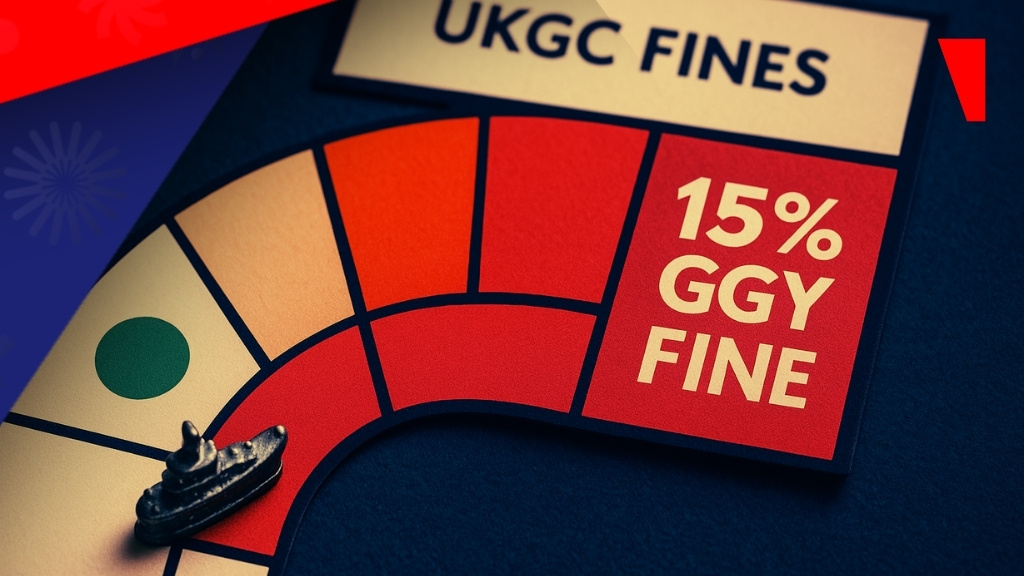
The UK Gambling Commission (UKGC) just ripped up the rulebook. In what it’s calling the biggest shake-up of its fines system in nearly ten years, the regulator is finally giving operators something to read between the lines. From 10 October 2025, licensed operators found in breach of their obligations may face significant financial penalties. In the most serious cases, fines may exceed 15 percent of Gross Gambling Yield (GGY), according to the Commission’s official announcement. No more crystal balls or coded warnings. The UKGC wants fines that speak in numbers, not riddles, and that tie wrongdoing straight to the bottom line.
The announcement, made official via the UK Gambling Commission’s website, follows a full-scale consultation launched in late 2023. They received 29 formal responses, representing industry leaders, legal experts, and consumer protection advocates. The new framework is akin to a ladder with rules — seven steps to follow, five rungs of seriousness, and no more guessing how far you might fall. Under the new regime, breach severity now scales with the operator’s GGY during the period of non-compliance, replacing ambiguity with a structured financial calculus.
While the Commission presents the overhaul as a long-awaited boost to transparency, many operators are left navigating a minefield of financial, operational and reputational consequences as they adjust to the incoming rules.
New UKGC enforcement formula ends discretionary grey areas
At the heart of the shift is a move away from guesswork towards a structured seven-step process. A straightforward penalty formula now replaces vague, case-by-case decisions. Key features of the structured penalty model include:-
- Repayment of profits gained through non-compliant conduct
- A five-tier seriousness scale aligned to operator GGY during the breach
- Variable adjustments for aggravating and mitigating factors, including concealment and management involvement
- A deterrence uplift designed to outweigh any financial benefit from the breach
- Early resolution discounts for operators who cooperate promptly with investigations
- Affordability assessments to prevent disproportionate penalties for smaller operators
- A final proportionality check to ensure the penalty remains fair and justified
Level 5 penalties will start at 10 percent of GGY, with the possibility of exceeding 15 percent in the most serious cases. In contrast, the current guidance, last updated in 2021, provides no clear financial parameters for GGY-based penalties.
Operators offering society lotteries, charitable games, or holding personal licences are excluded from GGY-based fines. Instead, they will face a separate calculation method considered more suitable for their business models.
From complaints to clarity, but will it hold?
The UKGC’s updated enforcement framework is, in part, a response to persistent industry criticism. Between August 2021 and July 2023, almost fifty percent of sanctioned firms pushed back, not against guilt, but against the murkiness of the maths and the muddle behind the decisions. The new process aims to tackle this directly through a step-by-step logic and publicly defined criteria. But while transparency is welcome, subjectivity still lingers.
Legal experts have warned that the five-tier seriousness scale, ranging from 0.99 percent of GGY for Level 1 offences to 15 percent or more for Level 5, remains vulnerable to interpretation.
Factors such as consumer detriment, attempts to conceal breaches, and management involvement are open to judgment. With GGY now central to the framework, even minor breaches could have multi-million-pound consequences for larger operators.
The early resolution discount may offer some relief. Yet, for smaller firms, the cost of compliance needed to avoid a fine could still be out of reach.
Affordability in focus, a wider regulatory theme
The UKGC’s focus on affordability extends well beyond its fines framework. The regulator is currently piloting financial risk checks, a move aimed at assessing customer vulnerability while remaining proportionate. You can read more in our recent SiGMA News report on the UKGC’s affordability checks pilot and how it intersects with operator systems.
Across both customer protection and enforcement, the regulator is moving towards risk-weighted models. In practice, this demands that operators develop new analytics capabilities to estimate not only player spend but potential compliance exposure under each seriousness level.
This dynamic, while theoretically rational, is a tough ask for small- to mid-tier firms already stretched by the costs of white labelling, tech integrations, and regulatory compliance.
Implementation is coming, but is the system ready?
The new penalty structure becomes active on 10 October 2025, giving operators three months to prepare. But implementing the UKGC’s seven-step model is no small task. It requires:-
- Real-time GGY tracking during breach periods
- Enhanced legal risk modelling tools
- Internal protocols for grading breach severity
- Cross-functional compliance coordination
- Ongoing staff training
Many legacy systems simply are not built to handle that level of granularity. Operators relying on siloed compliance teams or basic spreadsheets will face a steep learning curve. RegTech providers may benefit, but they too must move fast to support the October 2025 UK gambling rules.
A related concern is the Commission’s own bandwidth. For such a sophisticated model to work, the UKGC must ensure its internal enforcement team can apply the framework consistently across the board.
Inconsistencies in penalty decisions, even minor ones, could undermine the very transparency the reforms aim to deliver.
Reputation, risk, and rebuilding public trust
There is, however, a clear upside. Stronger and more predictable UK Gambling Commission fines may help repair the credibility of Britain’s gambling regulatory environment. The reforms arrive at a time when political pressure over social responsibility is at its peak, and media scrutiny of big-brand failures remains relentless.
By pinning penalties to revenue and publishing a seriousness scale, the UKGC is building a system that holds harm-doers accountable while rewarding responsible governance. That is a reputational win, not just for the regulator, but for operators willing to adapt.
Still, as we reported in a recent SiGMA News deep dive on the UKGC’s data strategy, the broader regulatory pivot depends on reliable infrastructure and stakeholder cooperation.
Looking ahead, deterrent or danger?
As October approaches, operators face a delicate question. Will the new rules promote fairer, more consistent enforcement, or simply raise the stakes of getting it wrong?
The answer likely depends on how well the industry balances investment in prevention against the spectre of punishment. What is clear, however, is that the era of vague enforcement has come to an end.
With GGY now embedded in the calculus, and 15 percent penalties no longer hypothetical, the UK’s gambling industry must evolve not only to comply but also to survive.


