
Philippines President urges continuity on gaming reforms

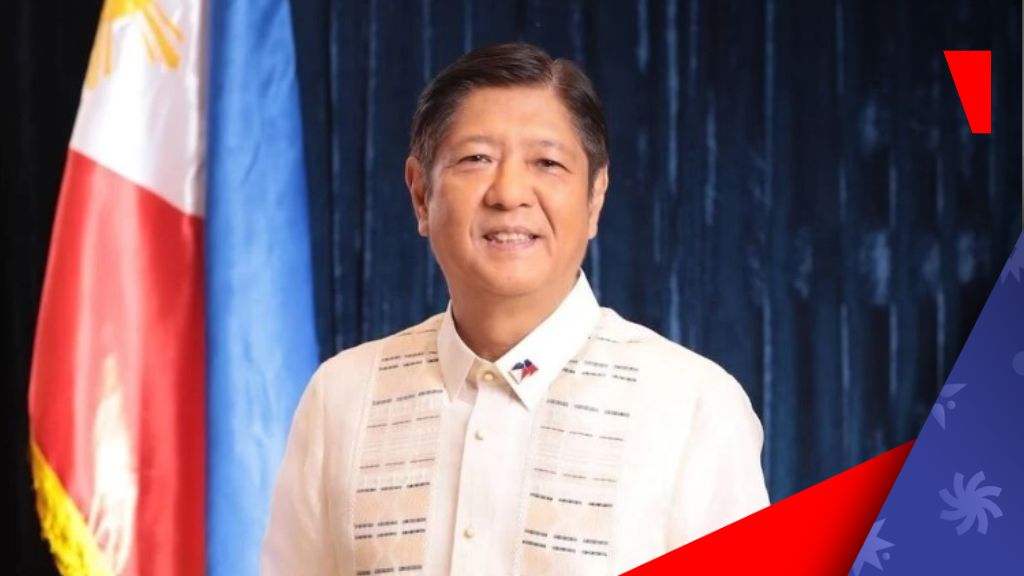
Philippine President Ferdinand Marcos Jr. has marked that the country will need a “like-minded president” after 2028 to sustain the economic and regulatory reforms his administration has pursued, including the sweeping overhaul of the country’s online gaming sector. The remarks were made during a fireside chat at the ASEAN Editors and Economic Opinion Leaders Forum, held on 24 February at the Fairmont Hotel in Makati, Manila.
The session, titled Tapping the Philippines’ Dynamic Growth Story, centred on economic competitiveness, structural governance and regional integration. No new gambling policy was announced. But the president’s framing of policy continuity carries direct implications for the regulated gaming market his administration has spent the past two years reshaping from the ground up.
From expansion to prohibition
The transformation of the Philippine gaming sector under Marcos has been one of the most decisive regulatory pivots in the region’s recent development. When he delivered his State of the Nation Address in July 2024, he announced an immediate ban on Philippine Offshore Gaming Operators, the sector commonly known as POGOs. “Effective today, all POGOs are banned,” he said. The statement left no room for interpretation.
The operational wind-down followed in November 2024, when Marcos signed Executive Order No. 74, which set out the formal framework for ceasing offshore gaming activity. The Philippine Amusement and Gaming Corporation (PAGCOR) confirmed in December 2024 that all offshore gaming licences had been cancelled with effect from 31 December. The sector that had once employed tens of thousands and generated significant, if contested, revenues was gone.
Legislative permanence came in October 2025. Marcos signed the Anti-POGO Act on 23 October, with the law published six days later and entering into force 15 days after publication. Republic Act No. 12312 has permanently banned offshore gaming and has repealed Republic Act No. 11590, the previous law that had given it a legal basis. This is now codified in law, rather than just an executive order.

What remains: the inland online market
Although the offshore gaming industry has been completely removed, the inland online gaming industry remains operational under the licensing system administered by PAGCOR. The system was made more stringent in conjunction with the offshore gaming exit. As of 1 January 2025, a one percent Responsible Gaming Levy was imposed on the gross win of the inland online gaming operators.
The gross gaming revenue fee structure for inland operators was also adjusted to rates broadly in the range of 25 to 30 percent. PAGCOR, chaired by Alejandro Tengco, confirmed the cancellation of offshore licences and has since repositioned its oversight function around the compliant inland sector. Anti-money laundering controls and responsible gaming requirements form the operating baseline for any operator holding a current PAGCOR licence.
The message from PAGCOR since the offshore exit has been consistent: the remaining licensed market is heavily supervised, and access is conditional on meeting compliance standards that the previous POGO era was widely criticised for failing to enforce.
Why continuity matters to the industry
Marcos’ comments at the ASEAN forum were not directed at the gaming industry specifically. But the regulated market that now exists in the Philippines is an administration-era creation. The offshore ban, the legislative codification, the licensing restructure and the levy framework were all introduced under his government. The concern for industry stakeholders is straightforward: a successor with different priorities could reopen questions that the current administration has treated as settled.
The president has a mandate until 2028. Whether the successor he has in mind shares his position on gaming regulation is, for now, an open question. What is certain is that the Philippine market operators and suppliers currently serve is a product of decisions taken since mid-2024, and that the stability of the current framework depends in part on the political continuity Marcos described at the forum.
For the moment, the regulatory picture is unchanged. Offshore gaming is banned in law. Inland online gaming is licensed and levied. PAGCOR holds oversight authority. Marcos has indicated he would like the direction to hold beyond his own tenure. Whether it does remains to be seen.
Stay in the loop and join the biggest iGaming Community in the world with SiGMA’s Top 10 news countdown. Subscribe HERE for weekly updates from the world’s iGaming authority and exclusive subscriber-only offers.


