

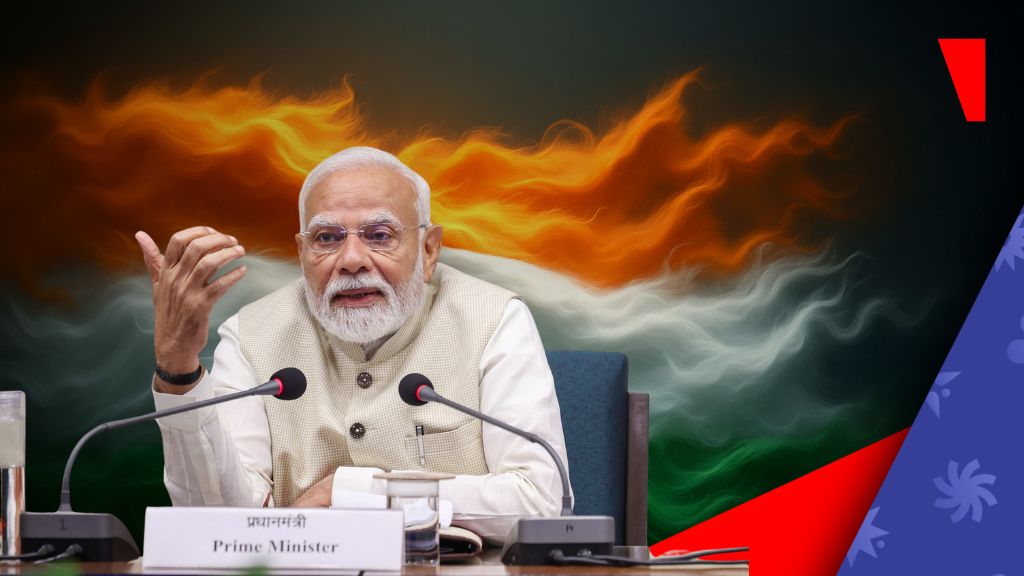
Indian Prime Minister Narendra Modi strongly backed the recently enacted Promotion and Regulation of Online Gaming Act, 2025, describing it as a “major decision” aimed at protecting youth from the harmful effects of online gambling and money-based gaming.
Speaking during an interaction with teachers in New Delhi on 4 September, as reported by local media, PM Modi emphasised the urgent need to regulate the growing influence of online games involving monetary transactions, citing multiple cases of debt, suicides, and family breakdowns linked to online gambling platforms. “Gaming in itself is not bad, but gambling is,” said PM Modi.
PM Modi said, “Unfortunately, many online applications are portrayed as games, but they incorporate gambling. Several families have been destroyed due to the addictive nature of such games and the financial difficulties they cause.”
The Prime Minister highlighted how online money games, which often disguise themselves as harmless entertainment, are proving to be dangerously addictive. He said this is especially the case among students and young professionals, reiterating that the future of the country’s youth must be safeguarded from such exploitative platforms.
Online Gaming Act 2025: Key highlights
The Online Gaming Regulation Act, 2025, passed by both houses of Parliament last month, aims to ban all forms of online money games, particularly those that require players to deposit money and offer cash rewards. All games involving money, whether based on skill, chance or a mix of both, are prohibited.
It does so while promoting esports and non-monetary online social gaming. Additionally, it prohibits advertisements promoting online money games and bans financial transactions related to online gambling by banks and financial institutions. Authorities can block access to unlawful services using powers under the Information Technology Act, 2000.
It also makes offering or facilitating online gambling punishable with up to 3 years in prison or a fine of up to ₹1 crore ($120,481). The Act was spearheaded by Union Minister for Electronics and Information Technology, Ashwini Vaishnaw, who stressed that the goal is to promote innovation in gaming while clamping down on predatory gambling models. The Ministry was assigned the responsibility under the Allocation of Business Rules to legislate for the sector.
“Gaming in itself is not bad, but gambling is.”
– Indian Prime Minister Narendra Modi
According to Vaishnaw, around 45 crore Indians have been negatively affected by online money gaming, with total losses estimated at more than ₹20,000 crore ($2.41 billion). Parliament cleared the law after reports of rising addiction and financial damage linked to online betting-style platforms.
On 1 September 2025, Union IT Minister Ashwini Vaishnaw met with leading gaming companies to discuss issues including fund security, regulatory adherence, and the development of lawful gaming platforms. The discussion included representatives from gaming companies, industry bodies, esports associations, and payment service providers, highlighting the wide-ranging implications of the new law. Minister Ashwini Vaishnaw addressed concerns raised by industry representatives regarding the scope and clarity of the new legislation. He stated that the aim is to support regulated gaming and esports while enforcing restrictions on real-money betting platforms.
Implementation timeline, next steps, and after-effects
PM Modi also underlined the NDA-led government’s (opposition) “political will” to push through this crucial legislation despite opposition, stating, “We are deeply concerned about the country’s future. We took this step to protect our youth and families.”
The rules and frequently asked questions (FAQs) related to the Online Gaming Act are expected to be issued within the next three to four weeks, according to updates from the first stakeholder consultation with industry representatives led by IT Minister Vaishnaw. While addressing concerns, PM Modi also acknowledged India’s potential to dominate the global online gaming industry, provided the sector remains ethical and free from gambling elements.
The after-effects of the blanket ban created strong ripples across the country’s fintech sector. Though the law is yet to be notified, leading gaming companies have already shut their paid offerings. The sudden halt has left payment aggregators and fintech firms facing a sharp fall in transaction volumes and revenues. The fintech industry as a whole earned an estimated ₹1,500 crore ($170.7 million) in revenue from gaming-linked transactions in the last financial year. This income stream has been abruptly cut off, removing one of the fastest-growing segments for payment companies.
Court hears challenge to online gaming ban
Meanwhile, last week, the Indian High Court heard a petition filed by Bagheera Carrom (OPC) Private Limited against the newly enacted Act. The company has challenged the law’s constitutional validity, arguing that it unfairly prohibits all online games played with real money stakes, regardless of whether they are based on skill or chance. The petition argues that the 2025 Act was passed in haste without adequate consultation with stakeholders from the online gaming sector. It challenges the blanket ban on real-money games, including those recognised as skill-based.
Bagheera contends that the law violates several constitutional protections. It has invoked Article 14, which guarantees equality before the law, Article 19, which protects the right to carry on trade or business, and Article 21, which safeguards the right to life and personal liberty. The petition describes the ban as arbitrary, disproportionate and vague. The company has also questioned the legislative competence of the central government. It has argued that subjects such as “betting and gambling” and “sports, entertainment and amusements” fall within the State List under the Constitution, and therefore only state legislatures have the power to make laws on these matters.
In a separate development, the Maharashtra government is considering a new model to revive its struggling lottery sector and increase state revenue. A proposal that is currently under review suggests that money spent on lottery tickets will not be forfeited if the buyer does not win. Instead, the amount will be deposited with the state government and repaid to the buyer after three or five years with interest.


