


Politics, blockchain, and economic democracy: Marcello Coppo’s perspective

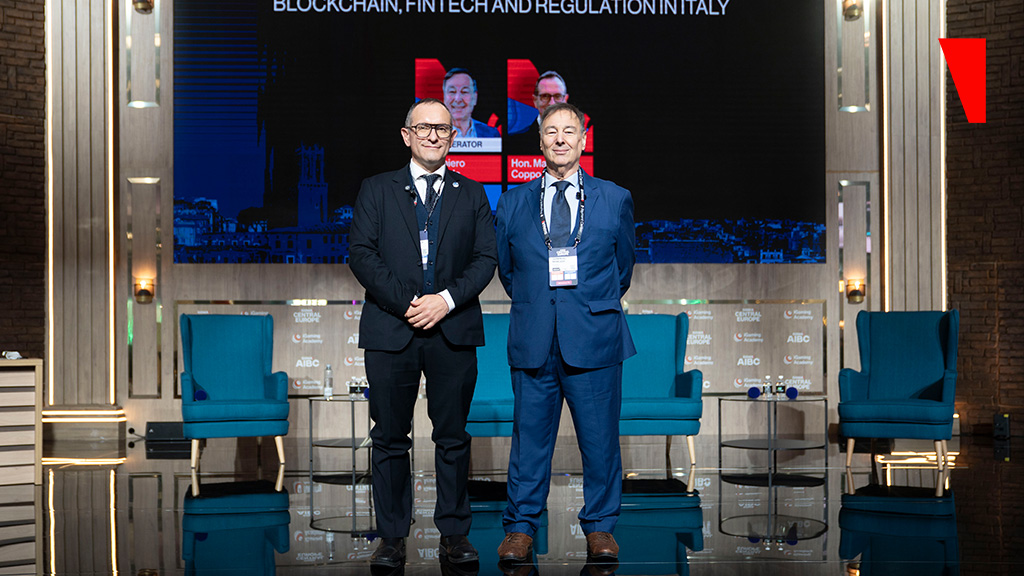
In a conversation with journalist Giampiero Moncada from PressGiochi, Hon. Marcello Coppo, Member of the Chamber of Deputies, shared his vision of how blockchain technology and cryptocurrencies can reshape the economy and society. As both a politician and the author of a novel inspired by the world of Bitcoin (“Tu, Satoshi, perché?”, which translates to “You, Satoshi, why?”), Coppo aims to make a complex and often distant topic more accessible, showing how blockchain can have a direct impact on people’s everyday lives.
At the heart of his reflection lies the idea that blockchain represents a new way to transfer value – an evolution that concerns not only finance or technology experts but everyone, from citizens to governments. According to Coppo, there are three main tools for value transfer today: Bitcoin, stablecoins, and central bank digital currencies (CBDCs). Each represents a different vision for the future of the global economy.
The fireside discussion took place at the SiGMA Central Europe conference, taking place this week at the Fiera Roma.
New Ways to Transfer Value
By definition, Bitcoin is decentralized and accessible, a system that belongs to no one yet can be used by everyone. CBDCs, on the other hand, are centralized and managed directly by central banks, offering stability but also raising concerns about privacy and control.
Stablecoins, according to Coppo, serve as the real bridge between traditional and digital finance: instruments that preserve the value of fiat currencies while providing the speed and flexibility of the crypto world.
For Coppo, the real challenge lies in balancing innovation and regulation. He notes that Italy has already legally recognized cryptocurrencies, introducing specific tax rules and a legal framework. However, the core direction remains European: the EU sets the general guidelines, and individual states must adapt. Yet, the European framework can sometimes be too rigid, as seen in the case of MiCA.
The goal, he argues, should not be to restrain cryptocurrencies, but to create an environment where innovation and security can coexist. Coppo envisions a future where euro-backed stablecoins could strengthen the European currency and offer a credible alternative to the dominance of the dollar and U.S. digital assets.
Can the Digital Euro Be the Solution?
When discussing the Digital Euro, Coppo makes a clear distinction between this project and stablecoins. The former, he explains, is a Central Bank Digital Currency, which means a fully centralized system. While it’s useful, it’s not sufficient: it doesn’t represent real innovation, nor does it solve the structural limitations of Europe’s financial system.
The Digital Euro can serve as a support tool, but not as the final answer. True innovation, Coppo believes, requires openness, experimentation, and a more flexible approach to new technologies.
One of the key challenges remains balancing security with development. When asked whether more permissive rules could lead to illegal activity, Coppo stressed the need for proportional regulation. The biggest mistake, he says, is applying the same regulatory framework to every type of project, regardless of its scale or nature.
A system designed only for major operators inevitably stifles startups and grassroots innovation—the very sources of new ideas and solutions.
For this reason, Coppo calls for a differentiated approach, where regulations are tailored to the type of activity and level of risk. Only then can authorities maintain control without paralyzing creativity and growth. Yet, this remains an open challenge: politics has not yet found an effective balance between oversight and technological progress.
The Dialogue Between Politics and Technological Innovation
The dialogue between policymakers and innovators is often hindered by a lack of understanding. Many decision-makers simply don’t grasp what blockchain is or how it works. This isn’t a matter of ideology or political alignment, but it’s rather a knowledge gap that limits institutions’ ability to adapt to change.
That’s why building bridges between experts and lawmakers is essential, so that regulations emerge from shared understanding, not from fear or prejudice.
Education, therefore, becomes a fundamental part of policymaking. These topics must be made accessible to everyone, because blockchain isn’t a passing trend. It’s a tool to make the economic system more transparent and inclusive.
It’s a technology that can give people back control over their data, savings, and transactions. In Coppo’s view, economic democracy is only possible if knowledge itself is democratized – in other words if everyone, not just specialists, can understand and participate.
In short, politics must move beyond its defensive stance toward innovation. It must learn to understand it, regulate it intelligently, and above all, leverage it. Only then can Europe take the lead in shaping the new digital ecosystem, instead of simply adapting to rules set elsewhere.
Highlights
- Blockchain introduces a new way to transfer value, accessible to everyone, not just experts.
- Bitcoin, stablecoins, and CBDCs represent three distinct models of the digital economy.
- Stablecoins could strengthen the euro and integrate traditional finance with digital systems.
- Italy legally recognizes cryptocurrencies but follows the broader EU framework.
- MiCA is often seen as too rigid and could slow economic innovation.
- The Digital Euro is useful but not the ultimate solution, as it remains centralized.
- Regulations should be proportionate to project size and actual risk.
- Excessive bureaucracy harms startups and limits creativity.
- Policymakers must educate themselves and engage with experts to legislate effectively.
- Educating people about blockchain means democratizing economic knowledge.
“I believe blockchain can make investment – as well as the understanding of economics and finance – more democratic.”
— Marcello Coppo
Disclaimer: The content presented on this page is strictly informational and intended for B2B purposes only. SiGMA Group is not responsible or liable for any business decisions, commercial agreements, or activities conducted by attendees, exhibitors, or third parties during or after the event. All participants are responsible for ensuring compliance with applicable laws and licensing requirements, including those of the Agenzia delle Dogane e dei Monopoli (ADM) in Italy. Our events are restricted to adults aged 18 and over.


