
Romania approves 2025 gambling tax hike for players & operators

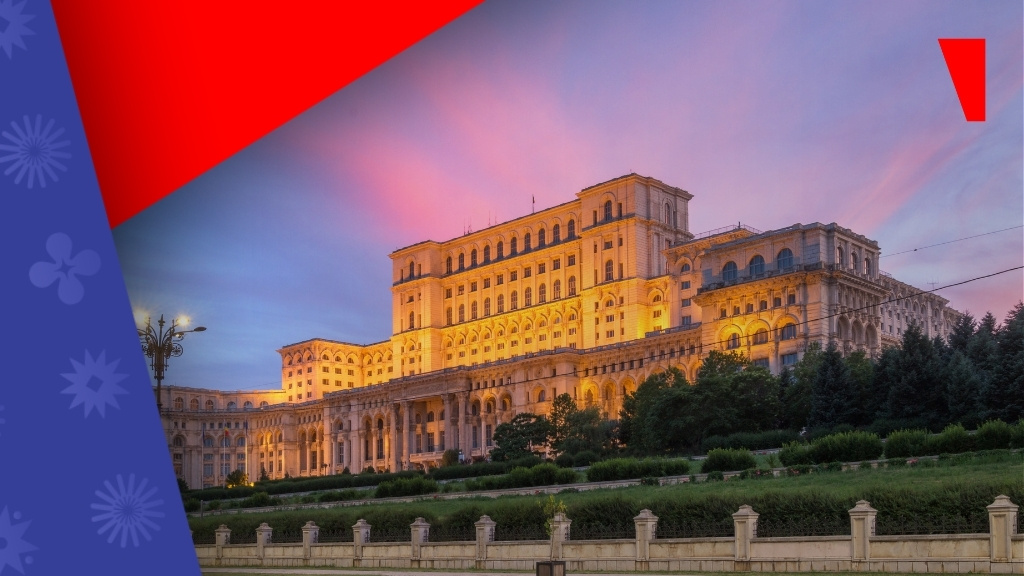
Romania’s government, led by Prime Minister Ilie Bolojan, has approved a fiscal package that significantly raises taxes across several sectors, including a controversial increase in gambling taxes. The decision, adopted on 4 July, is intended to help Romania meet its 2025 deficit target of 7% of GDP, in line with European Union requirements.
Among the key measures are an increase in the standard VAT from 19% to 21%, and a rise in the dividend tax rate from 10% to 16%.
Higher taxes for operators and players alike
Under the new regime, online gambling operators will now pay 27% tax on their gross gaming revenue (GGR), up from 21%, according to Mediafax. Retail operators will face a 23% GGR tax.
Slot machine operators, already struggling with a ban on venues in small communities, will be hit with an additional €1,000 annual fee per machine, according to the same source.
Players themselves are also affected. All winnings—regardless of amount—will now be taxed at 4% at source, up from the previous 3%. With no tax-free threshold in place, even winnings of a few dozen lei are subject to deductions.
As Mediafax noted, “For players, the new blow comes in the form of a 4% tax applied directly at source on any winnings, even those of just a few dozen lei, which, in the context of taxation from the first leu, means that players with small bets can lose money even when they ‘win’.”
By comparison, countries like Germany, France and Belgium do not tax gambling winnings at all, and others like Spain and Poland only apply tax after generous thresholds, noted the local media outlet.
However, according to Profit.ro, the draft law initially proposed a minimum tax rate of 10% on all winnings, which has since been reduced to 4% for winnings under 10,000 lei (approximately €2,000).
According to Profit.ro, this is how the winnings taxation system has evolved:
Tax regime, prior to reform:
- Up to 10,000 lei (€2,000): 3%
- From 10,001 to 66,750 lei (€2,000 – €13,350): 300 lei (€60) + 20% of the amount over 10,000 lei
- Over 66,750 lei (€13,350): 11,650 lei (€2,330) + 40% of the amount over 66,750 lei
Adopted version (as of 4 July 2025):
- Up to 10,000 lei (€2,000): 4%
- From 10,001 to 66,750 lei (€2,000 – €13,350): 400 lei (€80) + 20% of the amount over 10,000 lei
- Over 66,750 lei (€13,350): 11,750 lei (€2,350) + 40% of the amount over 66,750 lei
Original government proposal (now abandoned):
- Up to 10,000 lei (€2,000): 10%
- From 10,001 to 66,750 lei (€2,000 – €13,350): 1,000 lei (€200) + 20% of the amount over 10,000 lei
- Over 66,750 lei (€13,350): 12,350 lei (€2,470) + 40% of the amount over 66,750 lei
Escalating player shift to the black market
Critics argue the measures could have the unintended consequence of pushing more players towards unlicensed operators.
“There is already anecdotal evidence of players shifting to offshore platforms to avoid excessive taxation,” a local industry executive told Profit.ro. “These taxes make regulated play unattractive, especially for casual players.”
“A deeply unfair move”
“We are categorically opposed to tax increases and we consider it deeply unfair for the private sector to pay again for the irresponsibility of governments in recent years,” reacted Dan Șucu, president of the Concordia Employers’ Confederation, in a statement quoted by StartupCafe. The Confederation represents 20 of the most important sectors in the national economy and companies with more than 450,000 employees, with a total contribution of 30% to GDP.
The Romanian Economic and Social Council (ESC) has also been vocal in its opposition to the package, arguing it unfairly burdens the private sector.
However, the taxes have been deemed necessary to restore balance to the country’s economy — especially as Romania lost nearly €1 billion in gambling taxes between 2019 and 2023, due in large part to regulatory failures at the National Gambling Office (ONJN). An audit accused the regulator of operating with outdated IT systems and failing to monitor who was licensed or paying taxes. It also noted that ONJN failed to properly enforce the 2% monthly tax on online gambling participation fees introduced in 2019.
Meanwhile, ONJN joins European regulators’ forum
In a separate development, Romania’s National Gambling Office (ONJN) has joined the Gambling Regulators’ European Forum (GREF), bringing the GREF’s membership to 44 regulatory authorities.
The European organisation welcomed ONJN’s accession, stating it would “strengthen the association’s collective expertise and capacity to address the evolving challenges of gambling regulation across Europe.”


