



Armenia has long maintained a small but active gaming industry, shaped by both domestic policy shifts and regional market dynamics. Casinos operate mainly in designated zones outside Yerevan, while online betting and gaming platforms have grown steadily over the past decade, attracting both local and foreign operators.
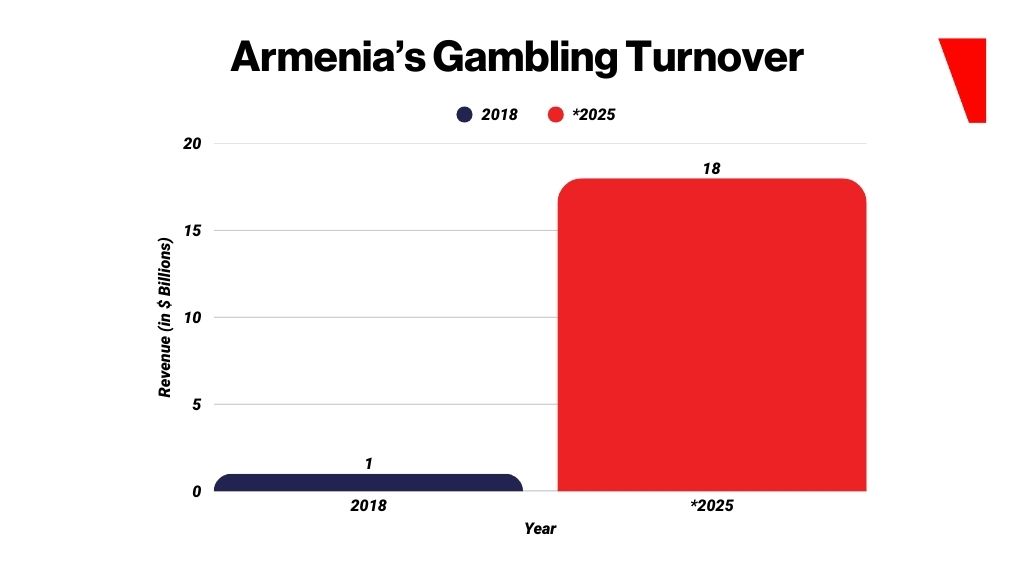
Data from the State Revenue Committee of the Republic of Armenia shows that gambling turnover reached nearly $18 billion (€16.6 billion) in 2024, compared to $1 billion (€0.92 billion) in 2018. Almost all of this activity, approximately 98 percent, originated from online platforms rather than land-based casinos. The scale of the sector now exceeds Armenia’s national debt of $12.8 billion (€11.8 billion).
The nation has seen a significant increase in gambling activities, both from local and foreign operators. According to data from Statista, the country’s online gambling market is projected to generate $205.22 million (€175.7 million) in revenue in 2025. Additionally, the online sports betting segment is expected to reach around $11.8 million (€10.9 million).
However, along with this, the concern of gambling addiction has also taken centre stage in Yerevan. As per a report by local media, in 2021, Armenians reportedly lost approximately $150 million (€138 million) to gambling. While specific national prevalence rates for problem gambling are not readily available, the high financial losses suggest a significant number of individuals may be affected.
Calls anew to ban gambling ads
The Armenian government has responded with legislative measures aimed at addressing gambling addiction, the latest being renewed efforts to restrict online gambling advertisements. A ruling party lawmaker has introduced a bill seeking to ban such ads in hotels and at border crossing points.
Lawmaker Narek Ghahramanyan of the Civil Contract party presented the proposal in parliament on 7 May 2025. The legislation would prohibit gambling advertisements, including online gambling promotions, at Armenian entry points and in hotels. Current law permits such ads in these locations, provided the hotel has a rating of four stars or higher.
Ghahramanyan noted a recent increase in these advertisements and expressed concern that tourists and visitors encountering them at airports or border points might receive a negative impression of Armenia and its tourism sector. If passed, the bill would limit gambling ads to official websites and business offices only.
Before this, gambling advertisements in Armenia were subject to limited regulation. In December 2012, the government approved amendments to the “On Advertisement” law, effectively banning the promotion of casinos and gambling houses. The changes prohibited such advertisements on television and radio, on the first and last pages of printed media, and public posters.
The amendments did not apply to lottery advertisements, which the government considered public events. As a result, the ban on advertising did not affect the organisation of lotteries in Armenia.
Increased taxation and duties
The government has taken a cautious approach, frequently tightening regulations in response to concerns over social risks and money laundering.
Recent years have seen increased taxation on gaming companies alongside stricter advertising rules, reflecting wider efforts to balance revenue generation with public health concerns. At the same time, international interest in Armenia’s online gambling framework has grown, partly due to its licencing system and relatively open digital infrastructure compared with neighbouring states.
The government began implementing more stringent regulations in 2022, including a ban on public advertisements related to gambling and lotteries. More robust measures have been enacted in recent days. In April 2025, state duties on gambling activities were doubled as part of an initiative aimed at balancing economic benefits with social responsibility.
Moreover, Prime Minister Nikol Pashinyan instituted a 10 percent turnover tax on online casino gaming revenues, which will be in addition to existing taxes and duties. It is noteworthy that this tax does not apply to bookmakers and has been effective as of 1 July 2025.
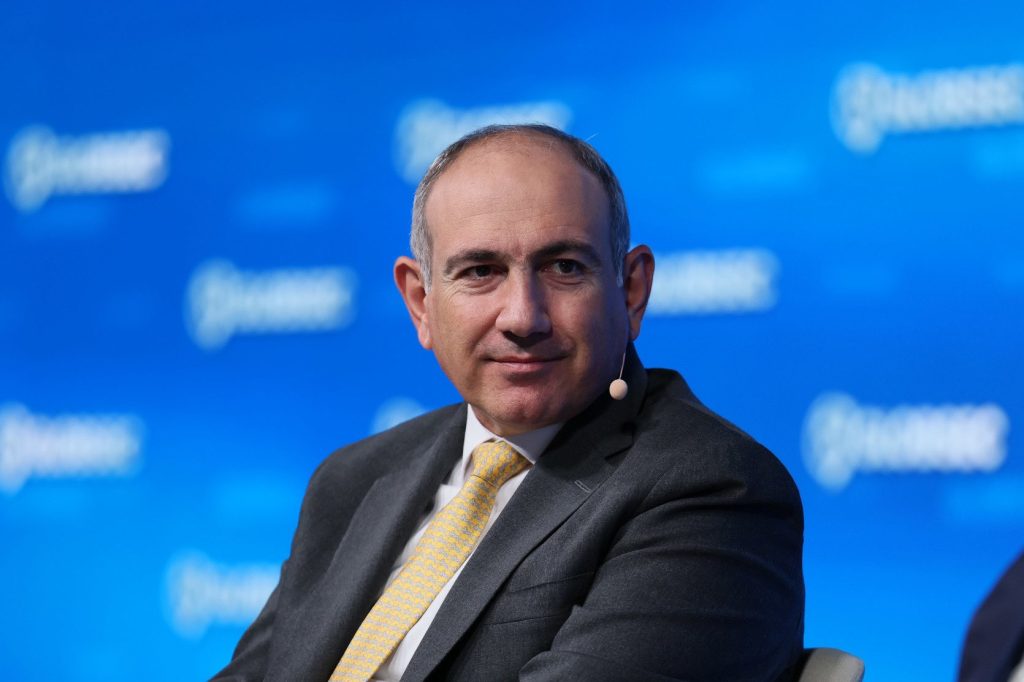
Pashinyan has emphasised that a complete ban on gambling is not a practical solution. “If people don’t place bets in Armenia, they will do so in another country. These are online bets. Restricting the internet would likely lead to widespread criticism, with claims that we are limiting people’s freedoms and taking a ‘dictatorial’ step,” he said during a recent press conference.
An outright ban?
However, actions via Yerevan indicate otherwise. While casinos and bookmakers have not strongly opposed the new rules, concerns have emerged from the advertising sector. Some companies claim that 60-70 percent of their revenue comes from online gambling and lottery promotions, although government officials argue that the actual figure is closer to 20–25 percent. Experts warn that if this tussle continues, it could inadvertently drive illegal gambling, potentially worsening the situation.
In an earlier conversation with SiGMA News, Andrejs Gladisevs, an iGaming expert and founder of MyCasino Setup, voiced his concerns over the proposed tax changes. He stated that the measures could have a major impact on businesses within Armenia’s gambling industry. He added, “If only local companies are permitted to operate under these legislations, it could harm the sector, potentially leading to the closure of legal casinos and fuelling the black market.”
An outright ban might push gambling underground, creating unregulated markets with higher risks for vulnerable individuals. Observers suggest that Armenia might benefit from a more nuanced strategy, including enhanced monitoring, targeted interventions for problem gamblers, and stricter enforcement of existing laws.


