


Nepal’s iGaming industry has faced a sudden setback after widespread protests and political upheaval followed a government order to block social media platforms. Market data shows that online gambling interest in the country fell dramatically within a week, underlining the disruption caused by digital restrictions and nationwide unrest.
Blask Index records steep decline
Blask, a market intelligence provider, reported that iGaming interest in Nepal dropped by 74 percent in early September. The Blask Index fell from 26,300 on 02 September, to just 6,600 on 09 September. The index reflects user activity at the top of the acquisition funnel, a key measure of new player engagement.
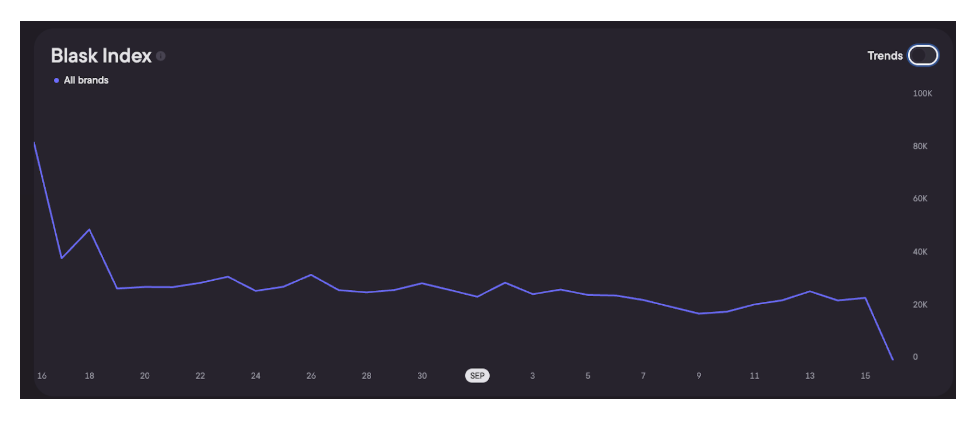
The fall comes after a period of strong growth. In the past year, the Nepal Blask Index rose 72 percent, climbing from 4.24 million to 7.29 million. The number of active iGaming brands stood at 48 before the crisis. This marks the sharpest downturn since Blask began tracking the market.
Social media ban sparks protests
The downturn coincided with unrest triggered by the government’s decision on 04 September to block 26 social media platforms. Applications such as Facebook, Instagram, YouTube, WhatsApp, LinkedIn and X were inaccessible, while only a handful like TikTok and Viber remained online after registration with the Ministry of Communications and Information Technology.
The restrictions prompted mass demonstrations led mainly by young people. Several rallies took place in Kathmandu, Pokhara, Lalitpur and Biratnagar, with thousands joining. Protesters used slogans such as “Shut down corruption and not social media” and “Youths against corruption.”
Deadly clashes and curfews
Protests soon turned violent. Security forces used tear gas, rubber bullets, water cannons and live rounds in several cities. At least 19 people were killed and over 100 were injured, though some local reports suggest higher injury counts. Authorities imposed curfews in Kathmandu, Lalitpur and Bhaktapur, while internet blackouts were reported in several districts.
During the unrest, infrastructure was also hit. Fires damaged data centres belonging to Vianet and CG Net, causing internet outages. Nepal’s overall internet bandwidth surged by about 40 percent as users turned to virtual private network (VPNs) to bypass restrictions. Despite these disruptions, core government digital infrastructure remained operational, allowing digital payments, emails and cloud services to continue.
Political fallout
The protests added to political instability. Prime Minister of Nepal K. P. Sharma Oli resigned amid pressure from opposition parties and public anger. An interim administration has taken charge and launched a judicial investigation into the clashes, promising free medical care for the injured and compensation for families of those killed.
Although the social media ban was lifted on 09 September, curfews and security restrictions have continued in some parts of the capital. Business closures and transport blockades have further slowed consumer activity.
Impact on iGaming and economy
The temporary loss of social media platforms cut off a vital marketing channel for iGaming operators, directly impacting user acquisition and engagement. Even after services were restored, ongoing curfews and reduced online activity limited recovery.
The iGaming slump reflects broader economic strain. Nepal’s tourism sector recorded a 30 percent fall in arrivals compared to last year during the unrest. Local businesses and digital marketers reported revenue losses, while IT firms raised concerns over the impact of unpredictable digital policy on investment.
Outlook
Before September, Nepal’s iGaming industry had been one of the fastest-growing in South Asia, supported by rising smartphone penetration and youth-driven demand. The current downturn highlights the sector’s vulnerability to political and regulatory shifts.
Whether the market can return to its earlier trajectory will depend on political stability, uninterrupted access to digital platforms and the restoration of public confidence. For now, operators and investors are monitoring the situation closely as Nepal works to restore order.


