



Colorado lawmakers are chiming in on a proposal that would impose stricter rules on sports betting and advertising across the state. Senate Bill 131 seeks to curb gambling addiction while safeguarding funding for Colorado’s water projects.
One of its sponsors, Senator Matt Ball, stressed that the measure is not a ban but a safeguard. As quoted on KKCO 11 News, he said that anyone who wants to wager $500 on the Broncos can still do so, adding that the bill introduces “reasonable guardrails” for a market he described as “out of control.”
Key restrictions on operators
The proposal outlines several new rules for licenced online sports betting platforms. For one, bettors would be limited to five deposits within a 24-hour period. In addition, operators would not be able to restrict deposits or betting frequency simply because a customer wins regularly, unless suspicious behaviour suggests problem gambling. Push notifications and text messages pressuring account holders to place bets would also be prohibited.
Rapid growth of Colorado’s betting market
Since legalisation in 2019, Colorado’s sports betting industry has expanded rapidly. Online wagering is projected to reach $6.3 billion by 2025—a 130% increase from 2020. While the revenue has boosted state coffers, lawmakers argue that betting has fuelled financial and social problems.
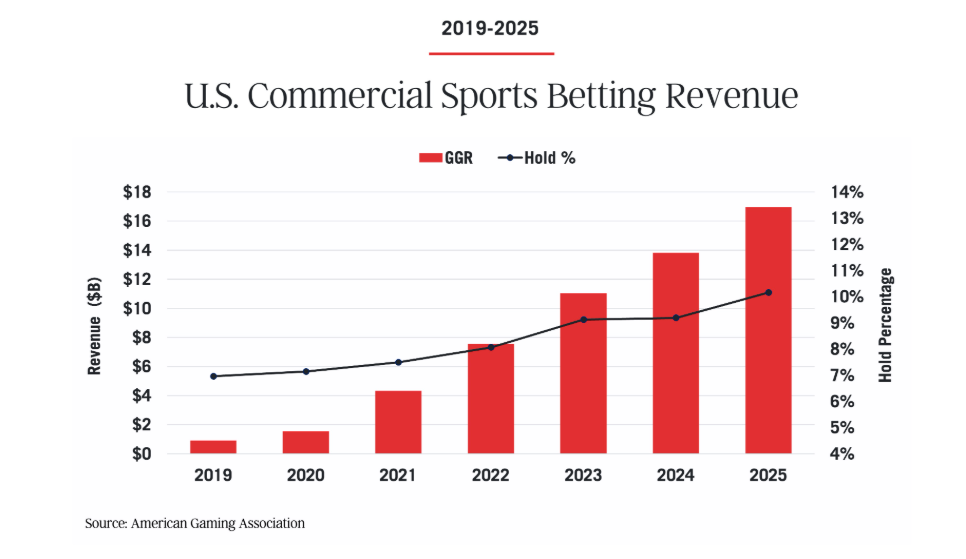
Nationally, U.S. sports betting revenue is expected to exceed $12 billion in 2025, with total wagers surpassing $150 billion, according to VIXIO. 38 states, including Washington, D.C., have legalised sports betting in some form. More than 80 percent of wagers are placed online or via mobile apps, reflecting consumer preference for convenience.
Additionally, Pew Research reports that 20 percent of U.S. adults have placed a sports bet in the past year, with participation highest among men under 40. NFL and NBA games drive most wagers, followed by college football and March Madness, Techopedia notes.
Advertising and promotion rules
SB 131 also targets advertising practices. Promotional terms such as “bonus” or “no sweat” would be banned, and ads could not demonstrate how to place a bet. Broadcast betting ads would be prohibited between 8 a.m. and 10 p.m. and during live sports events. States like New York and Massachusetts have introduced similar restrictions.
Oversight and reporting measures
The proposed bill bans third-party entities from being paid based on customer recruitment or betting outcomes. Starting in 2028, operators must submit annual transaction data to the Division of Gaming, which will publish statewide reports every three years.
Other provisions include banning “suggestion bets,” which are tied to athlete performance or specific in-game events. Furthermore, it prohibits credit card deposits and imposes penalties of up to $25,000 for violations. Operators must also provide self-exclusion tools, spending limits, and addiction resources, as gambling-related helpline calls continue to rise nationwide.
Finally, SB 131 guarantees that annual transfers from the sports betting fund to Colorado’s water plan will never fall below the previous year’s level, ensuring stable funding. The bill now advances to the Senate Finance Committee for further debate.
Subscribe HERE to SiGMA’s Top 10 News countdown and SiGMA’s weekly newsletter to stay up to date with all the latest iGaming News from the world’s iGaming authority, and benefit from subscriber-only offers.


