
New report exposes trust gap in Sweden’s online gambling market

Seventy-two per cent of Swedes gambled for money in 2025, according to the Swedish Gambling Authority’s most recently published annual survey. Another comprehensive study of the online casino market shows just how embedded digital gambling has become: around 18% of Swedes qualify as online casino players, placing online casino firmly in the mainstream of Swedish leisure activity.
At the same time, confidence in the system is fragile. According to the same study, 34% of online casino players say they sometimes or often suspect that outcomes at Swedish-licensed casinos are manipulated. That mistrust sits uneasily alongside one of the central promises of regulation: that licensed sites are fair, transparent and safer than their unlicensed counterparts.
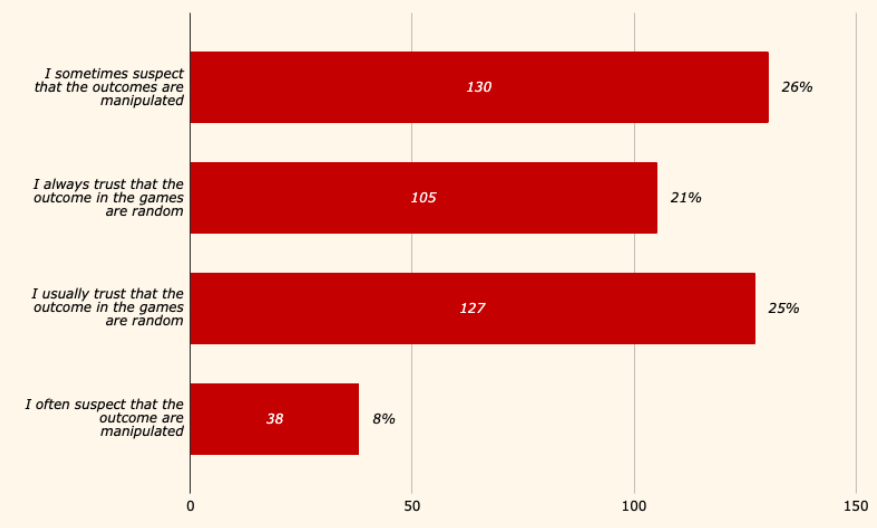
money? Source: CasinoFeber.
A knowledge gap and a quiet drift offshore
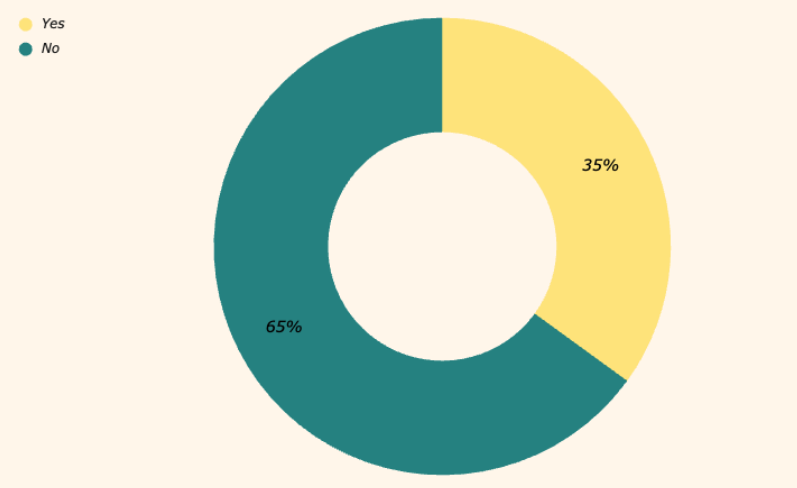
The survey, conducted by CasinoFeber and the independent research institute Reflect, also exposes a striking lack of basic consumer knowledge. Almost two-thirds of players (65%) say they do not know how to check whether a casino has a Swedish gambling licence. In practice, this makes it harder for consumers to distinguish between legal operators and offshore sites that fall outside Sweden’s rules on consumer protection, self-exclusion and taxation.
Offshore play is far from being marginal. The study found that 18% of respondents reported playing on casinos without a Swedish licence in the past year. For regulators, that figure undercuts the central goal of Sweden’s 2019 re-regulation: high “channelisation”, meaning that most gambling activity takes place within the licensed market.
Other findings hint at why players shop around. Fast withdrawals ranked as the single most important factor when choosing a casino site, ahead of bonuses. Nearly a quarter of players also said they do not tell anyone that they gamble online, suggesting that for many, online casino remains a private habit, potentially shameful, rather than a social one.
Trust improving slightly
Sports betting continues to grow, according to the regulator’s data. Betting on horse races rose to 44%, up from 38%, while betting on sports more generally increased to 30% from 19% over the past year. The survey also found that 42% of respondents gamble in the hope of “winning big”, a motivation that has steadily increased over time.
Notably, perceptions of industry responsibility have improved. Eighteen per cent of respondents now feel that the Swedish gambling industry takes sufficient social responsibility, compared with just 7% in previous years. That is progress, but from a very low base.
Regulation tightens, companies wobble
While players weigh speed and trust, policymakers are tightening the screws. Sweden already has some of the most rigid gambling rules in the world, and more are coming. From April 2026, a new law will introduce a total ban on all forms of credit in gambling, covering credit cards, short-term loans and “buy now, pay later” products.
The impact on the industry is already visible. In an article published by Dagens PS in January 2026, the business newspaper reported that Evolution Gaming’s share price has fallen more than 30% over the past year, as investors reassessed regulatory risk. The paper quoted the finance ministry’s stated aim of the credit ban as being “to prevent over-indebtedness as a result of gambling”.
For critics within the industry, the danger is that ever tougher restrictions will push more players away from the licensed market. As Gustaf Hoffstedt, head of the Swedish Trade Association for Online Gambling, put it in a recent interview with SiGMA News: “Channelisation is the mother of all other challenges.” Without it, he argued, “consumer protection is completely worthless if the consumers are not present”.
Sweden’s gamble was that regulation would bring trust, safety and control. The data now suggest a complex reality: a popular market, a sceptical public, and a growing tension between protection and competitiveness.
Subscribe HERE to SiGMA’s Top 10 News countdown and SiGMA’s weekly newsletter to stay up to date with all the latest iGaming News from the biggest iGaming community in the world and benefit from subscriber-only offers.


