


Channelisation gap: Sweden & Denmark gambling rules compared

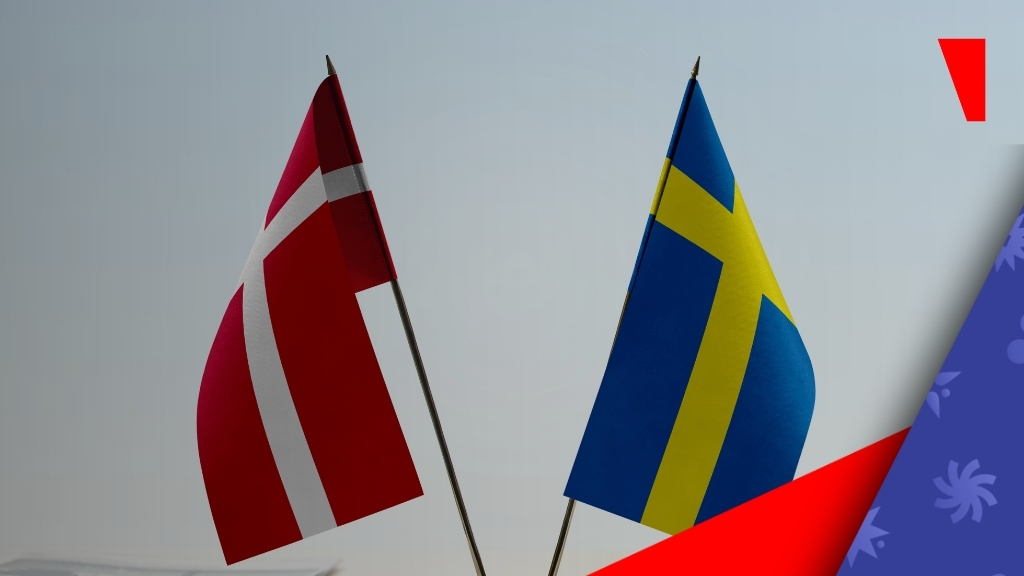
When Sweden liberalised its gambling market in 2019, the government set an ambitious goal: 90 percent of all gambling should take place within the licensed system. Six years later, that goal remains unmet. According to the new comparative report Lessons from two Nordic countries, presented by the Danish law firm Nordic Legal at a seminar organised by the Swedish trade body BOS, Sweden’s channelling rate continues to slide, particularly in online casino gaming.
Denmark, long seen as Europe’s model of pragmatic regulation, has until recently outperformed Sweden. But the report, co-authored by Maria McDonald and Morten Rønde, finds that “both markets are now under increasing pressure from unlicensed operators and will need to adapt if they are to defend their channelling rates going forward”. While Denmark’s system is often held up as a benchmark, new data suggest its advantage may be shrinking.
Sweden’s tightening grip
Under current Swedish rules, all loyalty schemes and recurring incentives are banned. The Swedish Gaming Act limits each licensee to offer only one welcome bonus per customer, the report notes, and courts have consistently upheld sanctions against operators that attempted to introduce recurring benefits.
This rigidity, according to the report, has hurt Sweden’s competitive position. “The licensed market’s ability to retain customers largely depends on the initial offer,” the authors write, warning that overly strict rules risk “driving players towards unlicensed sites where continuous promotions are available”.
“The current ban on retention bonuses is too restrictive and unnecessarily so,” explained operators, adding, “We consider that there is a clear connection between lack of bonuses and lower channelling.”
The country’s regulator, Spelinspektionen, is also criticised for its enforcement culture. Operators told Nordic Legal that the regulator “communicates through sanctions” and that its expectations are often unclear.
At the same time, Swedish lawmakers are preparing to expand the scope of the Gambling Act. A new proposal would replace the “direction criterion”, which limits enforcement to operators actively targeting Swedish consumers (by offering content in Swedish, for instance), with a “participation criterion,” meaning the law would apply whenever a Swedish resident takes part in a game. The reform, backed by the industry and expected to take effect in 2027, would also introduce obligations for payment providers to block transactions to unlicensed sites.
“This is an important contribution to the possibility of strengthening the Swedish gambling licence market,” said BOS Secretary General Gustaf Hoffstedt. ATG chief executive Hans Lord Skarplöth was blunter: “Then there are no excuses left.”
Denmark’s balancing act
Across the Öresund, Denmark’s gambling authority Spillemyndigheden has long championed a different philosophy. “Outright prohibition simply doesn’t work,” said its director Anders Dorph in an interview with SiGMA News earlier this year. “Our goal is harm minimisation, not an unrealistic attempt to ban human behaviour.”
Dorph credits Denmark’s high channelling rate, once among Europe’s best, to a pragmatic and open-minded approach to regulation, one that puts collaboration ahead of prohibition. The Danish model allows ongoing bonuses under strict conditions, ensuring that legal operators can remain attractive and competitive while maintaining consumer safeguards.
The Nordic Legal report supports that view, describing Denmark’s framework as “clearer and more proportionate,” with “a structured dialogue between regulator and licensees.”
But Denmark’s lead may be narrowing. H2 Gambling Capital, a UK-based analytics firm, revised its 2025 estimate for Denmark’s total channelling rate from 87 percent to 72 percent, the same level it now assigns to Sweden. The decline, H2 said, was driven by the rise of “skin betting sites and crypto-based offshore casinos,” which have eroded both countries’ regulated shares.
Dorph himself has acknowledged the challenges the regulator has to face. “Mirror sites pop up constantly,” he told SiGMA News. “We block one, they create another with a different web address.” While Denmark uses court-ordered DNS blocking and is exploring content-based blocking, he admits that “it’s not perfect, but it’s an obstacle.”
What the countries can learn from each other
Nordic Legal’s study shows a cultural gap in the Scandinavian gambling system. “Sweden emphasises strict rules and sanctions,” the authors write, “while Denmark places greater weight on dialogue and proportionality.” Sweden’s framework ensures strong consumer protection; Denmark’s focuses on trust and compliance.
But both, the report warns, face the same strategic question: how to keep the legal market competitive enough to prevent players from drifting offshore?
On taxation, the contrast is more nuanced. Sweden raised its gaming tax from 18 to 22 percent in 2024; Denmark already sits at 28 percent, among Europe’s highest. The Danish model has shown that high taxes can coexist with good channelling, but only if other regulatory conditions maintain market attractiveness.
In product innovation, both systems fall short. Sweden, for instance, does not allow new formats such as “crash games,” now popular across much of Europe. “The strict limitations in both Sweden and Denmark do not reflect the rapidly evolving online gambling market,” the authors write. “This may lead consumers to seek new forms of play from unlicensed operators”.
Two models under pressure
For now, Denmark remains the more trusted system, predictable, pragmatic, and rooted in cooperation. “Maintaining our high channelisation rate, that’s absolutely key,” said Dorph. “It’s why we liberalised the market in the first place.”
Sweden, meanwhile, is doubling down on enforcement. The government’s 2025 proposal to criminalise almost all unlicensed gambling, strengthen payment blocking, and extend responsibility to affiliates and suppliers was supported by both state-owned Svenska Spel and private operators. “It is about improved protection for consumers,” explained Svenska Spel’s CEO Anna Johnson, calling for additional measures such as DNS blocking to follow.
The Nordic Legal report concludes that the debate is not about choosing one model over the other, but finding balance. “The licensed market must be competitive, offer the products players demand and operators must operate under clear, proportionate and predictable rules,” it states. “Overreliance on restrictive or technical measures, without addressing the underlying causes of unlicensed play, is unlikely to deliver lasting results”.
Stay in the loop and join the biggest iGaming Community in the world with SiGMA’s Top 10 news countdown. Subscribe HERE for weekly updates from the world’s iGaming authority and exclusive subscriber-only offers.

