


Danish Regulator director Anders Dorph on Denmark's channelisation success

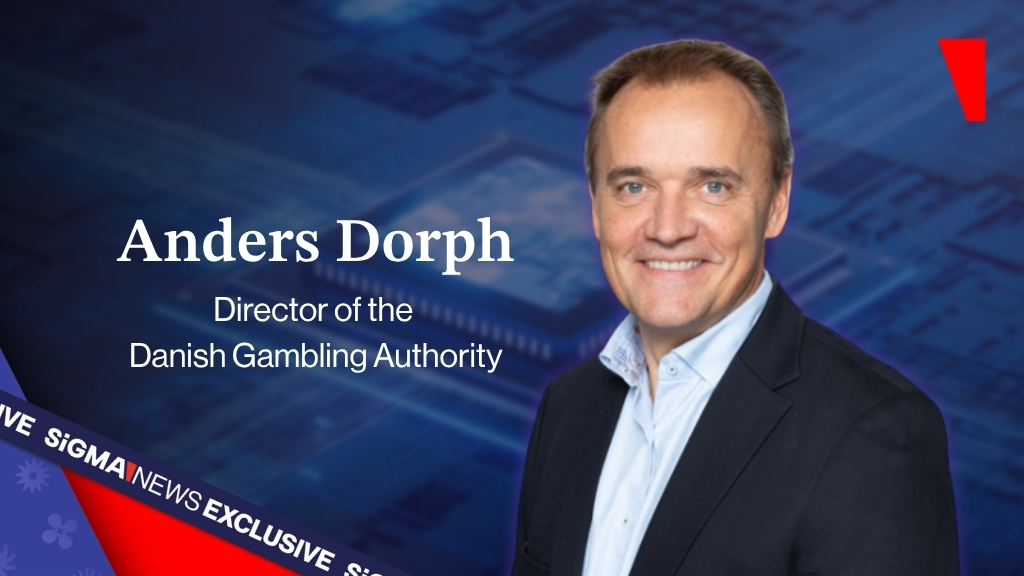
Why does Denmark have one of the highest channelisation rates in Europe? Anders Dorph, Director of the Danish Gambling Authority (Spillemyndigheden), sat down with SiGMA News to answer this question. For him, the answer lies in Denmark’s pragmatic and open-minded approach to regulation, one that puts collaboration ahead of prohibition.
A regulator with a legal mindset and a realistic one
Anders Dorph’s career trajectory is rooted in the legal system. “I’m a lawyer, an expert in criminal law, and I’ve spent over 35 years in state administration — 10 years in the Ministry of Justice, 14 years as chief in the Danish police, and even 4.5 years leading the asylum system,” he told SiGMA News. Now at the helm of the Danish Gambling Authority, Dorph has brought a legal yet deeply pragmatic philosophy to gambling regulation.
One of the defining principles, he says, is recognising that outright prohibition simply doesn’t work. “Whether we’re talking about hard drugs, soft drugs, alcohol, prostitution — restrictions alone never solve the problem,” Dorph explained. “People are drawn to these things, regardless of legality. Our goal is harm minimisation, not an unrealistic attempt to ban human behaviour.”
Keeping the legal market competitive
At the heart of Denmark’s success is a regulatory model that ensures the licensed, legal market remains attractive and competitive. “If you put too many restrictions on the legal market, you make it impossible for them to compete,” said Dorph. “The illegal market doesn’t pay taxes and can offer better odds, which remains a challenge for licensed operators to compete with.”
A 2025 survey by Spillemyndigheden revealed that nearly 40 percent of those who played on illegal platforms did so because the unlicensed operators offered “more interesting games,” explained Dorph. Better odds were the second most common reason. The solution, Dorph argues, is clear: “The legal market must have access to new games and favourable conditions. It doesn’t have to be identical to the illegal market, but it must be able to compete.”
This strategy is not just about business, but about consumer protection. “The higher our channelisation rate, the more players we keep in the legal, regulated environment, where there are rules, safeguards, and support if people develop gambling problems.”
A collaborative industry
Denmark’s regulatory success also reflects a carefully thought-out relationship between the regulator and the industry. “We have an industry that wants to be compliant,” Dorph stated. “The best way to achieve that is through close dialogue, understanding the challenges they face, working together to solve them, and avoiding the need for constant police involvement.”
This approach, Dorph insists, predated his tenure but is one he has been determined to maintain. “The value of keeping the industry close was already there when I arrived. I’ve simply kept it front and centre.”
Fighting the black market: DNS blocking, public awareness, and innovation
Although maintaining a competitive legal market is a central strategy against illegal operators, Denmark also relies on direct interventions. DNS blocking, preventing access to illegal gambling websites, remains a core tool. “It’s not perfect, but it’s an obstacle,” Dorph admitted. “We can measure its impact: the latest data showed that traffic to blocked sites dropped by a factor of 13. That’s significant.”
Blocking these sites requires a court order, which adds time to the process. “We’re currently doing this twice a year,” Dorph explained, “but we’re working to increase that to three or even four times annually.”
However, the cat-and-mouse game continues. “Mirror sites pop up constantly. We block one, they create another with a different web address. So now we’re exploring content-based blocking, not just blocking addresses.”
Beyond these efforts, payment blocking is also being considered, though not yet implemented. “In Norway, they’ve seen some success with payment blocking,” Dorph noted. “Here in Denmark, we’re talking to banks and we have the legislation in place. Given our high channelisation rate, we haven’t used it yet, but it’s a tool we may deploy in the future.”
Public awareness campaigns also play an important role. “We run campaigns urging players to look for the official Spillemyndigheden mark before gambling. The industry is required to display it in all their marketing. If players know what to look for, they can avoid the grey or black market.”
Redefining responsibilities
Denmark has also recently chosen to divide responsibilities more clearly between operators and suppliers. As of 1 July, new regulatory requirements have come into force, shifting part of the compliance burden from operators to suppliers.
“We saw this happen in England. We saw it in Sweden. Of course, we were inspired by that,” explained Anders Dorph, Director of the Danish Gambling Authority. “In some cases, if a single supplier provides products to ten different operators in Denmark, it’s much easier for us to have a direct dialogue with the supplier rather than go through each operator, who would have to go back to the supplier anyway. This makes it clearer who is responsible for what. In that respect, I think it’s an improvement.”
Learning from Europe, and leading by example
Could Denmark’s model be exported to the rest of Europe? Dorph is cautious. “Every country has its own specifics. Often, gambling is used to fund social causes, lotteries, sports, cultural programmes… It’s not easy to harmonise regulation across 27 countries with different priorities.”
That said, Denmark remains an active player in European cooperation efforts. As chair of the European Forum of Gambling Regulators (GREF), Dorph is committed to knowledge sharing and gradual alignment, especially around “markers of harm,” standard indicators to detect problem gambling.
Beyond channelisation: tackling match-fixing and emerging risks
The Spillemyndigheden’s regulatory remit has expanded in recent years, including the fight against match-fixing. “We took on that responsibility in 2023, and we’re getting new legislation and tools,” Dorph explained. “Soon, we’ll be able to analyse gambling data proactively. If someone bets on their brother’s yellow card in a football match, we’ll know.”
The black market remains aggressive and innovative, aided by new technologies, including AI. “We have to be just as fast, just as smart to keep up,” Dorph acknowledged.
Emerging phenomena like prediction markets, platforms where people bet on real-world events like elections, are also on the regulator’s radar, though Dorph says Denmark has yet to see them gain traction in the country.
A model worth watching
Despite the challenges, Dorph’s pride in Denmark’s regulatory model is evident. Asked to name his greatest achievement since taking office in 2020, he replied: “Maintaining our high channelisation rate, that’s absolutely key. It’s why we liberalised the market in the first place.”
Ultimately, Denmark’s success comes down to balance. “It’s always about finding the right balance between restrictions that protect consumers and ensuring the legal market can thrive,” Dorph said. “Tip the scales too far either way, and you lose control.”
For now, Denmark remains a European example of what pragmatic, cooperative, and realistic regulation can achieve: keeping players safe, the market competitive, and illegal operators at bay.

