


The future belongs to those who lead with values, says H.E. Sheikha Jawaher Al Khalifa

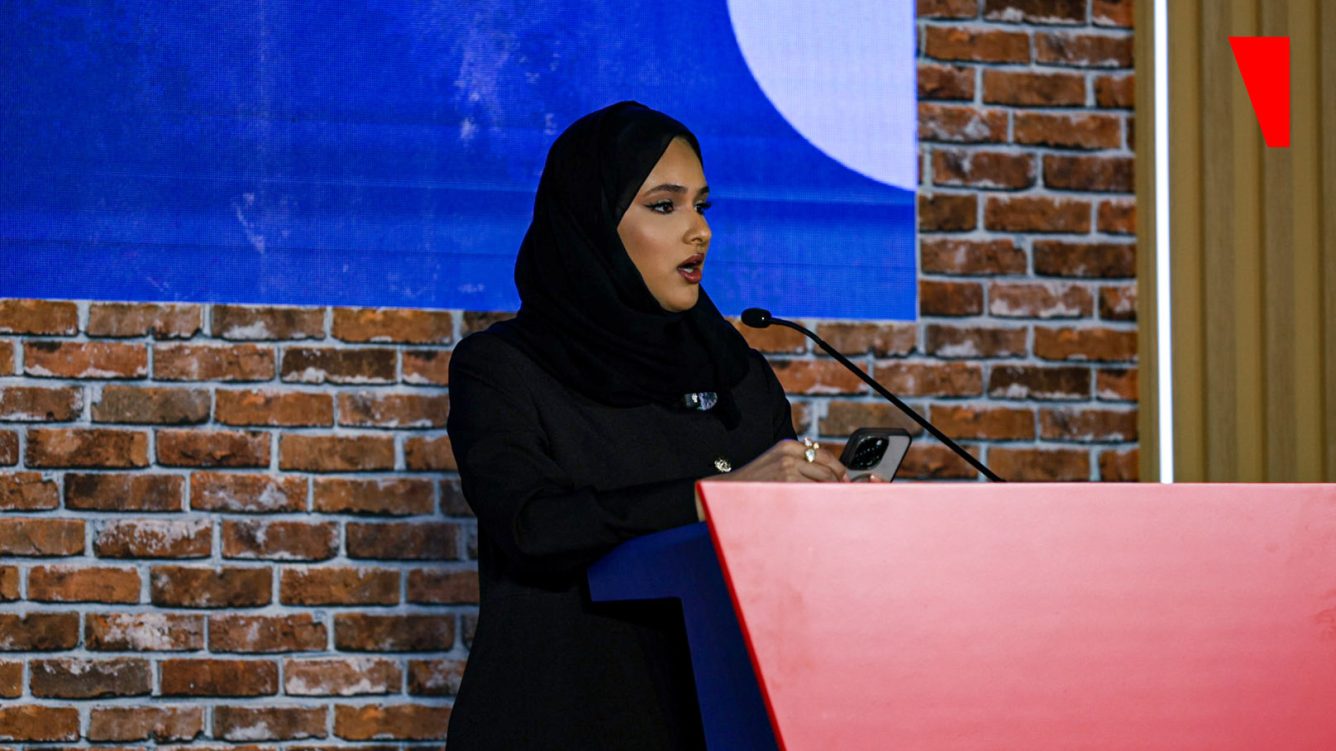
Who governs intelligence, asks H.E. Sheikha Jawaher Al Khalifa, Founder of Future8 and Chairperson at NFINITY8 Group. In a keynote delivered during the first day of the AIBC Eurasia summit taking place at the Festival Arena in Dubai, H.E examines the delicate balance between human autonomy and AI progress.
We are, she says, ‘living through a defining moment in human history, where intelligence is no longer confined to the human mind. It is engineered, it is scaled, it is deployed at speeds faster than regulation, faster than culture and faster than our institution can adapt to.’ With new tech fast shaping how we make decisions, predicting behaviour and moulding markets, the question of who holds ethical authority over artificial minds becomes a pertinent one.
The most important question of our time, she opines, is not about how powerful tech such as AI will become, but rather who will harness the power of an intelligence that is no longer human. “Power without governance has never built a civilization; it only has tested one.”
“Intelligence without ethics is not progress, but acceleration without direction and direction is a responsibility of leadership.”
In her region, this responsibility is something they understand profoundly, she explains. “In the UAE, the future is not something we wait for, but something we deliberately design.’
She goes on to elaborate – in the kingdom of Bahrain, her home country, progress is guided by balance: between innovation and identity, between speed and stability, between ambition and wisdom. Responsible governance has shown that ‘vision without values is incomplete and growth without governance is unsustainable.’ Ethical AI is not an abstract debate but a strategic imperative, she concludes.
H.E. Sheikha Al Khalifa argues that the future of AI will not be be led by technological capability alone, but by the intentions, values, and leadership guiding it. At the crux of it, she warns that incentives, not ethics, will drive AI – unless leaders deliberately intervene. If governance is weak, unchecked power will shape outcomes. If accountability is delayed, public trust – the most critical currency of the future economy – will erode.
When discussing the foundation of the coming AI economy, she highlights that it will not be built merely on data or speed, but on credibility. Trust becomes the new currency. Ethical AI is not a constraint on innovation — it is what makes innovation sustainable, reliable, and socially acceptable.
H,E. Al Khalifa connects this challenge to the region’s history of resilience and rapid transformation. Just as visionary leadership compressed decades of development into a generation, that same clarity and decisiveness must now guide AI adoption. Technology should support rather than replace human judgment, protecting our cultural identity and increasing opportunity in the face of inequality.
A key responsibility, she stresses, is not about asking what AI can do, but what it must never be allowed to do. Ethical foresight must come before harm, not as a reaction after trust is broken. The inclusion of accountability, transparency, and human values directly into AI systems ensures innovation is durable rather than reckless.
“This region is no stranger to resilience. We turned vision into reality and potential into platforms that now serve the world. We built economies that look forward, not backwards, and we compressed decades of development into a single generation through clarity of vision and decisiveness of leadership. That same mindset must guide AI – it must not replace human judgement but elevate it. It demands leaders who are not intimidated by technology but fluent in responsibility.”
H.E. emphasises that AI systems created without diversity, cultural intelligence, and human oversight are limited. Broad perspectives and ideas can reduce blind spots, while increasing women’s participation, ‘strengthens early risk detection and ethical judgment.’
Ultimately, this moment is a test of human leadership. AI is already shaping the next era – the real question, she says, is whether humanity will hand over the baton of responsibility to machines or show that human wisdom remains the highest form of intelligence. Her message is clear: ‘choose courage over convenience, governance over chaos, and purpose over unchecked speed.’
Ambition without ethics is unstable; intelligence without leadership is dangerous. The future will belong to those for whom innovation goes hand in hand with values.
“From this, the world will learn a powerful truth: ambition without ethics is fragile, intelligence without leadership is dangerous. The future belongs to those who lead with values, and we are ready to lead it.”
The AIBC Eurasia summit is powered by SoftConstruct AI.


