


Unregulated skins gambling surges, outpacing licensed bets


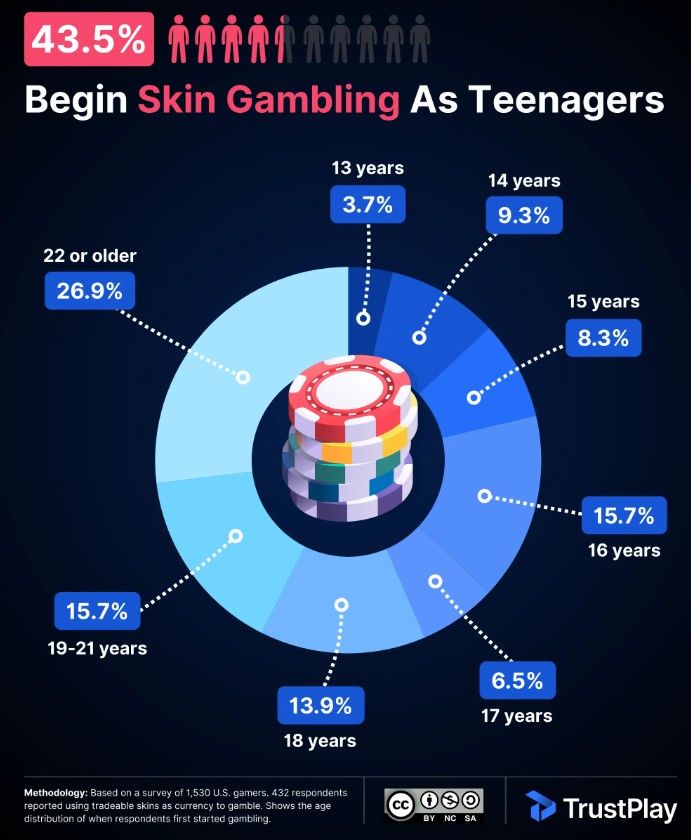
A recent report on skins gambling by TrustPlay, a review platform for gaming marketplaces and services paints a stark picture of an expansive, largely unregulated gambling ecosystem built around in-game items known as skins—cosmetic virtual goods earned or purchased in games such as Counter-Strike 2 and Dota 2. Based on a survey of 1,530 gamers, the report reveals that 47.1 percent of gamers who own tradeable skins have used them to gamble on third-party sites. Of those, 43.5 percent began while underage, with some players starting as young as 13.
The TrustPlay survey underscores the personal toll this shadow gambling world can take. A striking 79.4 percent of respondents reported behaviours recognised as clinical markers of problem gambling, while 72.2 percent said they lost money, with average losses exceeding $1,100. Nearly one in ten reported losing more than $5,000, and some losses exceeded $10,000. Yet despite such harms, the industry operates in an almost entirely regulatory grey zone.
Need of verification
Unlike regulated online gambling, which requires identity verification and responsible gaming safeguards, most skins gambling platforms demand only a Steam login, which is the user account for Valve’s Steam platform, a digital storefront and social gaming service where people buy, download, and play games to deposit valuable digital items. Teenagers already owning Steam accounts can trade skins, often worth real money into “casino-style” games, esports betting, or case-opening sites without ever proving their age.
While talking to SiGMA News, Rasmus Barslund, Founder of TrustPlay, said, “The 79.4 percent figure should be a wake-up call.” He noted that this percentage reflects respondents reporting behaviours recognised as clinical markers of problem gambling and warned that many of the platforms involved are unlicensed and lack basic responsible-gaming protections. Barslund highlighted that these sites have no deposit limits, no self-exclusion options, and no GAMSTOP (UK’s national online self-exclusion scheme) integration, making them especially risky for young or vulnerable players.
“Policymakers need to treat skins gambling with the same urgency as other forms of online gambling targeting minors.”
– Rasmus Barslund, Founder of TrustPlay
Parallel market outpacing traditional betting
A 2025 rapid evidence review commissioned by the UK government’s Department for Culture, Media & Sport helps illuminate the global footprint of this phenomenon. The review identified over 50 active skins gambling websites accessible from the UK, recording 6.9 million unique visits in February 2025 alone.
The UK review found that the most popular skins gambling sites generated more monthly global traffic than well-known online betting platforms, including Betfred.com and Betway.com.
Despite their popularity, these sites are not subject to the same legal requirements as regulated bookmakers and casinos in Great Britain. They do not hold licences from the UK Gambling Commission, do not perform age verification at the point of deposit, and generally lack basic responsible gaming tools such as self-exclusion or deposit limits.
Young users, easy access, and regulatory gaps
The UK government review highlights how skins gambling appeals to a disproportionately young audience. Website analytics suggest that nearly 45 percent of users are aged 18–24, far higher than the proportion seen on traditional gambling sites. However, the lack of age verification means even younger players can slip through unchecked.
“Parent Zone, has been investigating skin gambling since 2018. Our research found that even then, around 10 percent of UK children aged 13–18 had gambled skins in some form, equivalent to nearly 450,000 young people,” said Vicki Shotbolt, CEO of Parent Zone, a social enterprise central to family life, offering expert advice, knowledge and support highlighting how the issue predates recent surveys. “The fact that TrustPlay found such a high percentage of skin owners using them to gamble should be cause for concern.”
Shotbolt warned that because skin gambling is unregulated, it “attracts underage gamblers and people for whom mainstream gambling is off limits—often people who have an existing problem with gambling who have self-excluded from mainstream sites.” She added that “young people who start gambling when they are under age are more likely to go on to have a problem with gambling, so what we are seeing is a pipeline towards gambling-related harms.”
“The evidence has been there for years,” Shotbolt continued, “which makes it inexplicable that steps haven’t been taken to deal with it.”
“The gaming industry could manage this if they had the will to do so. They do not.”
– Vicki Shotbolt, CEO of Parent Zone
The TrustPlay report mirrors these concerns. Of the surveyed gamers who started skins gambling while minors, 76.1 percent of parents said they were unaware their child was gambling, and for half of them, parents still don’t know to this day.
“Parents often have no idea it’s happening; in our survey, 76.1 percent never found out,” he added. “Policymakers need to treat skins gambling with the same urgency as other forms of online gambling that target minors,” Barslund said, urging stronger oversight and protections to close the regulatory gaps that allow underage and unprotected gambling to flourish.
Why regulation hasn’t caught up
Part of the problem lies in how gambling laws treat skins. Traditional gambling regulations typically hinge on monetary transactions, but skins are digital items that can be traded, sold, or wagered without direct purchase in cash. This blurs the line between gaming and gambling and has allowed operators to sidestep licensing requirements.
The UK review makes clear that the current regulatory framework is outdated. Many jurisdictions either do not recognise skins gambling as gambling under existing law, or enforcement mechanisms are weak or unenforceable, especially where operators are offshore.
Be part of the action! Join the world’s biggest iGaming community with SiGMA’s Top 10 News countdown. Subscribe HERE for weekly updates, insider insights, and exclusive subscriber-only offers.


