


Vietnam has officially confirmed that it will grant permanent access for Vietnamese nationals at the Corona Resort & Casino and authorise five-year pilot programs for local entry at The Grand Ho Tram Resort and the planned Van Don integrated resort.
Reportedly, under Resolution No. 307/2025/NQ-CP, issued on 26 November 2025, the government formally expanded domestic access to casinos beyond a single trial site for the first time. The resolution took immediate effect, marking Vietnam’s most major policy shift on casino entry since 2017, when local access was first tested on a limited basis.
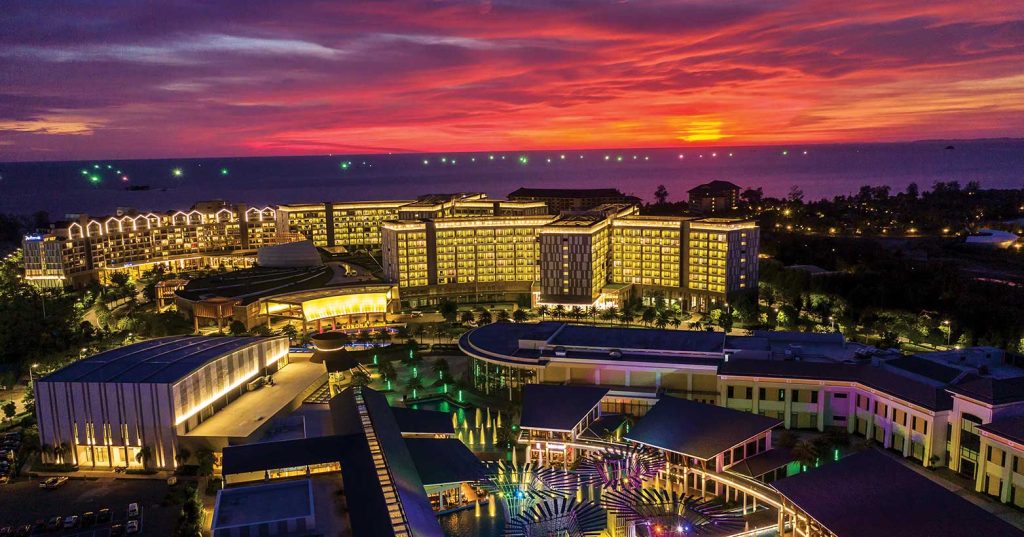
At the centre of the change is Corona Resort & Casino on Phu Quoc Island, which has been granted permanent approval to admit Vietnamese nationals. Corona was already the only casino allowed to accept local players under the original pilot scheme. Making this access indefinite suggests regulators are satisfied with its compliance record and economic contribution.
Two new five-year pilots
In addition, the government has approved two new five-year pilot programmes allowing Vietnamese citizens to gamble at The Grand Ho Tram Resort and the planned Van Don integrated resort. Officials say the pilots will allow authorities to assess economic benefits, social impacts and the effectiveness of existing safeguards before deciding whether to broaden or restrict access further.
Despite the expansion, entry conditions remain tightly controlled. Vietnamese nationals must be at least 21 years old, legally competent, and meet minimum income requirements, including a stable monthly income of VND 10 million (€370) or being subject to higher-grade personal income tax. Entry fees are unchanged at VND 1 million (€40) for a 24-hour pass, or VND 25 million (€1,010) for a monthly pass. Family members can still formally object, barring individuals from entry.
Approval nearly after a year
The policy shift comes after a period of uncertainty for domestic gamblers. Vietnam’s initial pilot programme ended at midnight on 31 December 2024, pending further evaluation. During that pause, Vietnamese citizens were left with almost no legal options for casino gaming within the country, even as foreign passport holders continued to be admitted.
The renewed focus on Phu Quoc reflects broader regional priorities. Deputy Prime Minister Le Thanh Long had asked the Ministry of Finance to review whether casino access for Vietnamese citizens can be formalised or not as part of efforts to drive economic growth in the Mekong Delta region. The request followed high-level discussions involving Communist Party General Secretary To Lam and provincial leaders from Kien Giang and An Giang.
Officials have also been instructed to explore new development mechanisms for Phu Quoc, including proposals for a special administrative unit, aimed at strengthening the island’s appeal to investors and tourists.
Economically, the inclusion of additional resorts is expected to improve project viability materially. The Van Don casino, with a planned investment of VND 51.5 trillion ($2.16 billion) and a 70-year concession, has long sought local-player access to underpin its business case. Meanwhile, The Grand Ho Tram, Vietnam’s largest integrated resort, is already in the midst of a $1 billion expansion that will increase capacity to more than 9,000 hotel rooms.
Analysts say the move reflects a cautious but clear shift towards regulated inclusion, as Vietnam balances social concerns against tourism growth, investment needs and the realities of demand among its own citizens.
Be part of the action at SiGMA South Asia, 30 Nov – 02 Dec 2025. Colombo becomes the heart of gaming as 5,000 delegates, 100+ speakers, and 1,000 operators gather under one roof. With high-value traffic, game-changing insights, and unforgettable networking, this is where new markets meet new horizons.


