


Watch: Charles Mizzi on Malta’s push for quality-driven gaming regulation

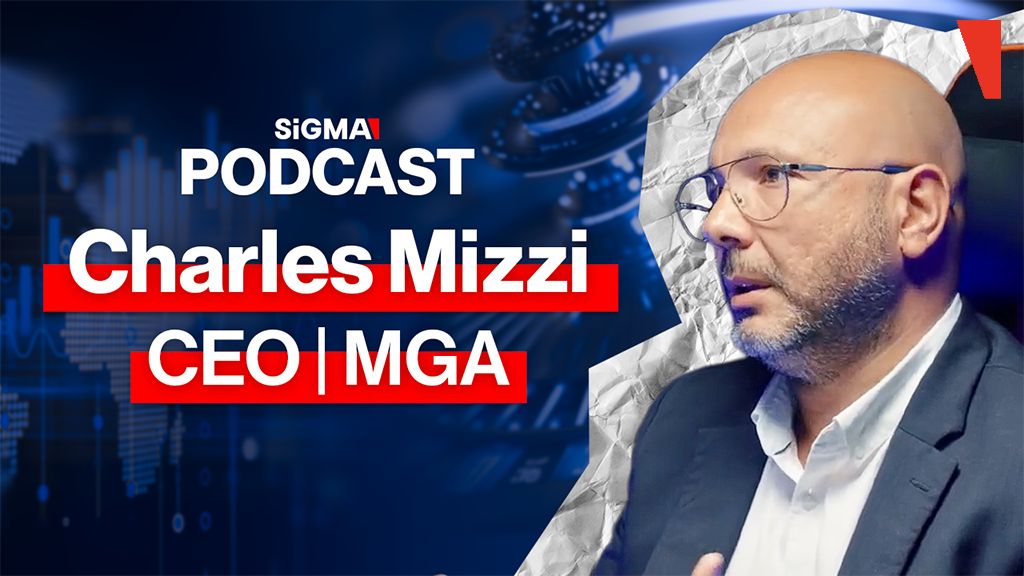
In the latest episode of the podcast Decoding Gaming Law, hosted by Dr Franklin Cachia, Head of Legal at BDO Malta, Charles Mizzi, CEO of the Malta Gaming Authority (MGA), delivers an in-depth look at how Malta’s gaming regulator is reshaping its strategy to focus on sustainable quality rather than rapid expansion.
The discussion charts the MGA’s evolution from its early years, when the goal was to attract as many operators as possible, to today’s more measured approach that prioritises long-term industry health, innovation, and compliance excellence.
From growth to quality
According to Charles Mizzi, although Malta is still processing licensing applications for new gaming companies, the goal and metrics for selecting and prioritising regulatory priorities have changed considerably. Whereas previously, the growth of quantity was the primary priority, the MGA now seeks to welcome operators who embrace transparency, accountability, and integrity, rather than simply rushing to onboard as many operators as possible.
Structural growth is at the forefront of the industry’s development. The MGA now has a strategic vision aimed at supporting the sector through an ecosystem that rewards responsible operators and sustains a level of regulatory integrity at the highest standards.
“Our challenge is finding the right balance between being business-friendly and remaining a strong, accountable regulator,” says Mizzi.
Building a supportive ecosystem
Collaboration is a cornerstone of this vision. Mizzi points to the MGA’s very close relationship with Gaming Malta, an umbrella organisation for the entire industry, which is not a regulator but a promoter and supporter of operators. The MGA focuses on compliance and regulation, while Gaming Malta assists operators in recruiting staff, obtaining work permits, and promoting Malta as a jurisdiction in a promotional capacity.
This two-pronged approach enables Malta to be a market and is also considered a safe environment. This allows us to understand that compliance is paramount, and by using compliance as the foundation in Malta, we can still help our operators further promote Malta as a safe and compliant jurisdiction.
The MGA also collaborates and engages with regulators worldwide. The MGA is an active member of several groups, including the European Forum of Gambling Regulators (GREF) and the International Association of Gaming Regulators (IAGR). While working on collaborative initiatives and personnel exchanges, our jurisdictions are benefiting from the measurable gains in improving our regulatory practices.
Welcoming innovation with apparent oversight
For Mizzi, the MGA is for innovation but only when it leads to enhanced regulatory oversight and player protection. From the beginning, with blockchain in its Sandbox, up to and including artificial intelligence, the Authority has consistently taken a technology-neutral approach to regulation. The MGA does not impose rules for new technology but instead leaves it to operators to design innovative approaches to their operations, with the MGA’s compliance structure evaluating these approaches against the existing compliance framework. This flexibility enables the regulator to respond to innovations and emerging trends without hindering innovation.
In particular, artificial intelligence can provide opportunities for the MGA’s current data-driven operations. AI not only provides the Authority with an overall capacity to collect and interpret data and information, but it can also lead to better decision-making concerning compliance risks.
“Innovation and regulatory oversight go hand in hand,” Mizzi remarks.
Embedding a proactive compliance culture
With Malta now successfully removed from the FATF grey list, compliance is one of the main areas of focus for the MGA. Charles Mizzi highlights the extensive work the Authority has done in developing a compliance culture that is proactive rather than reactive, with the regularity of interaction from thematic and full-scope reviews ensuring operators know what their obligations are and allowing them to feel reassured about the state of the industry.
The Authority’s supervisory model is risk-based, enabling it to focus on areas of most significant concern when deploying personnel on-site. This relationship, built on frequent interaction through thematic and full-scope reviews, allows operators to understand their obligations and work through meeting those obligations as necessary.
Be open and honest. Mizzi also says that decisions are easier when operators are honest with the regulator, especially in areas where they face operational difficulties. This allows the MGA to collaborate on solutions rather than defaulting to enforcement.
Charles Mizzi clearly states that the MGA does not punish operators; it supports them, but compliance must take precedence to act within the law. This approach demonstrates the MGA’s commitment to a responsible gaming industry.
Looking ahead, steady, measured change
While the MGA continues to evolve its approach, Mizzi confirms that no major legislative overhauls are planned shortly. Instead, the focus will be on fine-tuning existing laws based on feedback from industry stakeholders.
He emphasises that Maltese gaming law should be seen as a “live document”, adaptable, responsive, and guided by ongoing dialogue with operators. This ensures that the legal framework remains fit for purpose without creating unnecessary disruption to the market.
For gaming operators, legal professionals, and policy stakeholders, this conversation provides a comprehensive insight into how one of Europe’s most respected regulators is guiding the sector toward a future built on trust, innovation, and responsible growth.


