


AFCON’s month-long spectacle ends quietly for iGaming

AFCON 2025 concluded on 18 January after nearly one month of football. The tournament kicked off on 21 December and was hosted by Morocco. Organisers scheduled 52 games across 19 matchdays during the competition.
Such an intense calendar usually encourages more iGaming activity demand. Markets linked to tournament favourites typically record noticeable betting surges. However, Blask’s data indicates the expected uplift did not materialise.
Favourites failed to trigger demand spikes
Senegal, Morocco, Nigeria and Egypt reached the final weekend of AFCON 2025. These teams were also leading pre-tournament outright picks in betting books.
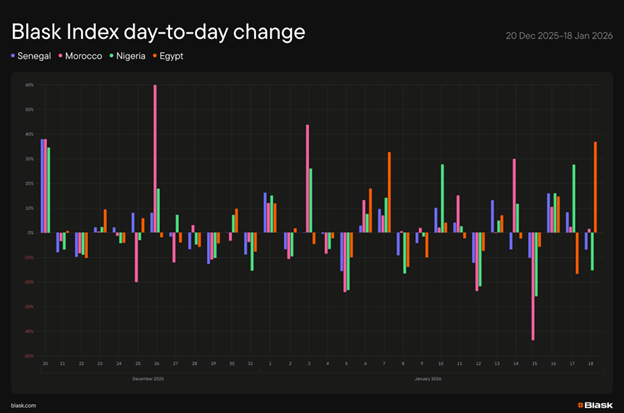
Despite strong performances, iGaming demand remained essentially unchanged. Blask data shows only occasional deviations from normal activity levels. Even in the strongest football markets, engagement stayed within usual ranges. The tournament failed to shift established demand patterns across these countries.
Weekly rhythms remained dominant
Blask data shows the tournament schedule didn’t interfere with normal calendar behaviour. Activity continued to follow regular weekly cycles. Peaks in user demand were rarely on national team days.
For the majority of the markets, the patterns of movement throughout the day tracked a similar course. This is the case, even in the games that took place in the knockout stages of the tournament. Football excitement did not disrupt the underlying demand structure.
Morocco’s hosting advantage was limited
Morocco enjoyed more favourable viewing times during the tournament. Five of seven kick-offs fell on Sundays or Friday evenings. These slots are generally more viewer-friendly.
Morocco recorded its most significant Blask Index movement on 26 December. The group stage match against Mali started at 21:00 local time. Despite this, the overall impact on iGaming demand remained modest.

Vertical competition diluted the football impact
The relative weakness of iGaming demand during big football tournaments can also be explained by the competition among verticals. At the same time, they draw attention away from casino games.
These dynamics limit overall demand growth across platforms. Blask Index hourly data confirms this behavioural split. Demand frequently dipped or stagnated during national team matches.
Market leaders shift focus, not growth
In most African countries, there are only one to four brands in the iGaming industry. The competition in the industry occurs through the shifting focus of the brands.
According to Blask’s data, AFCON did not have a significant impact on daily market shares. Leaders remained in their positions during the entire duration of AFCON. Competition remained balanced in most countries.
Nigeria stood out as an exception
Nigeria displayed a different pattern during AFCON 2025. Two brands control over 70% of audience attention in the market. Bet9ja entered 2025 as the overall market leader.
During AFCON, SportyBet led on most days. This lead included all Nigeria team matchdays. The rivalry caused visible daily position swaps.
Calendar forces continue to dominate
AFCON remains one of Africa’s most-watched sporting events. It attracts widespread attention across multiple demographics. Yet Blask’s daily data shows limited iGaming uplift.
The calendar continues to shape demand more than football tournaments. Matches mostly rearrange attention rather than expand it. For iGaming operators, timing still matters more than trophies.
Subscribe HERE to SiGMA’s Top 10 News countdown and SiGMA’s weekly newsletter to stay up to date with all the latest iGaming News from the biggest iGaming community in the world and benefit from subscriber-only offers.


