


Senate approves project that guarantees lottery funds for care homes for the elderly

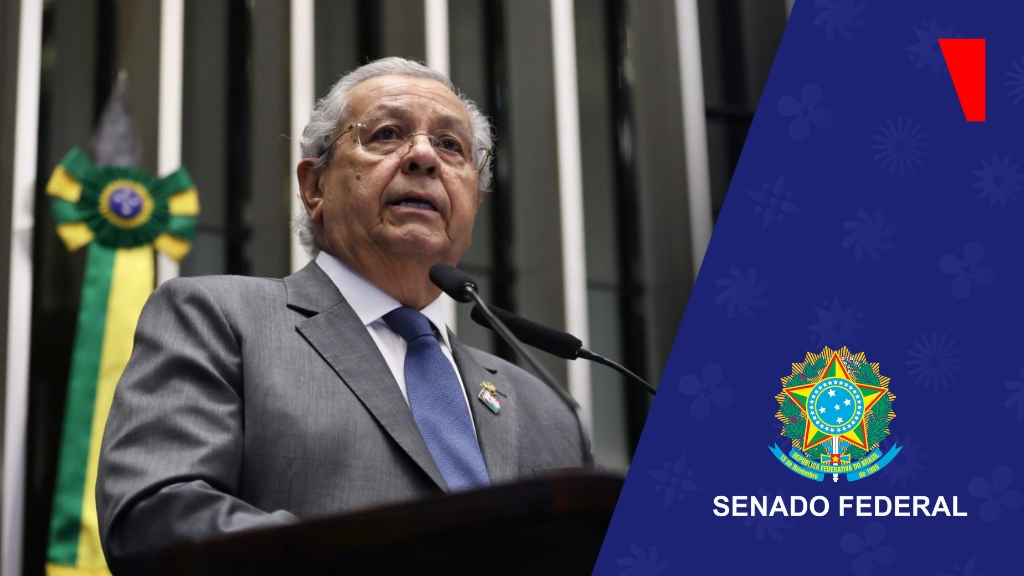
Last Wednesday (24 September), the Human Rights and Participatory Legislation Committee (CDH) approved Bill 1.130/2025. Authored by Senator Jayme Campos (União-MT), the bill proposes to include thousands of long-term care institutions for the elderly (ILPIs) in Brazil among the beneficiaries of resources from sports lotteries.
The approved text establishes that the net income from three annual sports lottery draws will be allocated to these entities to guarantee housing, food and assistance for the elderly living in these institutions. Now, the project moves on for a final decision in the Economic Affairs Committee (CAE).
What the project provides and the legal changes
The Bill amends Law No. 13.756/2018, which regulates fixed-odds betting in Brazil, so that part of the resources generated by sports lotteries are transferred to entities in the elderly care sector. Until now, that law has already distributed funds to organisations such as the National Federation of Associations of Parents and Friends of the Exceptional (Fenapaes), the Brazilian Red Cross and the National Federation of Pestalozzi Associations. The proposed innovation is to allow ILPIs to also be contemplated. To be entitled to the transfers, the institutions must meet some requirements:
- Be non-profit.
- Be registered with health surveillance bodies and the councils for the rights of the elderly at the municipal, state, or federal level.
- Even those with tax debts with the Union will be able to receive the resources, according to the report of the rapporteur, Senator Damares Alves (Republicanos-DF).
In her report, Damares Alves highlighted data from the 2022 Census to justify the need for the measure: around 11% of the Brazilian population is 65 years old or older, and there are approximately 67.2 thousand ILPIs in operation in the country. The Bill also defines that the resources are not limited to housing, but may also be applied to “health and safety actions” within these institutions.
Why is this relevant
Senator Jayme Campos, the author of the proposal, commented that “it is an act of social justice that strengthens the care of those who most need these homes, with assistance and food”. He also recalled that Brazil already has more than 33 million elderly people, and that this share of the population is growing more and more.
Senator Jorge Seif (PL-SC) also supported the measure, speaking about the urgency of financial support for long-term care homes for the elderly. He said that those who work in these institutions often carry out voluntary work or even allocate part of their personal resources to maintain them. For these institutions, which often operate on limited budgets, the security of a source of annual resources can allow better structuring, maintenance of quality in care and even adjustments required by health and surveillance standards.
But, even if the Bill moves forward, its passage will still go through some difficult stages. The next step is analysis and deliberation in the CAE, which may approve or amend the text in a final decision. If amended, it may return to the CDH or the Plenary for further deliberations. Another important point is compatibility with the regulatory framework for betting and lotteries in the country. Law No. 13.756/2018 established the bases for fixed-odds betting as a lottery modality permitted in Brazil. In December 2023, Law No. 14.790 improved it, bringing even more rules for supervision, authorisations and the distribution of social resources from these lotteries.
At the same time, the Secretariat of Prizes and Betting (SPA), linked to the Ministry of Finance, is conducting a public consultation to improve the mechanisms for the legal allocation of revenue from fixed-odds betting, focusing on making processes more effective and transparent. The SPA was officially created in 2024 to regulate, authorise, monitor and supervise the betting, lottery and commercial promotions market in the country.
The effectiveness of the Bill will depend on how the transfers are operationalised: whether there will be oversight of the use of resources by the ILPIs, clear accountability criteria, audits and transparency in the process. There is also another challenge: many institutions are small or located in remote municipalities, with lower administrative capacity.
Broader context of betting and lotteries in Brazil
Betting and games of chance in Brazil have historically always had to submit to stricter regimes. Casinos, for example, have been banned since 1946. Lotteries, however, are regulated and operated under state control. Part of their revenue is allocated to social policies such as health, education, culture, sport and security, as well as the payment of prizes and the remuneration of operators. With the approval of Law No. 13.756/2018, the fixed-odds betting model was formally allowed in Brazil, in which the value of the prize is previously fixed according to the probabilities of the outcome. The regulation of this model evolved over the following years, with Law No. 14.790/2023 adjusting rules on granting, supervision and distribution of resources.
This article was first published in Portuguese on 26 September 2025.
Sign up HERE to receive SiGMA’s Top 10 News and SiGMA’s Weekly Newsletter. Stay up to date with the latest iGaming news from the world’s largest iGaming community and enjoy exclusive subscriber offers.


