


Can land-based and digital casinos converge into one experience?

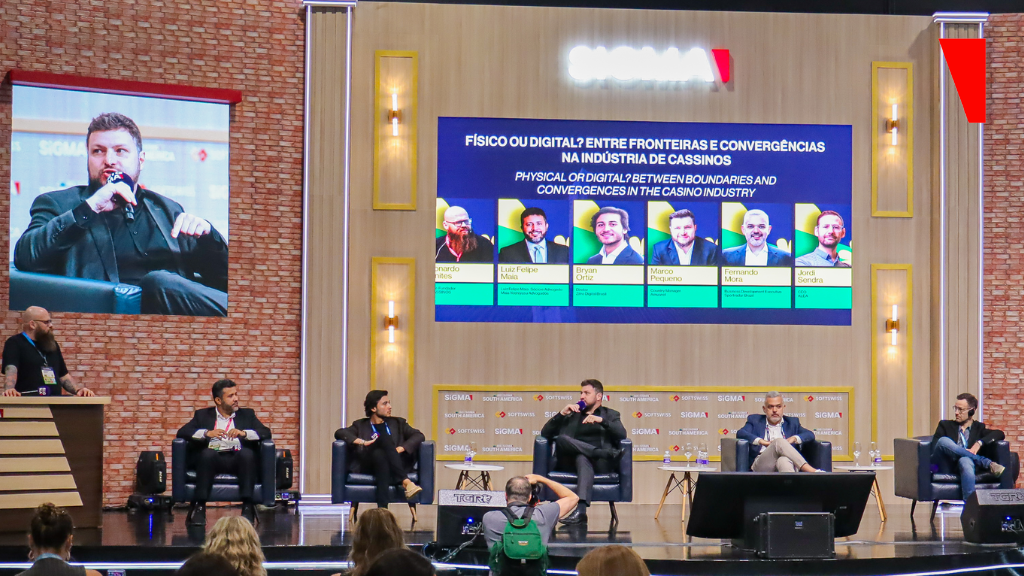
During BiS SiGMA South America 2026 in Sao Paulo, held at the Transamerica Expo Center, the Itaim Stage hosted the panel Physical or Digital? Between Boundaries and Convergences in the Casino Industry. Bringing together experts from across the gaming ecosystem, the session explored how technological innovation and evolving regulation are reshaping the relationship between land-based casinos and digital platforms.
Speakers including Leonardo Benites, Founding Director of ANCASSINOS, Luiz Felipe Maia Partner and Lawyer at Maia Yoshiyasu Law Firm, Bryan Ortiz, Director of Zitro Digital Brasil, Marco Pequeno, Country Manager of Amusnet, Fernando Mora, business development executive at Sportradar Brazil and Jordi Sendra, CEO of ALEA, examined the growing shift toward hybrid models and integrated player experiences.
A convergence in motion
From the outset, the panel made it clear that the convergence between physical and digital is no longer hypothetical. As moderator Leonardo Benites noted, “this is no longer a choice, but an integration,” pointing to a rapidly evolving ecosystem where technology and regulation are naturally bringing both worlds together.
Bryan Ortiz reinforced this idea, challenging the notion of competition between channels. “The digital does not replace the physical, it complements,” he said, highlighting how omnichannel strategies are reshaping user journeys. Rather than choosing between online and land-based experiences, players are increasingly moving fluidly between both.
This shift is also being driven by changing consumer behaviour. Post-pandemic, Ortiz observed, players are seeking social, in-person experiences again, creating an opportunity for land-based venues to build on the reach and accessibility of digital platforms. The result is a more connected environment where data, personalisation and user experience sit at the core.
The Brazilian opportunity
A central theme throughout the discussion was Brazil’s unique position as a market that regulated digital betting before fully establishing land-based casinos. While this creates challenges, it also opens the door to building a more advanced, integrated system from the ground up.
Ortiz pointed to regulatory developments such as cashless systems, player identification and government-connected platforms as key enablers of transparency. “It will be very difficult to deny taxes and money laundering,” he explained, noting that these tools can create “security, control, [and] transparency” across both channels.
However, for Luiz Felipe Maia, the legal landscape remains a critical variable. He emphasised that upcoming judicial and legislative decisions could significantly influence the pace and structure of convergence. “We have very strong legal arguments,” he said, referring to ongoing debates around gambling regulation, while cautioning that any abrupt changes could create instability if not carefully managed.
The consensus was clear that effective regulation must strike a balance both enabling innovation while ensuring consumer protection and market integrity.
Digital communities & physical experiences
Fernando Mora brought a consumer-focused perspective, highlighting how digital platforms have already built strong communities that can transition into physical spaces. “Digital has already created several communities for each sport,” he explained, pointing to the vast ecosystems formed from social media, messaging platforms and streaming.
These communities present a major opportunity for land-based casinos. By leveraging player data and partnerships with online operators, venues can create tailored experiences that attract and retain users. Mora described the potential for shared, social moments, fans gathering to watch events, place bets, and celebrate wins together, as a key advantage of physical environments.
“There is a gigantic potential… for people to leave only the digital… to go to the physical,” he said. This blending of digital engagement with real-world interaction is at the heart of the omnichannel vision.
Adapting global models to local realities
As the industry moves toward convergence, localisation will be essential. While international markets offer valuable lessons, Brazil’s cultural and behavioural nuances must shape how these models are implemented.
Panellists noted that initial strategies may mirror established markets, but long-term success will depend on adaptation. From game design to sports preferences, operators will need to align offerings with local demand while maintaining global standards of quality and compliance.
Ultimately convergence is about creating a seamless, player-centric ecosystem. One where digital and physical channels enhance each other, rather than compete.
Fully integrated future
As the lines between physical and digital gaming continue to blur, the panel made it clear that the future of the casino industry lies in convergence, where omnichannel strategies, smart regulation and player-centric innovation work hand in hand.
Stay tuned for more exclusive coverage, expert insights and key highlights from BiS SiGMA South America 2026 as we continue to bring you the latest developments shaping the global gaming landscape.


