


Regulation and transition: an interview with COGA on Curaçao’s iGaming landscape

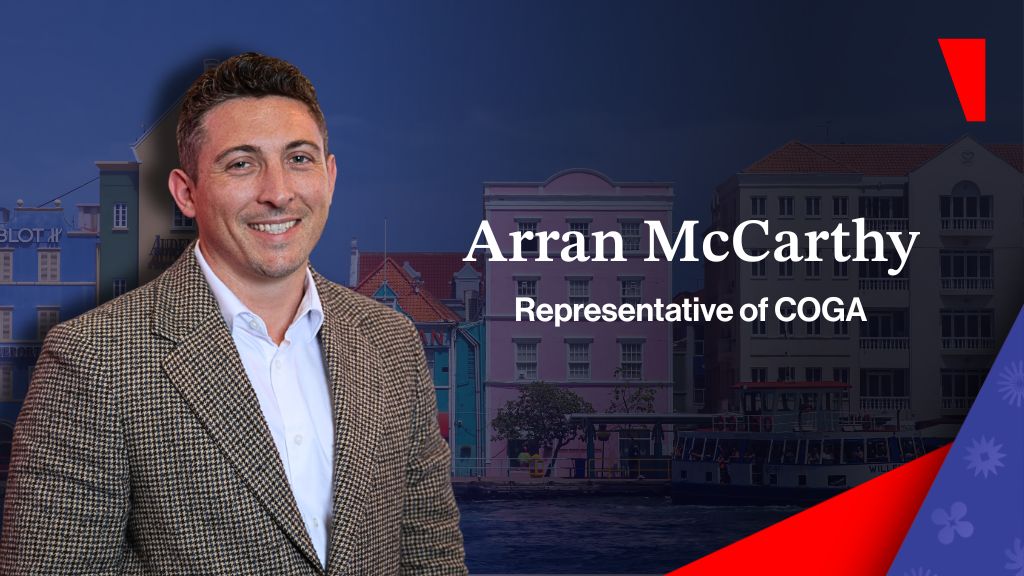
The regulatory reform process that Curaçao is going through will usher in a new era for the country’s iGaming sector. A group that actively participates in regulatory discussions and represents operators and licensees in this regard is the Curaçao Online Gaming Association (COGA). To better understand its mission, SiGMA News spoke with Arran McCarthy, COGA’s representative, in a conversation exploring the goals behind this transition.
Curaçao in transition
SiGMA News: Arran, thanks for joining us. To start, why was COGA created?
AM: Thank you for having me. It’s a real pleasure to talk about something I believe can make a significant impact: the Curaçao Online Gaming Association, better known as COGA.
COGA was created with a clear mission: to bring Curaçao’s licensees together, amplify our collective voice, and support the evolution of our iGaming ecosystem. This isn’t just a technical change; we are in the midst of a real transformation. Curaçao is entering a new era of regulatory reform, and we’re not just spectators; we are part of it. It’s a revolution that brings challenges and risks, but also incredible opportunities. That’s where COGA comes in: to guide this transition with clarity and purpose.
SiGMA News: What role does the island of Curaçao play in the global gaming industry today?
AM: Our island has always held a unique position in the global industry. For years, we’ve been a key pillar as a licensing jurisdiction. Now, with the modernisation of our sector under the National Ordinance for Games of Chance (LOK), the law that regulates and supervises all gambling in Curaçao, we have the opportunity to do more. To lead. To set the standard in transparency, innovation, and collaboration.
A bridge between industry and regulator
SiGMA News: Compliance is often seen as the main challenge for operators. How does COGA approach this?
AM: COGA isn’t only about compliance; it’s about empowerment. We act as a bridge between policy and practice. Yes, we help operators understand and implement new requirements, but we also help them thrive. We’re building something stronger, more resilient, and more sustainable, not only for businesses but for Curaçao as a whole.
SiGMA News: How do these changes impact Curaçao?
AM: The impact extends beyond operators. By strengthening the industry, we strengthen Curaçao’s broader ecosystem. We stimulate economic activity, attract investment, and reinforce our reputation as an innovative hub for digital business. That’s something I’m proud to be part of.
Responsible compliance management
SiGMA News: Since its creation in 2022, COGA has played an active role in Curaçao’s gaming sector, and by 2025, it was officially recognised as a representative entity. What does this recognition mean for you?
AM: Recently, COGA’s role as a recognised representative organisation was reaffirmed in the draft of the National Decree on the Committee for Reporting Unusual Transactions. That recognition matters. It shows our voice is being heard and that we have a seat at the table to help shape compliance standards and contribute to Curaçao’s regulatory dialogue.
SiGMA News: How would you describe COGA’s collaboration with regulators?
AM: We work alongside the regulator, not apart from it. Our goal is to complement the framework by offering support, expertise, and a platform for constructive dialogue. And with our membership options, both with and without voting rights, we ensure every licensee, regardless of size or structure, has a voice and a role in shaping the future.
Driving the gaming community through knowledge
Understanding key institutions and their dynamics is crucial for developing shared knowledge that promotes sustainable growth in Curaçao’s gaming community. Gaining insight into the interactions between various regulatory and associational entities may encourage fruitful discussions that fortify the sector’s pillars. Contributions that assist licensees and the ecosystem overall may arise from an analytical and cooperative basis. The true value lies in a collective understanding, which enables us to face challenges and seize opportunities during the regulatory transition.
This article was first published in Spanish on 25 August 2025.


